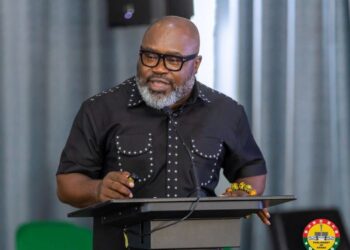
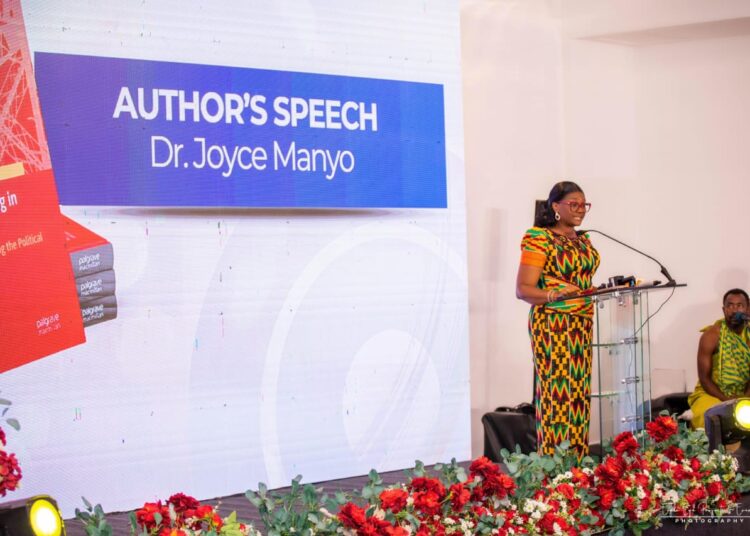
Dr Joyce Manyo, lecturer at the University of Media, Art and Communication, launched her pioneering book on political branding in Ghana at a ceremony held at the Lancaster Hotel, Accra, arguing that political trust ultimately rests on whether leaders deliver on the promises they make rather than on how effectively those promises are communicated.
The renowned Political Marketing Expert opened her remarks by describing the emotional weight of the occasion, framing it as a milestone shaped by faith, humility and collective support.
“There are moments in life where words fail to express how you feel, and today is one such moment. I am overwhelmed with a sense of gratitude, humility, and hope. Gratitude because the journey would never have been possible without God’s grace, the encouragement, sacrifices and support of so many people gathered here today”.
Dr Joyce Manyo, lecturer at the University of Media, Art and Communication
She emphasised that the knowledge captured in her book was not the product of a single individual, but of sustained collaboration with mentors and colleagues. “Humility because I recognise that knowledge is never the achievement of one individual. It is built on consultation, mentorship, collaboration, and counselling, acts of kindness,” she said.
A Case Study on Ghana’s Leading Political Party
Dr Manyo explained that her research draws directly from Ghana’s political landscape, describing the book as a case study exploring a dimension of political branding she believes has been neglected in existing literature.

“This book represents more than the culmination of a year of research. It represents the beginning of an important conversation. This book discusses the leading political party in our country and discusses political branding from a dimension that has been neglected in the literature of political movements”.
Dr Joyce Manyo, lecturer at the University of Media, Art and Communication
Central to Dr Manyo’s presentation was an explanation of what she termed political branding, describing it as a continuous process aimed at building relationships between political actors and the electorate.
She argued that this concept has become increasingly important as voter support patterns shift and the political landscape grows more complex. “The market has become extremely complex and complicated; the market has become very punitive, and therefore political branding is needed to effectively position political elements,” she said.
Beyond Logos and Campaign Videos
Dr Manyo challenged common assumptions about what political branding actually involves, arguing that many observers reduce the concept to surface-level campaign activities.
“Many people have assumed that political branding is merely about designing a party logo, running a campaign process, capturing videos, or effecting social media campaigns. These elements are certainly important in positioning political elements. However, they only represent the visible aspects of political branding”.
Dr Joyce Manyo, lecturer at the University of Media, Art and Communication
Dr Manyo traced the origins of her research back to 2016, when she had recently completed her postgraduate academic work focused on political branding and voter choice, prompting deeper questions about how politicians formulate policy.
“I asked, how do these politicians design their policies? Is it just by going around the country, engaging civil society, and coming up with their policies? I also asked, do politicians know that the brand on which they live is central to positioning them in the heart and in the mind of the electorate?”
Dr Joyce Manyo, lecturer at the University of Media, Art and Communication
These questions ultimately led her to pursue doctoral research focused specifically on political branding, a project she continued to develop through subsequent election cycles in Ghana.
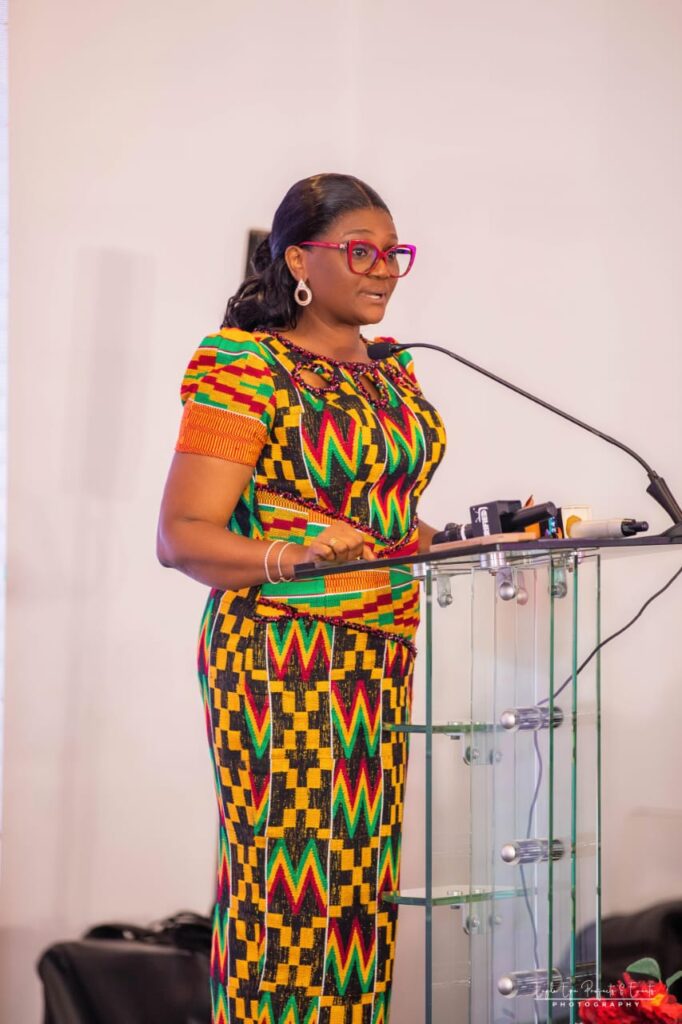
“A few months for me to finish my PhD, we went into the 2020 election, and the outcome confirmed a lot of the arguments I’ve made as a doctoral researcher. Then we went to the 2024 presidential election, and once again, my arguments were well-confirmed by the political behaviour of political parties and the political market”.
Dr Joyce Manyo, lecturer at the University of Media, Art and Communication
She recalled the encouragement from her professors that ultimately pushed her toward writing the book itself. “My professors recommended that it’s time for you to write your book on political branding, else you have no right to criticise politicians. And I knew it was going to be a difficult study, and I still appreciate that,” she said.
Delivery, Not Communication, Determines Trust
Dr Manyo outlined the central thesis of her book, arguing that political branding is fundamentally about whether the experience citizens have with a party matches what was promised to them.
“The book argues that political branding is not just about communicating ideas. It has a focus rather on resonating and reasonable platforming to construct a functional framework within a political market.
“The book also argues that political branding is the overall experience within a political market. Therefore, what is promised and the extent of delivery is important in how you are perceived”.
Dr Joyce Manyo, lecturer at the University of Media, Art and Communication
She placed particular emphasis on the precise relationship between promises made and promises kept, introducing what she termed a deficit in value delivery. “Delivery is not just about keeping the promise. It is about keeping the promise in the form, in the shape, and in the nature as you made it“, she said.

Otherwise, politicians suffer the ramifications of what she called a deficit in value delivery when delivery does not match the promise they made. She argued that sustaining political trust requires consistency over time rather than a single well-executed campaign moment.
“A strong political brand is not created by communication alone. It is obtained by consistency. Ultimately, when the market evaluates you, your performance will tell whether it contributes to your success or is a broken promise”.
Dr Joyce Manyo, lecturer at the University of Media, Art and Communication
Not a Political Endorsement
Dr Manyo was careful to clarify that although her book examines the real-life political behaviour of a specific party in Ghana, it does not serve as an endorsement or celebration of any political tradition over another.
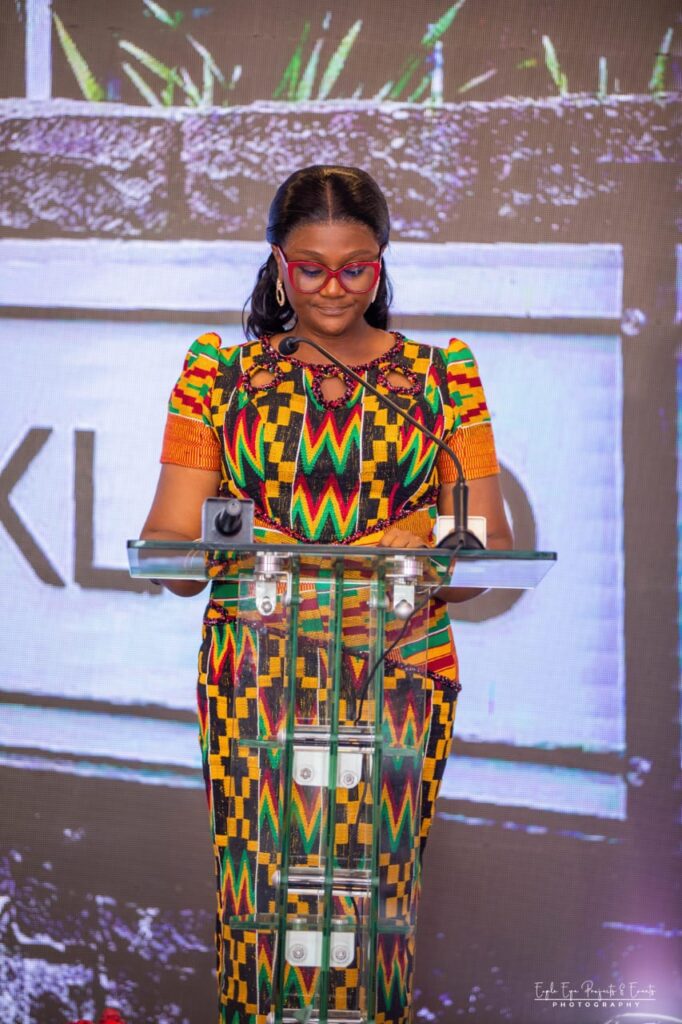
“The objective of the study is to draw from the political behaviour of political parties and leaders to make a significant contribution to knowledge, and provide guidance for practice,” she said.
Dr Manyo expressed hope that her work would resonate across multiple audiences, from students and researchers to political leaders and ordinary citizens seeking to better understand governance and accountability.
“I hope that students will interrogate the issues that are discussed and test their theoretical skills from their own context to broaden knowledge. I hope researchers will use it, political leaders will reflect on it, practitioners will apply it, and citizens will use it to deepen conversations about governance and accountability”.
Dr Joyce Manyo, lecturer at the University of Media, Art and Communication
She reflected on what success would ultimately look like for the book, framing its potential impact in modest but meaningful terms. “If this book succeeds in encouraging one political leader to take more careful steps before making a promise, if it encourages government to communicate more honestly with citizens, if it empowers one student to pursue research that advances democratic governance, if it helps one citizen better understand the relationship between public performance and public trust, then the book has done its work,” she said.
A Paradigm Shift in Political Branding
Dr Manyo described her broader ambition for the book as encouraging a fundamental rethinking of how political branding is understood within Ghana’s political discourse, returning once more to the theme of promises meeting expectation.
“I wrote this book to impart a paradigm shift in how we think about political branding in multiparty politics. The promise must be there in the shape and form in which it was made to meet expectations”.
Dr Joyce Manyo, lecturer at the University of Media, Art and Communication
Dr Manyo closed her remarks by extending thanks to the professors, mentors, colleagues, family, and friends who supported her throughout the research and writing process, along with former President Kufour, who wrote the foreword of the book.

She concluded by expressing hope that the book would spark wider conversation not only within Ghana but across the African continent. “Thank you all very much for joining me this evening, where I hope we can enjoy conversations, not only in Ghana, but also in Africa. May God bless us all,” she said.
Dr Manyo’s book launch adds a significant academic contribution to the study of political marketing in Ghana, positioning her research as a case study that examines how political parties build and maintain public trust through consistent delivery on promises rather than communication alone.
As the book enters circulation, its central argument, that political trust rests on delivery rather than messaging, will likely resonate among students, political practitioners, and everyday citizens seeking a clearer framework for evaluating political accountability in Ghana’s evolving political landscape.
READ ALSO: Quiet Day Sees Major Losers on GSE