
The Tema Oil Refinery (TOR) and the Upper East Regional Coordinating Council have opened discussions on measures to ease growing congestion of petroleum tankers at the Paga border enclave, as cross-border fuel trade with neighbouring countries continues to expand.
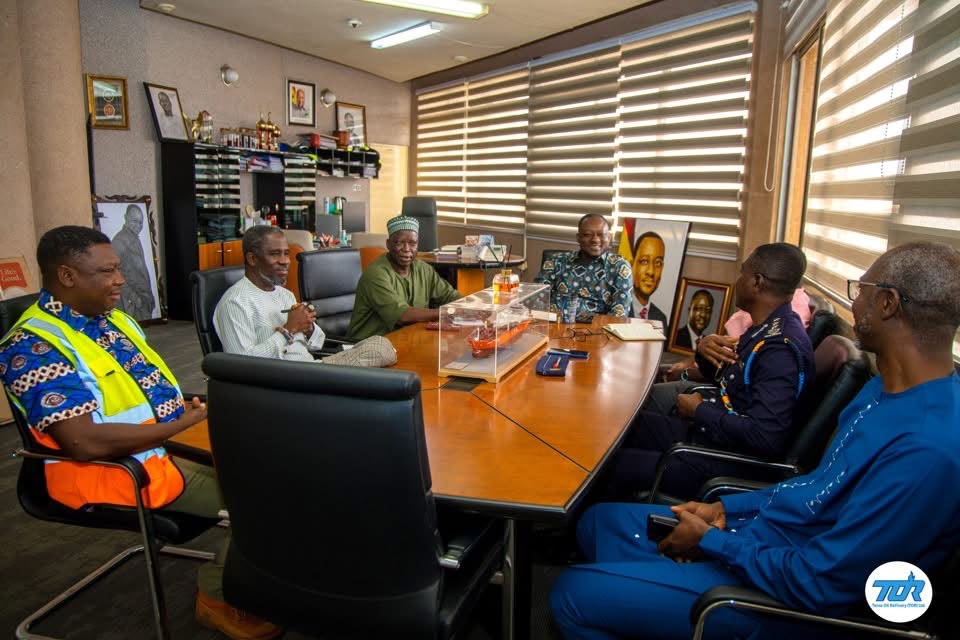
The issue was discussed during a courtesy call by the Upper East Regional Minister, Hon. Akamugri Donatus Atanga, on TOR Managing Director Edmond Kombat, with both sides focusing on improving the movement of petroleum products through one of Ghana’s most important northern transit corridors.
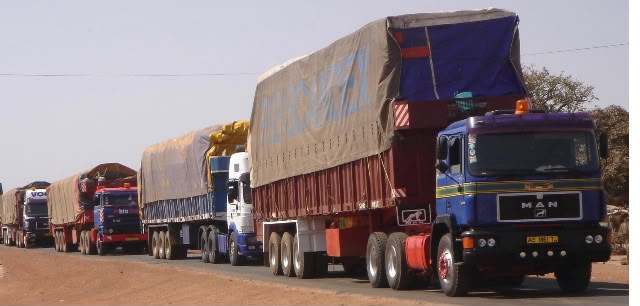
The talks come amid increasing queues of Bulk Road Vehicles (BRVs) at the border, a development that has raised concerns about traffic management, public safety, security and the efficiency of regional fuel distribution.
Petroleum transit through the corridor is expected to increase in the coming months as demand grows.
Edmond Kombat, TOR CEO
The warning is significant because the Paga corridor plays a critical role in supplying petroleum products to parts of the Sahel and neighbouring West African markets.
Border congestion becomes a regional trade issue
The discussions reflected a growing recognition that fuel transit is no longer only a local transport problem but an emerging regional trade and logistics challenge.
As demand for petroleum products rises across Ghana’s northern neighbours, the volume of tankers moving through Paga has increased, placing pressure on road infrastructure, customs operations and nearby communities.
Officials discussed a range of measures aimed at improving traffic flow while reducing the risks associated with large concentrations of fuel-laden vehicles.

The proposals included community safety sensitisation campaigns, stronger collaboration with the National Petroleum Authority (NPA), stricter customs and weighing-bridge enforcement, and the development of a dedicated tanker yard under a user-pay model.
The possibility of extending transit designation to the Namo border point, alongside Paga, was also considered.
A dedicated tanker yard gains attention
One of the most notable proposals was the creation of a dedicated tanker holding area.
Energy and logistics analysts say such a facility could help reduce roadside parking, improve scheduling of customs procedures and lower the risk of accidents involving petroleum tankers.

A user-pay structure would also be intended to make the facility financially sustainable rather than dependent on continuous public funding.
“The objective is to improve traffic flow, enhance safety and security, and support the efficient movement of petroleum products to neighbouring countries,” the discussions emphasised.
If implemented, the proposal would represent a shift from ad hoc congestion management toward a more structured border-energy logistics system.
Customs enforcement and safety move to the forefront
The emphasis on customs checks and weighing-bridge enforcement highlights another concern: the integrity of the transit system.
Overloaded vehicles, irregular documentation and weak enforcement can increase road damage, safety risks and opportunities for diversion of petroleum products.
For regulators, stronger enforcement is not only a compliance issue but also a revenue-protection and security issue.
The inclusion of community sensitisation in the discussions is equally important. Tanker congestion often affects local settlements through traffic obstruction, noise, fire risk and environmental concerns.
Why this matters beyond the Upper East
The Paga discussions point to a broader trend in Ghana’s downstream petroleum sector.
As regional demand grows, Ghana is increasingly functioning not only as a domestic fuel market but also as a transit and distribution hub for neighbouring economies.
That role creates opportunities for trade, storage, transport and related services, but it also requires investment in border infrastructure, traffic management and regulatory coordination.
The proposal to involve the NPA at board level suggests that the issue is being treated as a strategic downstream matter rather than a purely regional administrative concern.
A test of Ghana’s regional energy ambitions
TOR said it remains committed to working with regional and national stakeholders to ensure the safe and efficient movement of petroleum products.
The deeper significance of the engagement is that it connects three policy areas that are often treated separately: energy security, trade facilitation and border infrastructure.
If tanker congestion at Paga is not addressed, the corridor could become a bottleneck that undermines both commercial efficiency and public safety.
If the proposed measures are implemented effectively, the corridor could evolve into a more organised and secure petroleum transit gateway for northern Ghana and neighbouring markets.
For a country seeking to strengthen its role in West Africa’s downstream energy trade, the management of border fuel logistics may prove almost as important as refinery capacity and fuel availability themselves.
READ ALSO: Korle-Bu Receives GH¢181,500 As Deliver Well Plus Honours CEO