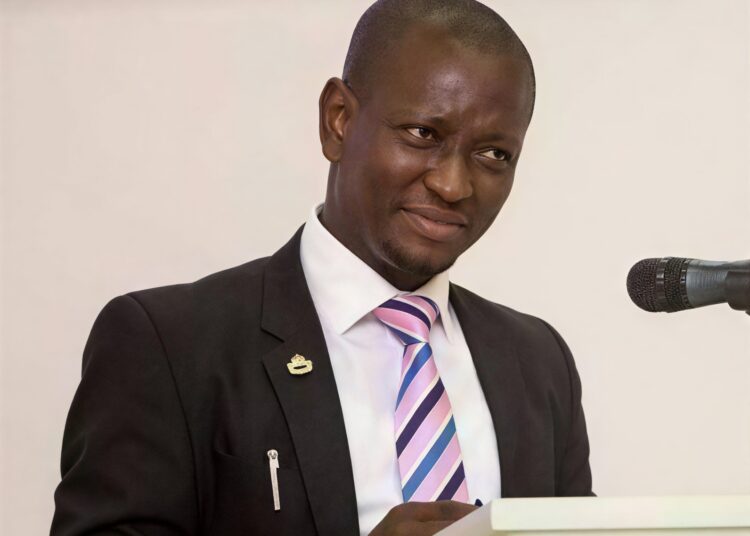
Former Deputy Attorney-General, Alfred Tuah-Yeboah, has backed the Ghana Bar Association’s position on substantive trials during legal vacation, arguing that established judicial practice should guide the handling of such cases. He explained that lawyers and their clients should receive adequate consideration when courts decide to continue substantive proceedings during the vacation period.
The Former Deputy Attorney-General noted that the position of lawyers in ongoing cases could involve both professional objections and genuine circumstances affecting their availability. He therefore rejected the suggestion that a lawyer’s earlier decision to abstain from vacation proceedings automatically invalidated a subsequent medical explanation for absence.
Referencing the absence of Abdul Wahab Hanan’s lawyer during proceedings, Mr Tuah-Yeboah indicated that Godfred Yeboah Dame could maintain his position on legal vacation while also becoming indisposed. He added that the court could require medical evidence where necessary to establish the circumstances surrounding counsel’s absence.
The former Deputy Attorney-General further turned to the position of Samuel Atta Akyea, who serves as lead counsel in Adu-Boahen’s case affected by the vacation arrangements. He urged the court to give sufficient room for the accused person to determine how to proceed if counsel remains unavailable when proceedings resume on August 17, 2026.
The issue, he explained, could become significant if an accused person seeks new legal representation after the existing lawyer declines to appear. A replacement lawyer would require time to study the proceedings and understand the evidence before taking over the case.
Mr Tuah-Yeboah therefore urged the judiciary to exercise patience when dealing with such circumstances, particularly where the liberty and legal interests of an accused person could be affected. He stressed that allowing adequate preparation would strengthen the fairness of proceedings and preserve confidence in the justice system.
“Ghana is not collapsing today. Ghana will continue to be Ghana. And so even if the matter is not heard within this term, it doesn’t mean that the accused person will not be in court.”
Alfred Tuah-Yeboah
The discussion also brought the Ghana Bar Association’s position into focus, with the former Deputy Attorney-General expressing full support for its call for substantive trials to be halted during the legal vacation. He explained that the association’s position draws from established practice governing the exercise of judicial powers during the period.
According to Tuah-Yeboah, the Chief Justice possesses the authority to issue warrants allowing substantive matters to proceed during vacation. However, he argued that such authority should be exercised with consideration for the established practice of consulting lawyers involved in the affected proceedings.
The Opuni case, he recalled, provides an example of how such consultation can facilitate proceedings without disrupting legal arrangements. In that matter, counsel were consulted and agreed to return for two days in August to complete cross examination after a witness had remained in the box.
The former Deputy Attorney-General consequently questioned the circumstances surrounding the assignment of a Court of Appeal judge to sit as a vacation judge. He argued that the arrangement deserved closer examination because the judge’s regular judicial role differs from that of a High Court judge.
Court Vacation Rules Faces Scrutiny Over Judicial Practice
A separate legal suit against the Chief Justice has also brought the wider framework governing judicial vacations into focus, with questions emerging over how the superior courts manage their work during periods when regular sittings are suspended. Mr Tuah-Yeboah explained that the matter requires careful consideration of the different legal instruments governing the High Court, Court of Appeal and Supreme Court.
Discussing the suit before the courts, he indicated that the plaintiff’s arguments appear to target legal vacation arrangements affecting the Court of Appeal and Supreme Court. The legal challenge reportedly relies on C.I. 19 and C.I. 16 while leaving C.I. 47, which regulates the High Court’s operations, outside the main argument.
The distinction, he explained, matters because the existing arrangement for the superior courts differs across the various levels of the judiciary. The Court of Appeal and Supreme Court currently operate without permanent vacation judges, although the Chief Justice can issue warrants when urgent matters require judicial attention.
Mr Tuah-Yeboah acknowledged the argument for preserving vacation arrangements at the superior courts while proposing an additional mechanism for urgent cases. He suggested that the Court of Appeal and Supreme Court could also have designated vacation judges to handle pressing matters when the need arises.

The proposal, he indicated, would provide a structured means of dealing with urgent proceedings without creating uncertainty over the broader principle of legal vacation. Such an arrangement could also reduce the need for individual judicial interventions whenever exceptional matters emerge during the break.
Another dimension of the debate centres on the distinction between urgent applications and substantive trials. Established practice traditionally allows vacation judges to handle matters such as bail applications, injunctions and other urgent applications while substantive hearings require additional considerations.
In this context, the former deputy Attorney-General’s position places emphasis on preserving legal traditions while allowing the judicial system to respond effectively to urgent cases. He argued that any significant departure from long standing practice should rest on a clear legal foundation.
READ ALSO: Mrs. Juliana Bubune Titiati Tsikata, First Runner-Up of Ghana’s Most Beautiful 2013, Passes Away