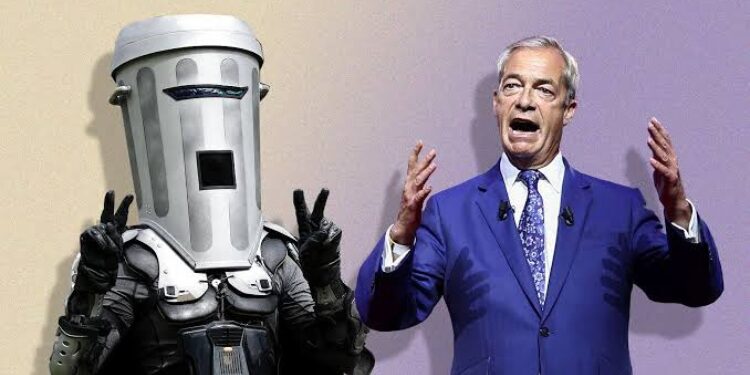
Voters in Clacton-on-Sea head to the polls in an extraordinary parliamentary by-election that has placed Nigel Farage at the centre of another major political spectacle, with the Reform UK leader widely expected to reclaim the seat despite facing a highly unconventional challenge from satirical politician Count Binface.
Rather than confronting the major political parties at the ballot box, Nigel Farage is facing a contest in which Labour, the Conservatives, the Liberal Democrats and the Greens have all chosen not to field candidates.
The absence of UK’s traditional major parties has transformed what could have been a conventional parliamentary contest into one of the most unusual by-elections in recent British political history.
Among those standing against Farage is Count Binface, the satirical character created by comedian Jon Harvey, who campaigns wearing a grey dustbin over his head, a cape and silver armour. His platform includes promises to abolish VAR in football, conscript people who play loud music on public transport and “nationalise Adele”.
Tendring District Council has confirmed 34 candidates for the Clacton contest, the highest number ever recorded for a parliamentary election. Most are standing as independents or fringe candidates, producing a ballot paper that is almost a metre long.
Despite the unusual field, Farage remains the clear favourite to retain the eastern Essex constituency, which voted strongly for Brexit in the 2016 referendum and gave him a decisive victory when he finally entered the House of Commons in 2024 after several unsuccessful attempts.
Farage won 46% t of the vote in the 2024 general election, securing a majority of 8,405 votes and achieving his long-standing ambition of becoming an MP after eight attempts.
According to Nigel Farage, “Britain needs Reform, Britain wants Reform, and Britain demands a general election.”
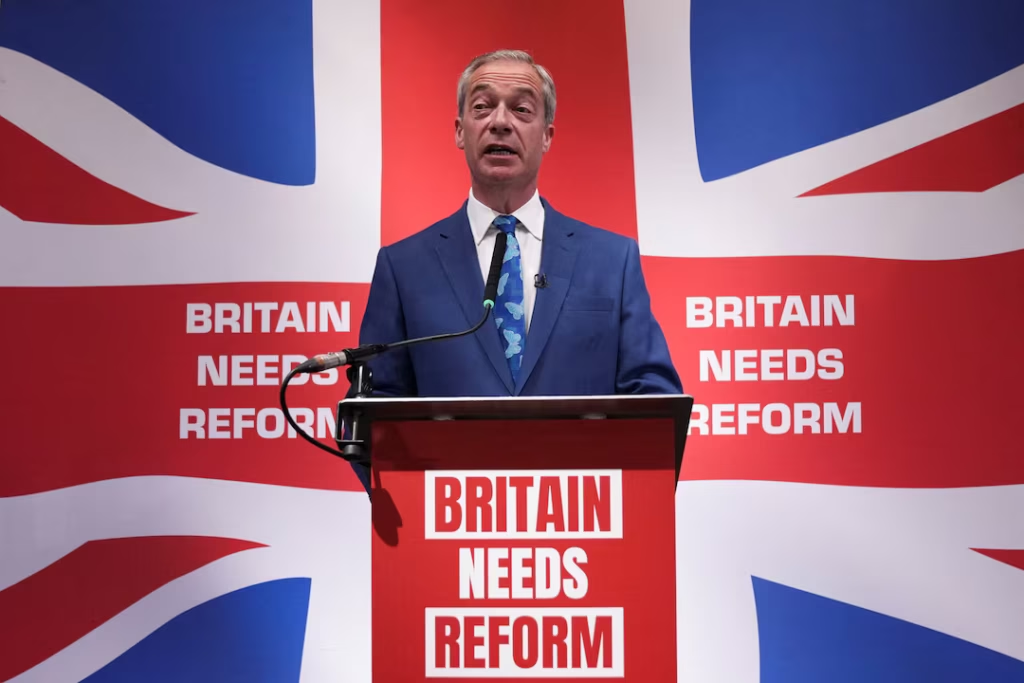
The Reform leader described the contest as “the people of Clacton versus the Establishment”, arguing that voters should be given the opportunity to decide whether he should continue representing them.
His political opponents, however, have rejected that framing. The Conservatives, Labour, Liberal Democrats and Greens have all decided against contesting the seat, with Conservative leader Kemi Badenoch describing the by-election as “fake” and Labour leader Sir Keir Starmer previously calling Farage’s decision a “desperate political stunt.”
The decision to stay away has left Farage with a much less conventional electoral test than he might otherwise have faced. Instead of measuring Reform’s strength directly against Labour or the Conservatives, the result is expected to reveal more about Farage’s personal popularity in a constituency where he already has a strong electoral base.
Political analysts have therefore warned against interpreting a Farage victory as a decisive indication of Reform UK’s national prospects.
University of Southampton Political Science Professor Will Jennings stated that the result was unlikely to have a major impact on British politics.
“It seems unlikely that the by-election will be consequential for British politics. Victory won’t mean that questions about Farage or Reform’s finances will go away, so it seems most likely it will be a wasted summer for everyone.”
Professor Will Jennings
He added, “when Farage returns to parliament afterwards we will be back where we started.”
The contest nevertheless carries political significance for Farage because it comes at a moment when Reform UK’s national momentum has faced fresh questions.
Financial Scrutiny Shadows Farage as Satirical Rival Draws Support
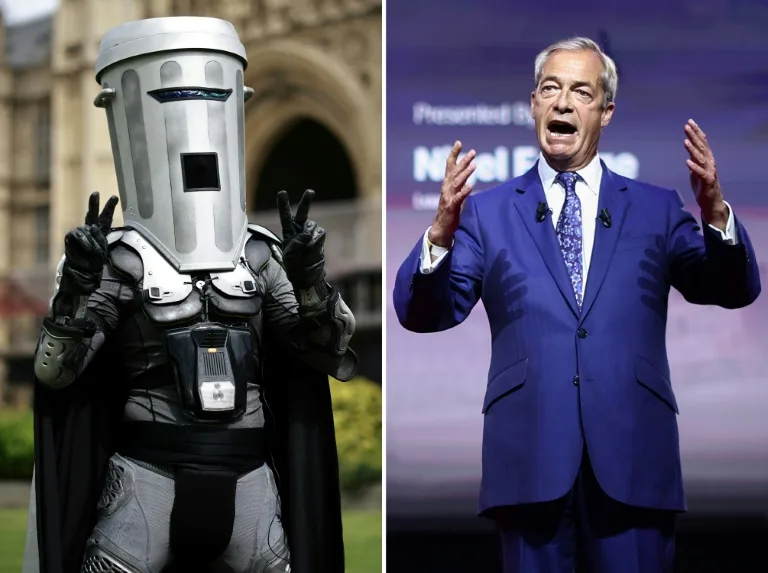
Nigel Farage triggered the by-election on 7 July after announcing his resignation as Clacton’s MP and immediately declaring his intention to contest the seat again.
His decision followed intense scrutiny over financial support associated with him and Reform UK, including questions about a £5 million donation linked to cryptocurrency billionaire Christopher Harborne.
Farage and his party have denied wrongdoing. However, the parliamentary standards watchdog is investigating Farage and Reform UK deputy Richard Tice over allegations that financial gifts were not properly declared. London police have also confirmed that an investigation was opened last year into donations to Reform ahead of the 2024 general election.
Reports have linked that investigation to alleged undeclared financial support from Farage ally and convicted fraudster George Cottrell and Cottrell’s mother.
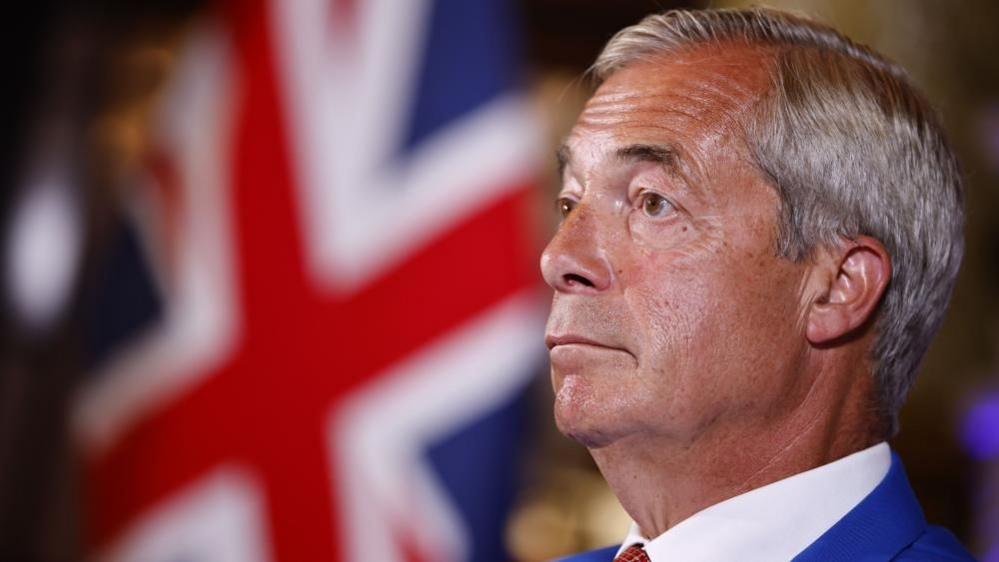
The controversies have created an awkward backdrop for Farage’s attempt to return to Parliament. Rather than allowing the financial questions to dominate the political narrative, he has sought to turn the by-election into a public verdict on his wider political standing.
Journalist Michael Crick, who wrote a biography of Farage, described the decision to trigger the contest as a serious political error.
“This has been a complete misjudgement by Farage. He’s hoping to become Prime Minister and Clacton is in no way representative of the country as a whole.”
Michael Crick
The unusual nature of the contest has also allowed Count Binface to become one of its most prominent figures.
The satirical candidate, who has previously contested elections against senior political figures, has attracted considerable media attention and could potentially secure a significant share of the vote despite having little conventional political infrastructure.
A Survation poll suggested Count Binface could attract around a fifth of the vote, although the unusual circumstances of the contest make predictions particularly uncertain.
READ ALSO: Ghana Moves to Turn Public Buildings into Clean-Energy Assets