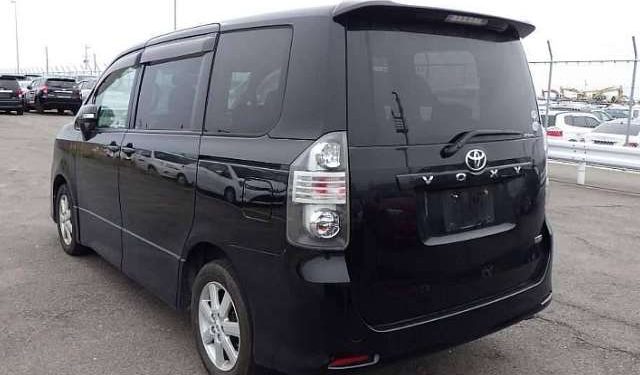
The Director General of the Road Safety Authority, Abraham Amaliba has clarified that the proposed restriction on voxy vehicles for intercity travel is still at the implementation stage. Speaking on measures to improve road safety, Mr Amaliba explained that the recommendation followed consultations with key transport and security agencies.
“There wasn’t a ban. There was a report recommending the ban. We have met with stakeholders and national security to help us .”
Abraham Amaliba
The proposed measure seeks to limit the use of voxy vehicles to movement within cities while restricting their operation over long distances. The Road Safety Director indicated that the initiative is intended to address the safety risks associated with the vehicles and establish clearer conditions for their use.

Several institutions have already participated in discussions on the recommendation, giving the process an interagency character. Mr Amaliba disclosed that the Road Safety Authority has engaged National Security, the Police, the Driver and Vehicle Licensing Authority and the Minister of Transport as part of the consultations.
The next phase will involve a team drawn from agencies within the transport sector. According to him, the group will undertake further engagement before the recommendation moves into implementation.
The timeline for the next stage is also becoming clearer as authorities prepare for another round of discussions. Mr Amaliba indicated that the relevant agencies under the Ministry of Transport are expected to meet in September to determine the practical steps required.
Meanwhile, the government is taking steps to address the importation of right hand drive vehicles. Customs is expected to give importers until the end of the year before restrictions on the importation of such vehicles take effect.
The proposed import controls form part of a wider effort to regulate vehicles entering the country. Mr Amaliba explained that the move is significant because the voxy vehicles under discussion are generally manufactured with right hand drive configurations.
Another measure involves inspection before vehicles are shipped into Ghana. The Ghana Standards Authority is expected to examine vehicles at their countries of origin to determine whether they comply with Ghanaian laws and standards.
The combination of import restrictions and pre shipment inspections is expected to give authorities greater control over vehicles entering the country. These measures, the Road Safety Authority believes, can complement domestic road safety interventions and reduce risks associated with unsuitable vehicles.
Poor Road Lighting Prompts Renewed Push For Infrastructure Repairs
The condition of roads after dark has also emerged as an important part of the road safety discussion, with poor visibility posing additional risks to motorists. Mr Amaliba disclosed that he has engaged relevant institutions over malfunctioning traffic lights and other infrastructure issues affecting road users.
Responsibility for road lighting and related infrastructure is shared among several public institutions. He identified Urban Roads, metropolitan and municipal assemblies and the Energy Commission as agencies with roles in areas connected to street lighting.
Traffic lights require particular attention because their failure can disrupt the movement of vehicles at busy intersections. The Road Safety Authority has therefore taken up complaints received from road users and referred them to the institutions responsible for corrective action.

Mr Amaliba explained that his engagement with Urban Roads initially centred on malfunctioning traffic lights. At the time, outstanding payments to contractors were identified as one factor affecting some maintenance work.
Funding has since been released through the Ghana Education Trust Fund, creating an opportunity for the affected works to progress. The Director General indicated that the Road Safety Authority would continue following up with the responsible agencies to ensure that the repairs receive attention.
Road markings also form part of the infrastructure required to guide motorists, particularly at night. Responsibility for markings differs according to the category of road, with Urban Roads handling markings within the region while the Ghana Highways Authority takes responsibility for trunk roads.
The distinction in institutional responsibilities means that road safety agencies must work closely with other public bodies to resolve infrastructure problems. Mr Amaliba indicated that whenever complaints reach his office, they are directed to the appropriate institution for action.
“When it comes to road markings in the region, it is the Urban Roads, but when it comes to road markings on trunk roads, it’s the Highways.”
Abraham Amaliba
The infrastructure challenge therefore requires sustained coordination beyond the Road Safety Authority itself. Proper lighting, functioning traffic signals and visible road markings all contribute to safer movement by helping motorists identify hazards and navigate roads correctly.
At the same time, the proposed vehicle restrictions introduce another layer to the country’s road safety strategy. Together, the measures point to an approach that combines regulation of vehicles with improvements in the physical environment in which motorists operate.
The ongoing engagements also place emphasis on institutional accountability. Agencies with specific mandates are expected to respond to road safety issues within their areas of responsibility while the Road Safety Authority follows up on matters brought to its attention.
Mr Amaliba’s remarks consequently place vehicle regulation and road infrastructure within the same national road safety conversation. While restrictions on unsuitable vehicles address one aspect of road safety, functioning traffic systems and clearer road markings remain essential to protecting motorists and other road users.
READ ALSO: Jinapor Signals Fresh Push to Revive Ghana’s Upstream Growth