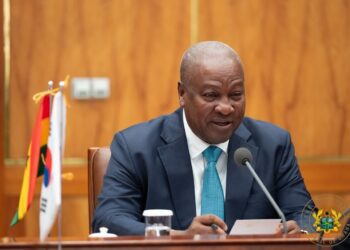
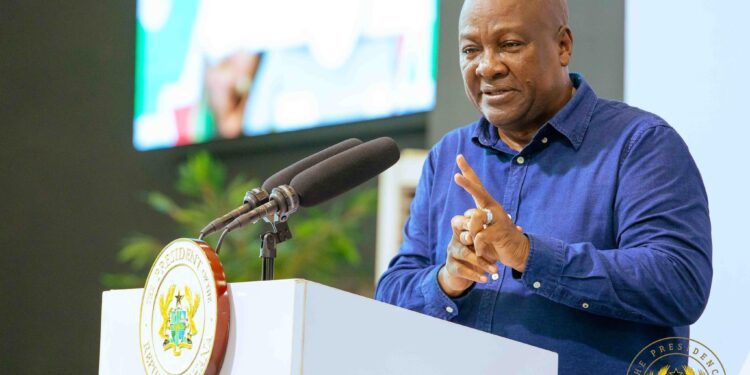
President John Dramani Mahama has attributed rising indiscipline in Ghana’s schools to the material children encounter on their phones, and has backed a proposal by the Minister of Communications to bar those under 16 from certain websites.
He made the case at a Citizen Engagement in Bolgatanga during his Resetting Ghana Tour of the Upper East Region, answering a question about disorder in the classroom. The President argued that a phone hands a child access to the whole world’s content, including material that reshapes a value system faster than parents or religious instruction can correct.
He cited a pupil who took his father’s loaded gun to school and discharged it, blinding a girl who had to be flown abroad for treatment, and said the government is not averse to faith-based organisations taking a greater role in managing the schools they established.
The phone as the point of entry
President Mahama contrasted his own childhood with the world children now inhabit, and the gap he described is one of scale rather than degree. “To gain any knowledge, we had to go to the library and read books. One channel, GBC, and GBC gave us the programmes that promote our values and our culture,” he said.
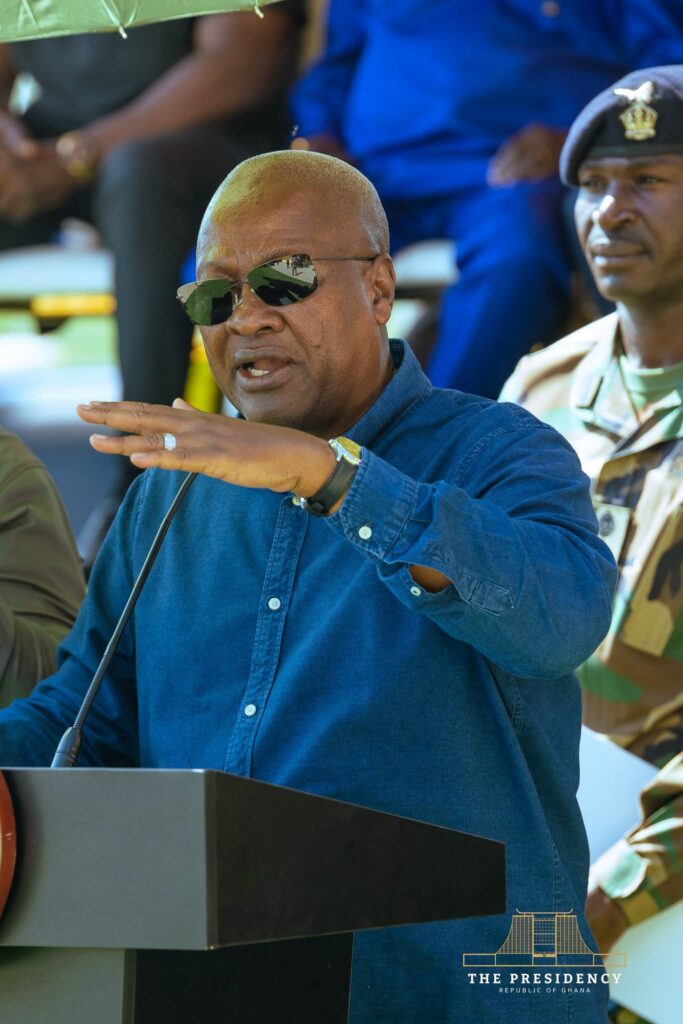
“The children of today have access to knowledge that we couldn’t have imagined when we were children. They have the new media. They have AI. They have ChatGPT. They have Netflix TV. Indeed on that little phone that they have, when you give your child a phone, know that you are opening him up to both positive and negative.”
President John Dramani Mahama
The President was explicit that supervision has limits once the phone is in a child’s hands. “So when you give your child a phone, you don’t control the phone; you put checks on the phone. He’s exposed to so much information from across the world, some of which affects his value system,” he said.
That reach extends past the household. “So it goes even beyond our parenting and our morality in terms of our religious faith. And so it’s a wider problem than we envisioned,” he said.
“And I am a person of faith. I’ve done my best to bring my children up based on the values that I was also given. But there are many cases where children break loose and become something else other than what you intended them to be.”
President John Dramani Mahama
What arrives in the classroom
President Mahama said pupils carry those influences into school, and he offered two illustrations of the result. “And so in one school, a child takes his father’s gun, takes it to school. Apparently the gun is loaded, and it discharges. And it injures a girl. She went blind. She had to be flown out to work on her eyes before she regained her sight,” he said.
He then described how pupils respond to authority. “And when a teacher is enforcing discipline, a housemaster, the students gang up and say they don’t like him. They go and attack his house. In some cases, burn his house down.”
The two examples point at different failures. One concerns a weapon left accessible at home. The other concerns collective action against a member of staff, which speaks to the authority teachers command rather than to anything a pupil watched online.
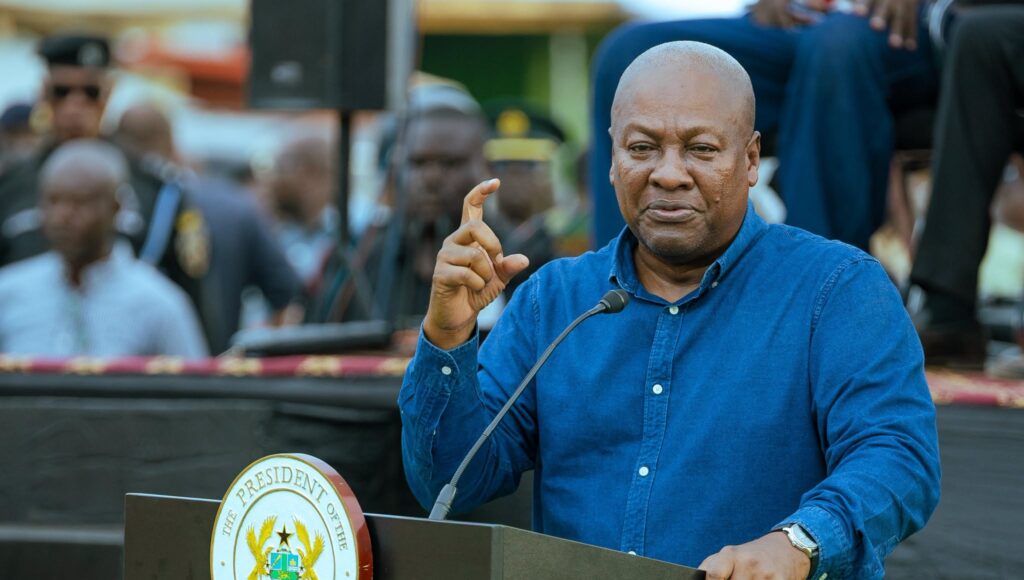
“And that is why even the Minister of Communications is proposing to implement a system that prevents children under 16 from visiting certain sites on their phones. If we do that, that will help to protect our children”.
President John Dramani Mahama
However, the President named neither the sites, the mechanism, nor a timeline. Age verification has proved difficult to enforce elsewhere, since children share devices, borrow credentials and reach networks that sit beyond a national regulator’s control.
A restriction that works at the point of access still leaves open how a regulator establishes a user’s age without collecting identity data from every adult on the network.
A greater say for faith-based schools
President John Mahama turned to a proposal religious bodies have put to government, treating it as part of the same problem.
“We have noted the roadmap that was presented by faith-based institutions and faith-based organisations to have a greater say in the schools that they established. And government is not averse to it.
“We’re not averse to the faith-based organisations having a greater say in how their schools are managed. And so I can assure you, Reverend Father, that that is a process that is ongoing.”
President John Dramani Mahama
Mission schools built much of Ghana’s education infrastructure before the state absorbed them into the public system, and the churches have long argued that they carry responsibility for character formation without matching authority over management.
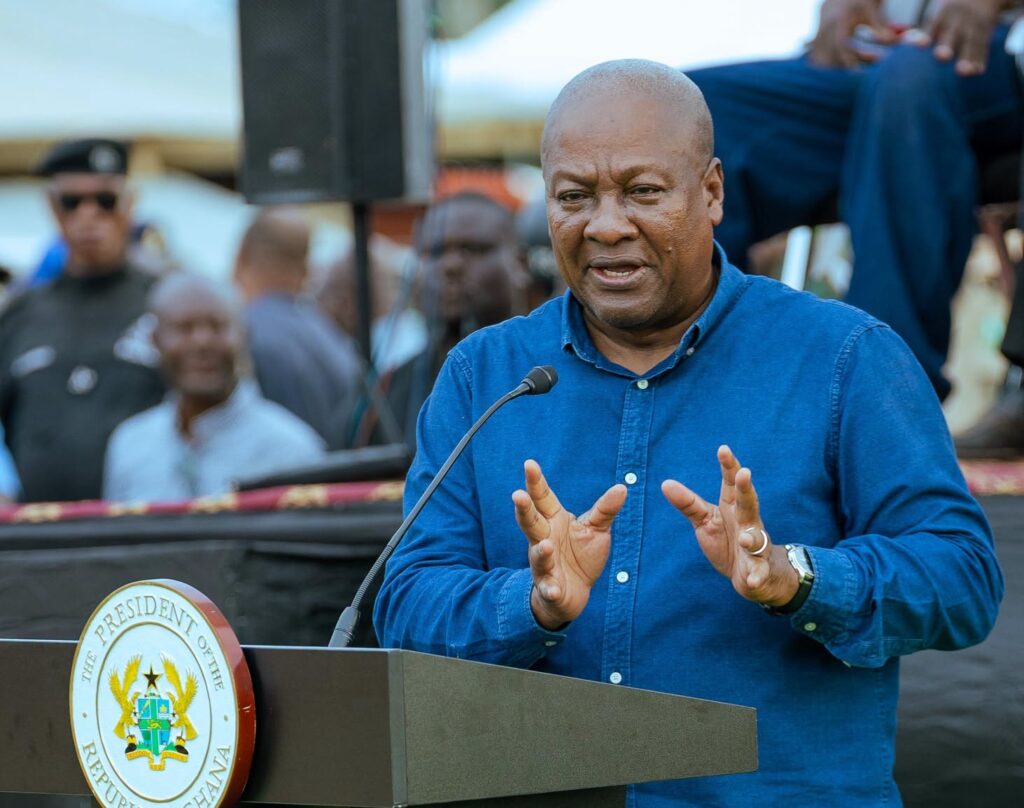
“And so, yes, it is a problem that we must work together to solve. Both the government and the faith-based institutions. But like I said, we’re not averse to increasing the roles of faith-based institutions and organisations in the running of the schools that they establish.”
President John Dramani Mahama
Two questions remain open. What a greater say means in practice, and whether the under-16 restriction moves from proposal to policy, will determine whether the assurance changes anything inside the schools he described.
READ ALSO: Mahama Unveils $10bn New Economic Era After Stabilisation Gains