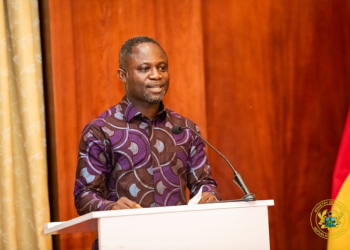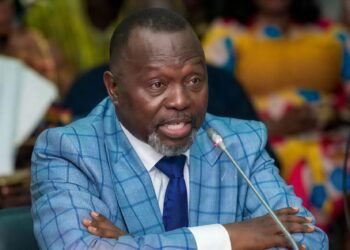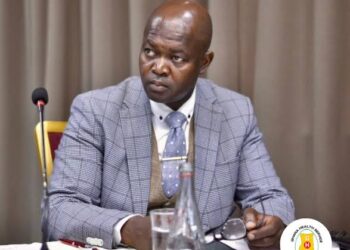
The General Secretary of the Ghana Association of University Administrators, Mr Charles Kojo Aidoo has warned that the association will intensify its strike if authorities fail to make progress on negotiations over its outstanding demands. Speaking on the industrial action, the GAUA National Secretary disclosed that discussions with the Education Minister have yet to begin after a scheduled meeting was postponed.
“Next week, we are going to roll out our phase two of the strike action, and the phase two will be far worse than what we are seeing now.”
Mr Charles Kojo Aidoo
Mr Aidoo explained that the meeting, which was expected to open formal negotiations, has been rescheduled for Tuesday following an emergency involving the Education Minister. He indicated that GAUA expects the engagement to provide an opportunity to address the issues that have pushed its members into industrial action.
The association has also continued discussions with university vice chancellors as the strike enters a new phase. The GAUA leadership met the vice chancellors on Tuesday and is scheduled to engage them again on Monday ahead of the planned escalation.
The next phase, according to the General Secretary, will involve a complete withdrawal of professional services across public universities. He explained that GAUA brings together senior professionals including accountants, auditors, procurement specialists, architects, quantity surveyors and human resource practitioners whose services are essential to university operations.
At present, the association estimates that its members are operating at about half capacity as part of the initial phase of the action. Mr Aidoo warned that this level of withdrawal will rise significantly when the second phase begins next week.
The possible disruption to examinations represents one of the most immediate effects of the planned escalation. The association’s decision would affect administrative and professional functions supporting university examinations, adding pressure to institutions already managing the consequences of the first phase.
The planned intensification follows several attempts to secure institutional intervention. Mr Aidoo disclosed that GAUA has petitioned the National Labour Commission as well as the Ministers responsible for Labour and Education over the matters at the centre of the dispute.
He argued that the industrial action did not begin suddenly and followed a prolonged period of engagement with state institutions. The absence of a resolution, he indicated, eventually left the association with industrial action as its chosen avenue for pressing its demands.
Salary Disparities Deepen Dispute As Union Demands Fair Treatment
The salary dispute has become a central issue in GAUA’s negotiations with the Fair Wages and Salaries Commission. Mr Aidoo argued that existing equivalences between university staff categories have been undermined by increases in market premiums received by other groups.
He recalled that GAUA accepted a market premium arrangement in 2012 despite receiving a higher premium at the time. The decision, he explained, was influenced by the established equivalences within the university system and the understanding that similar treatment would continue to apply across comparable positions.
The association now believes that the principle has been weakened by subsequent adjustments granted to other labour groups. Mr Aidoo pointed to a disparity in which an entry level teaching position can receive a higher market premium than senior administrative positions such as the Registrar or Director of Finance.
The General Secretary described the situation as an unfair imbalance within university structures. He argued that senior administrators who oversee major institutional functions should not receive significantly lower market premiums than lower ranking positions within another staff category.
GAUA has also challenged the Fair Wages and Salaries Commission’s position on online teaching support. Mr Aidoo claimed that the Commission previously acknowledged during a GAUA Congress that the payment constituted a form of market premium before later adopting a different position publicly.
The association is consequently demanding clarity from the Commission and has called for an opportunity to resolve the disagreement through direct engagement. Mr Aidoo is also seeking an apology and retraction over comments attributed to the Commission’s Chief Executive Officer regarding GAUA’s position.
“GAUA, we are saying that we are not going to sit down for them to cheat us anymore.”
Charles Kojo Aidoo
The union’s call to action has also extended to the National Labour Commission, which it believes has been slow to act on its petition. Mr Aidoo disclosed that GAUA wrote to the Commission on 16th July and is still awaiting action on its complaint.
According to him, the Commission has yet to summon the Fair Wages and Salaries Commission or the Ghana Tertiary Education Commission over the dispute. He argued that the prolonged delay has added to the association’s dissatisfaction as its members continue their industrial action.
READ ALSO: Shatta Wale Confirms Second Edition Of Shatta Fest This October