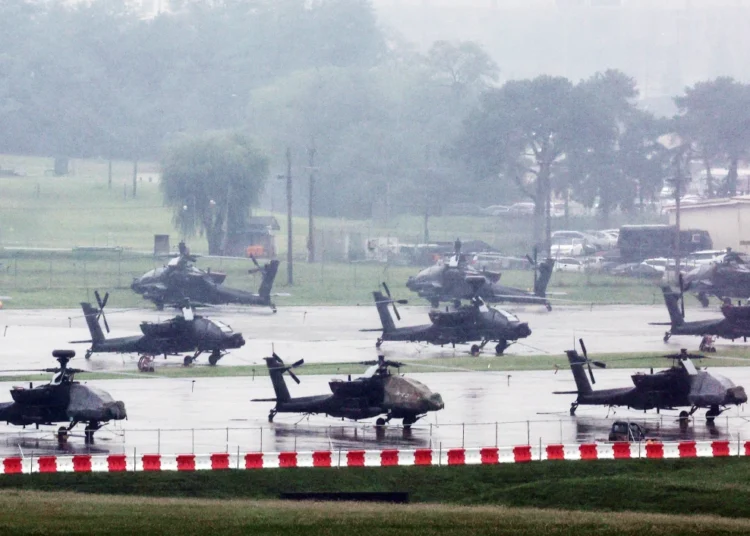
The United States and South Korea ended their annual joint military exercise six days earlier than initially planned on Friday, following President Donald Trump’s order to substantially reduce the drills in what appeared to be a conciliatory gesture toward North Korea.
Trump abruptly ordered the Pentagon to “substantially reduce” the annual Ulchi Freedom Shield exercise shortly before it began on Monday. The U.S. President cited what he described as his good relationship with North Korean leader Kim Jong Un, while also pointing to South Korea’s refusal to support the United States in its war against Iran.
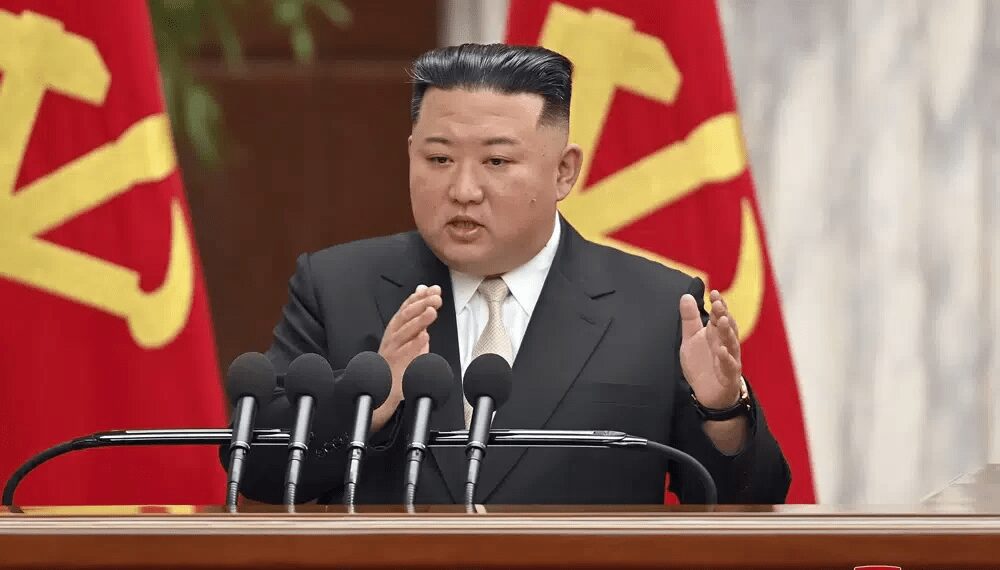
South Korea’s military confirmed that the Ulchi Freedom Shield command post exercise with the United States concluded on Friday. The drills had initially been scheduled to run in two phases over 11 days, simulating potential North Korean attacks. The first phase focused on defensive operations and was scheduled to end on Friday, while the second phase, planned to continue until August 27, was expected to focus on counteroffensive operations.
North Korea has traditionally been particularly sensitive to such counteroffensive scenarios, viewing large-scale U.S.-South Korean military exercises as rehearsals for a potential invasion.
The reduction extended beyond the command post exercise. South Korea and the United States had initially planned to conduct 14 joint field training exercises during the Ulchi Freedom Shield period. South Korea’s military said the allies agreed to halve the number of those exercises. The decision marked a significant adjustment to one of the allies’ major annual military exercises, which are designed to strengthen joint readiness against potential threats from North Korea.
U.S. and South Korean officials have consistently maintained that their joint exercises are defensive in nature and aimed at improving military coordination and preparedness.
Despite the scaled-back drills, North Korea showed little sign that the move would lead to an immediate return to diplomacy. Kim Yo Jong, the influential sister of North Korean leader Kim Jong Un, dismissed Trump’s overture on Wednesday, saying that reducing the duration and scale of the exercises would not change what Pyongyang sees as their “provocative, aggressive nature.”
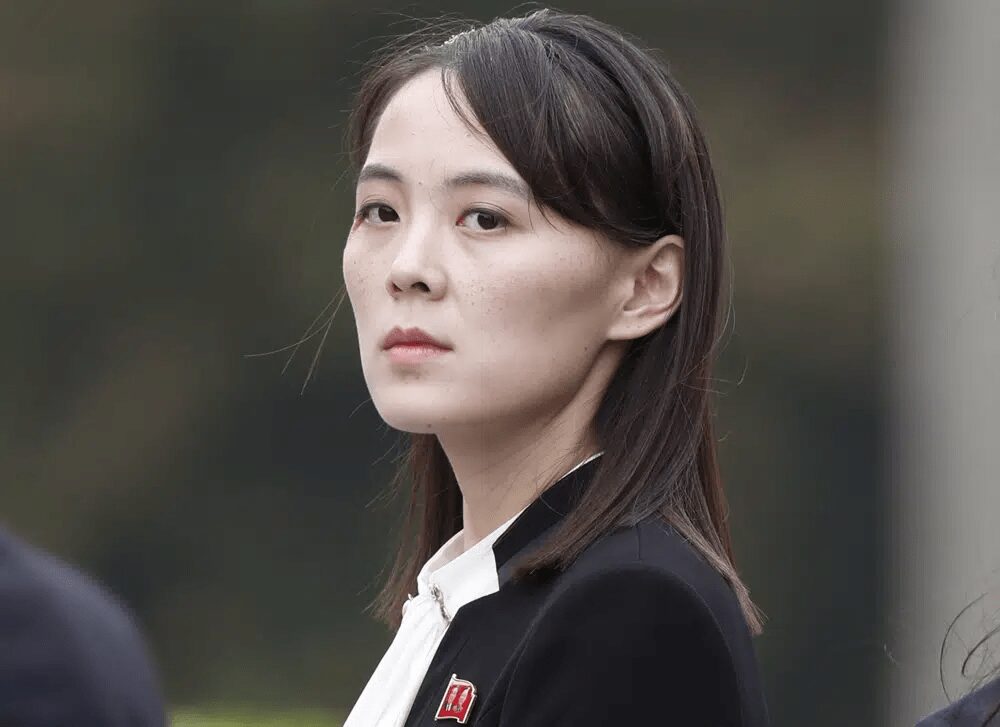
Her comments suggested that North Korea remains unwilling to resume talks based solely on adjustments to U.S.-South Korean military activities. The following day, North Korea fired about 10 short-range ballistic missiles toward the sea, apparently following through on earlier threats to respond to the military exercises.
The U.S. Indo-Pacific Command said the launches did not pose an immediate threat to U.S. territory or its allies. It added that Washington remained committed to defending the United States and its regional partners.
Hopes For Renewed Diplomacy Fade
Kim Yo Jong’s statement and the subsequent missile launches have dampened expectations of an early resumption of talks between Trump and Kim Jong Un. The two leaders previously engaged in high-profile diplomacy aimed at addressing North Korea’s nuclear programme, but negotiations collapsed in 2019 without an agreement.
Since then, Kim Jong Un has continued expanding and modernising North Korea’s nuclear and missile capabilities while strengthening ties with Russia amid Moscow’s war in Ukraine. The prolonged diplomatic stalemate has allowed Pyongyang to pursue new weapons programmes and deepen strategic cooperation with Moscow, further complicating efforts to restart negotiations.
Kim Jong Un indicated last year that North Korea would not return to talks unless the United States dropped its demand for North Korean denuclearisation as a precondition for diplomacy. That position remains a major obstacle to renewed negotiations, as Washington has long viewed the dismantling of North Korea’s nuclear weapons programme as a central objective.
Trump’s decision to reduce the joint exercises appeared aimed, at least in part, at creating conditions for renewed engagement with Kim. However, North Korea’s response suggests that scaling back the drills alone is unlikely to overcome the deeper differences between Washington and Pyongyang.
The missile launches and Kim Yo Jong’s comments underline the challenge facing any future diplomatic effort: while Trump continues to emphasise his personal relationship with Kim Jong Un, North Korea is demanding broader changes to U.S. policy before returning to negotiations.
For now, the shortened Ulchi Freedom Shield exercise may signal an attempt to reduce tensions, but Pyongyang’s response indicates that a return to nuclear diplomacy remains uncertain.
READ ALSO: Xabi Alonso Downplays Fernandez’s Exit Speculations, Says He’s a Chelsea Player