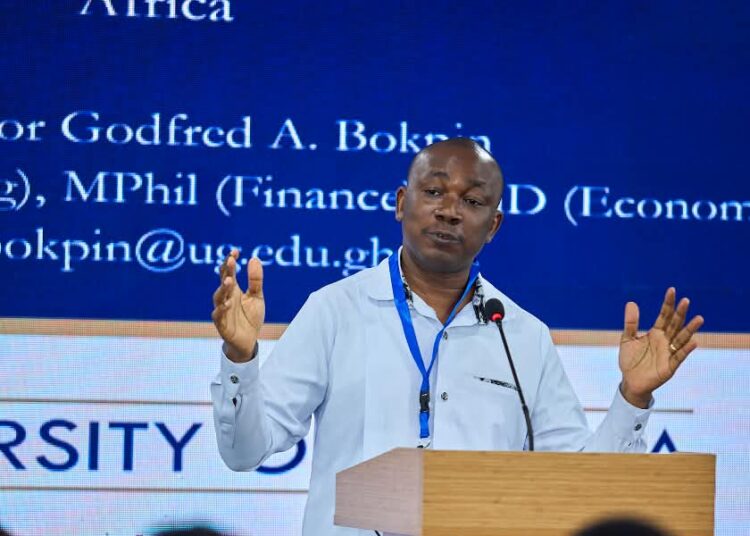
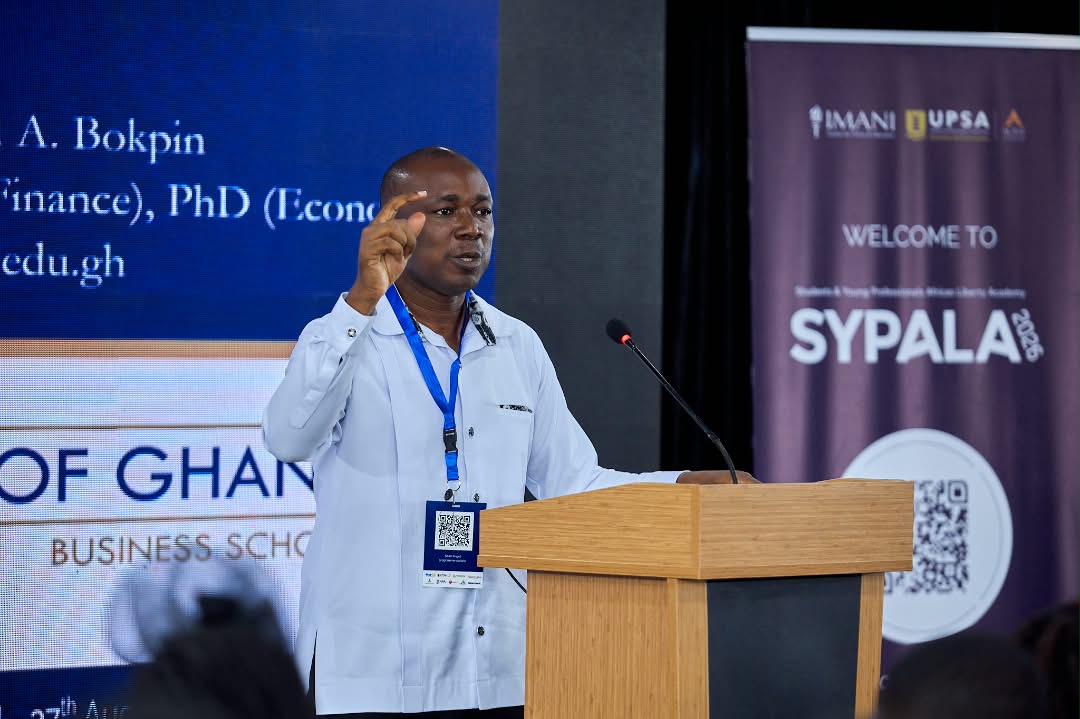
Professor Godfred A. Bokpin of the University of Ghana Business School has challenged Ghana’s young people to abandon a growth model built on natural resources in favour of one driven by ideas, innovation and digitisation, telling participants at the Students and Young Professionals African Liberty Academy that no country has ever achieved sustainable development through resource extraction alone.
Speaking at SYPALA 2026 under the theme “Resilient Economies,” Professor Bokpin drew a sharp distinction between those who generate ideas and those who merely carry them, arguing that the gap between the two groups determines who benefits from economic growth and who pays its price.
Professor Bokpin opened with a direct challenge to the students and young professionals in the room, framing the choice between idea generation and passive participation as the defining divide of the modern economy.
“Ideas rule the world, and people are using it. Others are just carrying it. Those who are making good use of this are reaping the benefit. And those who are just carrying it are paying the price.”
Professor Godfred A. Bokpin of the University of Ghana Business School
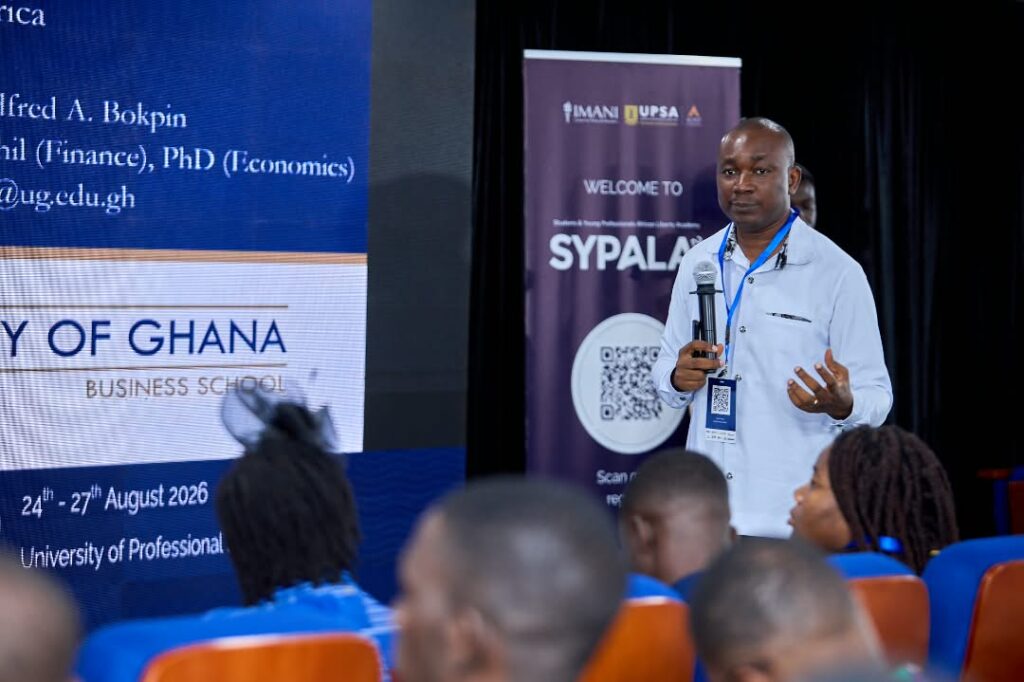
He argued that Ghana’s own educational institutions reveal how far the country remains from an idea-driven culture. He said students rarely attend academic seminars unless attendance carries a personal incentive, either an exam benefit dangled by a lecturer or an appearance that burnishes a political profile.
“You organise a seminar today, maybe at UPSA or University of Ghana, and if you don’t promise ‘Item 13’, students won’t show up,” he said, contrasting that reluctance with the energy he said young people devote instead to courting political leaders.
No Country Has Developed Through Resources Alone
Professor Bokpin’s central economic argument rested on a claim he presented as settled by evidence rather than opinion. “Any growth model that relies extensively on natural resources will never deliver sustainable growth and development,” he said. “No country has actually, through that path, delivered sustainable development for anyone to reference.”
He framed the continent’s continued reliance on resource extraction as both environmentally destructive and an existential threat, arguing that Ghana and Africa more broadly must move deliberately away from that model.
In its place, he called for an idea-generating economy built on innovation and digitisation, one capable of scaling growth by finding better ways to achieve more with less. He said the country has already tested the resource-dependent path for decades without result. “We didn’t get results. Did we get results? No,” he said.
Professor Bokpin turned his critique toward the tone of political engagement he sees among young Ghanaians, particularly on social media.
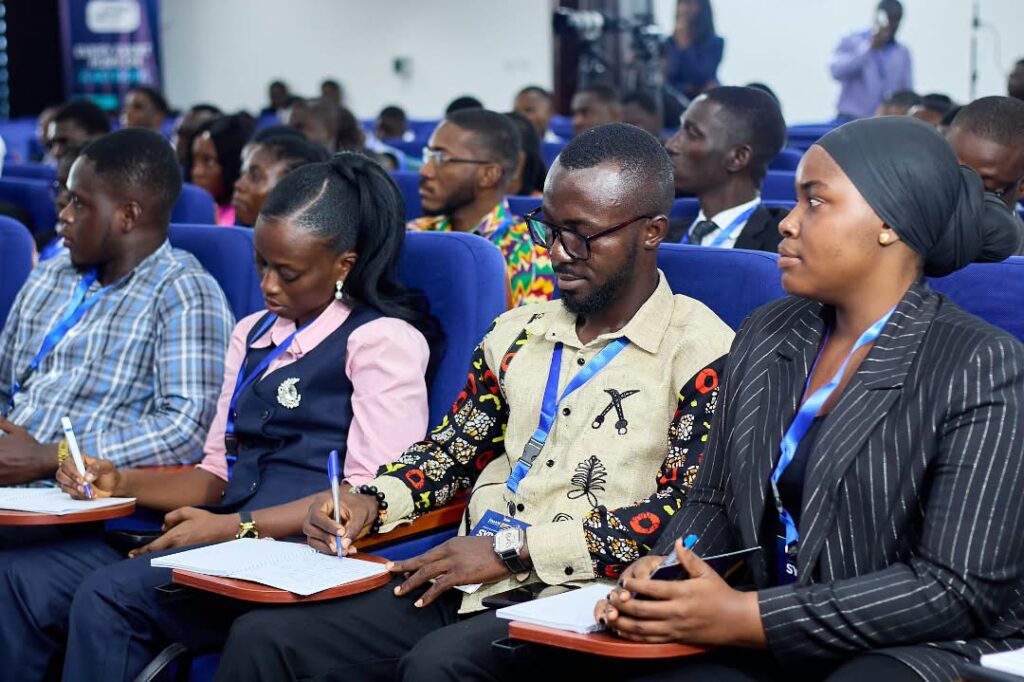
He said the platforms are full of what he called unguarded words, and that some young people appear to believe their political loyalty will be rewarded once their party takes power precisely because of how forcefully they attacked opponents online.
“That will not bring development,” he said, repeating the line for emphasis. He urged the audience to treasure idea generation and ideas-based competition instead, arguing that a change built on insult rather than intellectual contribution serves no one.
The Disciples as a Model for Young Leadership
Professor Bokpin offered a biblical illustration to argue that youth is no barrier to transformative leadership. He noted that while scripture does not state the exact ages of Jesus Christ’s disciples, theologians estimate their average age at between 15 and 25, a range he suggested closely matches the audience before him.
He said Christ spent three and a half years with that group before declaring his work complete at age 33 and a half, confident enough in what he had built with them to step back entirely.
Professor Bokpin used the account to argue that meaningful transformation does not require age or seniority, only conviction and the willingness to invest in people early.
Professor Bokpin closed by pointing to Ghana’s demographic weight as both an opportunity and a responsibility. He said almost 58 per cent of the country’s population is under 30, a figure he presented as a reason for confidence rather than despair.
“The power to transform this country is in your hands,” he said, before delivering his sharpest line of the address: “If you sell your intellectual liberty for the policies of today, you have failed your generation. It doesn’t matter how much money you have made. You have failed.”
READ ALSO: IMANI Boss Blames Policy Indiscipline for Africa’s Weak Economic Resilience