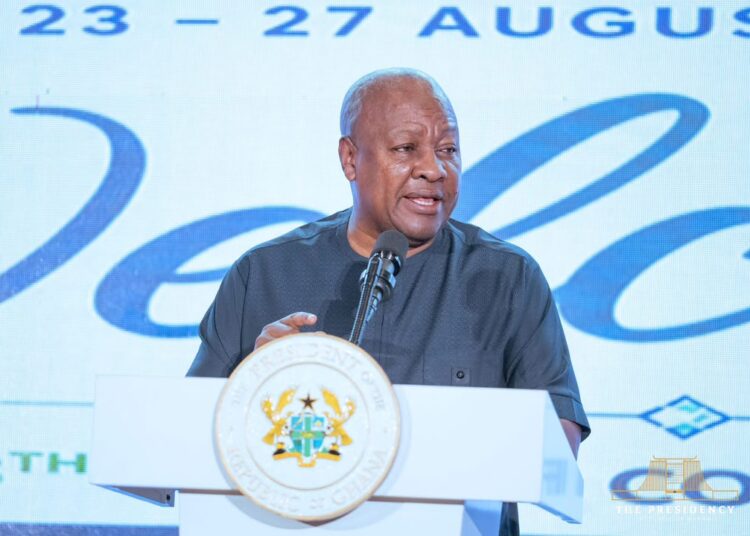
President John Dramani Mahama has called for stronger, more responsive and more collaborative health regulation across Africa, insisting that safeguarding patients and strengthening public confidence in healthcare systems must sit at the core of the continent’s pursuit of universal health coverage.
Delivering the keynote address at the 28th Annual International Conference of the Association of Medical Councils of Africa (AMCOA). the President told delegates that widening access to healthcare, without a parallel commitment to safety and accountability, would leave Africa’s health gains incomplete and vulnerable.
President Mahama challenged the conventional framing of universal health coverage, arguing that access to services is only one dimension of a much broader obligation that governments and regulators owe the public. He said the true test of any health system lies in whether it is also safe, ethical and answerable to the people it serves.
“Universal health coverage is not just about access to healthcare, it must also mean safety, quality, ethics and accountability,”
H. E. President John Dramani Mahama
New Threats Testing Africa’s Regulatory Systems
A significant portion of the President’s speech focused on the shifting risks confronting health regulators across the continent. He identified the rapid expansion of digital health tools and artificial intelligence in clinical care, alongside the continued migration of trained health professionals out of Africa, as forces reshaping how healthcare is delivered and supervised.
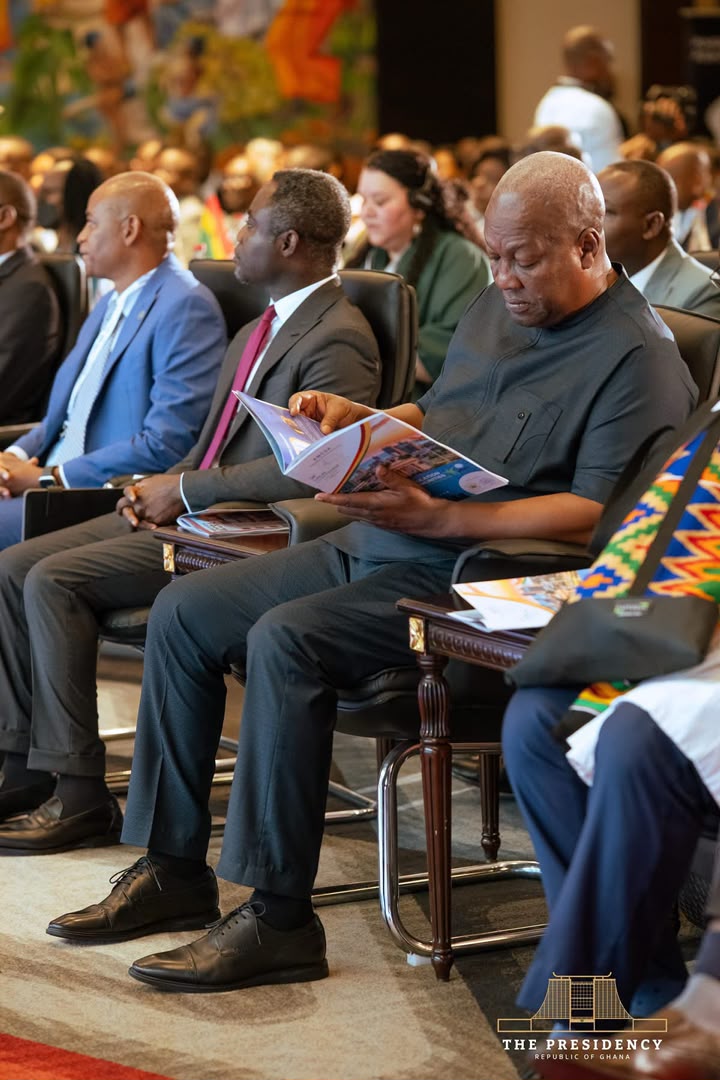
He further pointed to the circulation of forged professional qualifications, the disruptive impact of humanitarian crises in various parts of the continent, and the growing spread of health-related misinformation as threats capable of eroding public trust if left unchecked.
According to the President, these varied challenges share a single underlying demand, regulatory systems built to adapt quickly rather than remain fixed in place.
To meet that demand, he urged African regulators to deepen cross-border cooperation, strengthen the verification of health professionals’ credentials, secure sensitive health data, and design clear frameworks specifically tailored to governing digital health and artificial intelligence.
Addressing the role of artificial intelligence directly, President Mahama was unambiguous about where he believes its limits should be drawn. While acknowledging its potential to strengthen clinical decision-making, he stressed that AI must never be permitted to replace the training, judgement and accountability that only human health professionals can provide.
“Artificial intelligence must support, not replace, the judgement and responsibility of health professionals.”
H. E. President John Dramani Mahama
Ghana’s Health Sector Progress Highlighted
Turning to developments at home, the President updated delegates on Ghana’s own health sector performance, disclosing that the National Health Insurance Scheme (NHIS) currently covers about 76 percent of the population, with government working toward a target of 90 percent coverage.
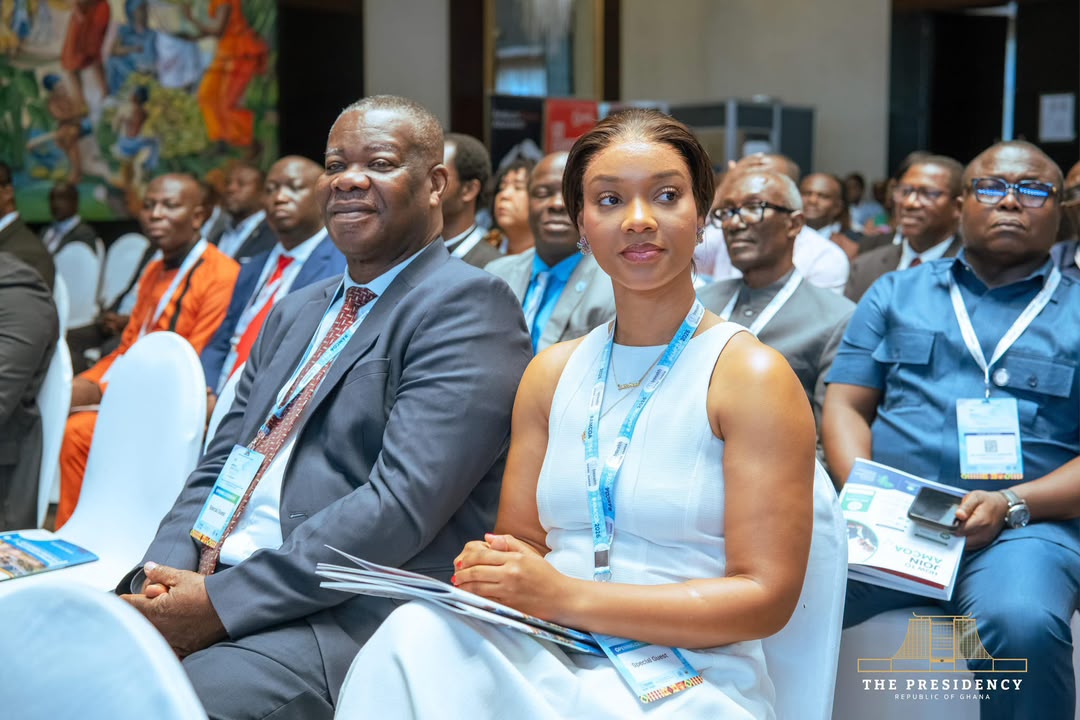
He also cited the ongoing rollout of the Free Primary Healthcare Programme, now active in roughly 160 districts nationwide, as evidence of government’s commitment to removing financial barriers to basic care.
Alongside this, he referenced continuing efforts to expand local pharmaceutical manufacturing capacity, describing it as a strategic step toward reducing Ghana’s dependence on imported medicines and strengthening long-term health security.
Call For African-Owned, Globally Competitive Systems
Closing his address, President Mahama challenged African nations to pursue health systems anchored in three defining qualities at once, rooted in African ownership, competitive by global standards, and unwavering in protecting the public.
“Let us build health systems that are African in ownership, global in quality, and uncompromising in protecting the public,” he said, framing the statement as both a challenge to the delegates before him and a rallying point for the continent’s regulatory community.
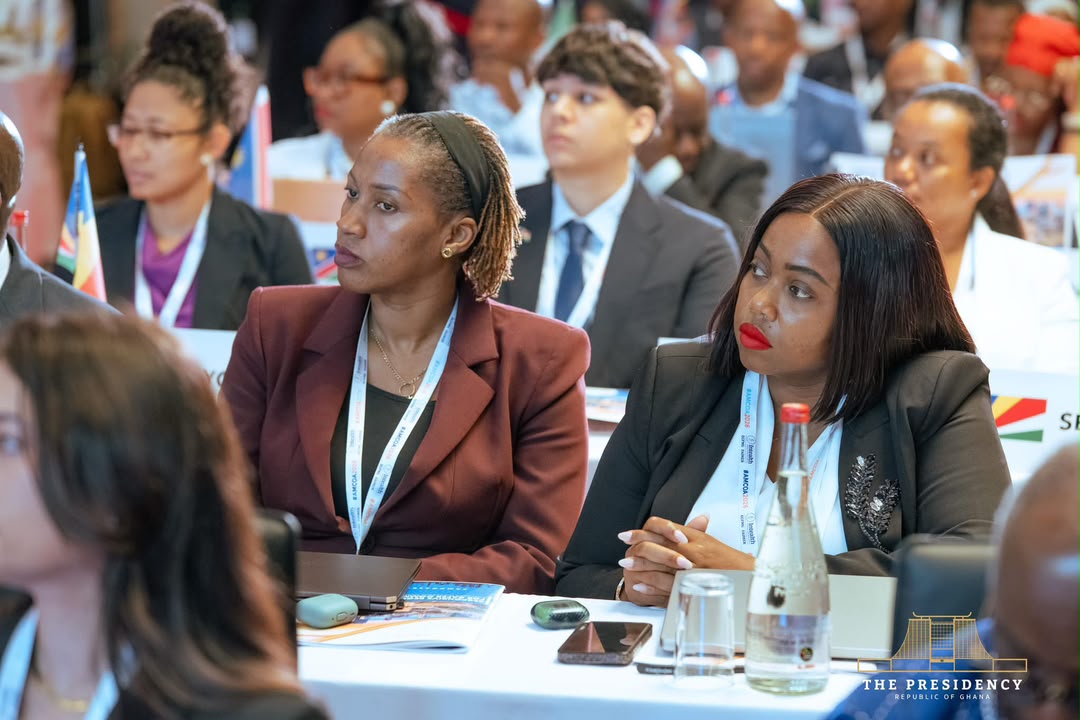
He described the AMCOA conference as a vital platform for translating that vision into practical, enforceable continental standards, before formally declaring the 28th Annual International Conference of the Association of Medical Councils of Africa officially open, marking the start of several days of deliberation among regulators, health professionals and policymakers on the future of medical governance in Africa.
READ MORE: 89% of New HIV/AIDS Infections Occur Among Working-Age Ghanaians