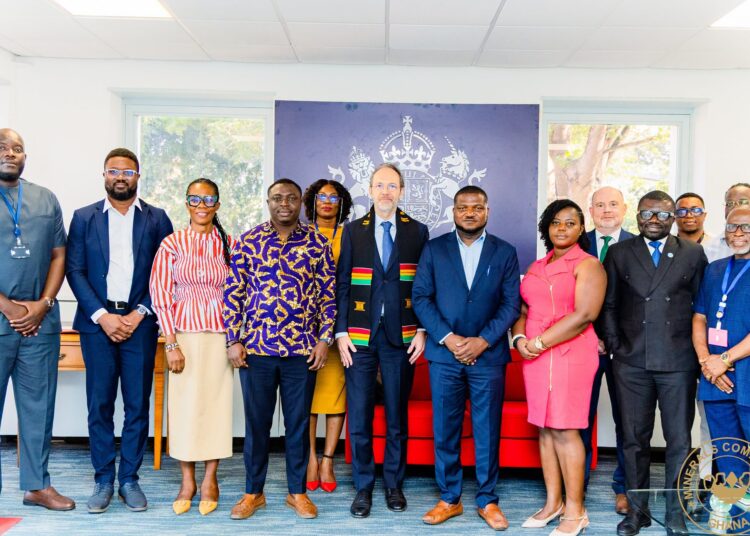
Mr. Isaac Andrews Tandoh, Chief Executive Officer of the Minerals Commission, led a high-level delegation from the Commission on a diplomatic courtesy call to the British High Commission in Accra, initiating a crucial dialogue centered on deepening bilateral economic relations.
The strategic engagement focused primarily on bolstering Ghana–UK cooperation to accelerate responsible, sustainable, and mutually beneficial investments across the nation’s rich mining landscape.
“He further reaffirmed Ghana’s commitment to strengthening trade relations with the United Kingdom and highlighted the Government’s ambition to ensure that, from 2030, only refined gold is exported as part of the country’s broader value-addition and industrialisation agenda. The British High Commission welcomed the regulatory updates and expressed its continued support for responsible and sustainable investment in Ghana’s minerals sector.”
Mr. Isaac Andrews Tandoh
Mr. Tandoh utilized the platform to unveil significant regulatory policy updates, notably highlighting the government’s proposal to trim the tenure of mining leases from 30 to 20 years.
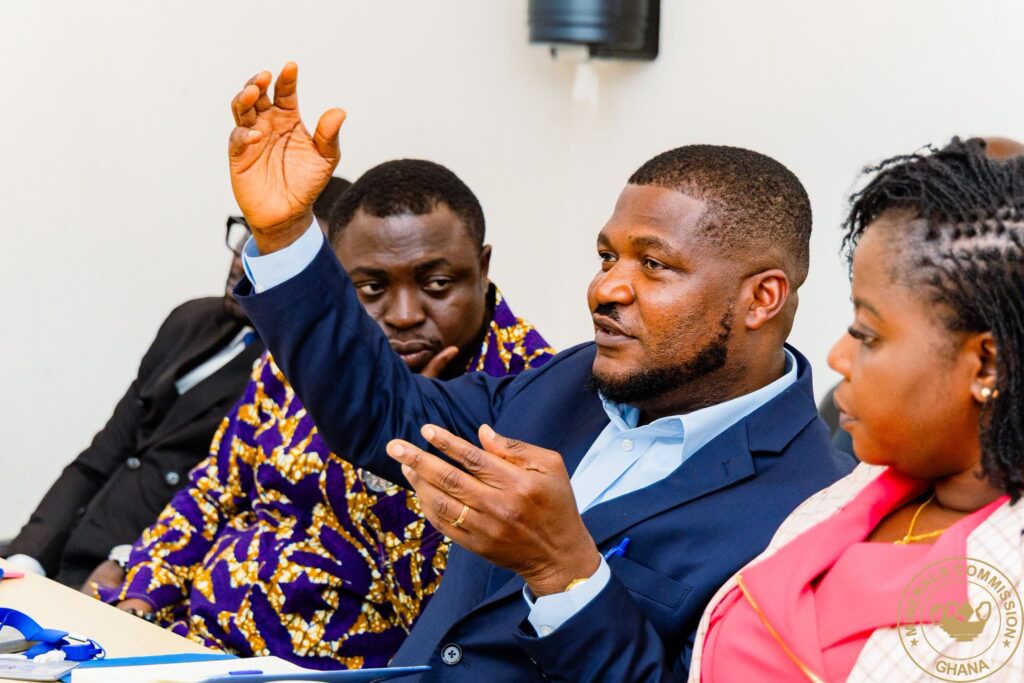
He informed British officials that this fundamental legislative overhaul aims to establish a fit-for-purpose legal architecture designed to safeguard national assets while simultaneously offering investor protection and regulatory predictability.
Furthermore, discussions stressed the expansion of local content mandates and Ghanaian equity participation, underscoring the government’s commitment to ensuring that local businesses, skilled workforce, and host communities capture substantial economic value from mineral extraction.
Modernizing the Governance Framework for Sustainable Growth
The ongoing reform strategy reflects a deliberate shift toward modern extractive sector governance that balances state sovereign rights with private capital requirements.
Restructuring mining lease durations down to two decades represents a dynamic approach to asset management, preventing long-term speculative holdings and encouraging accelerated operational timelines.
According to Mr. Tandoh, “the reform is intended to establish a fit-for-purpose legal framework that safeguards Ghana’s national interests while providing adequate protection and certainty for investors.”

This structural fine-tuning aligns with modern global standards, where regulatory frameworks must remain agile enough to address environmental, social, and governance (ESG) imperatives while offering robust legal guarantees to foreign direct capital.
By placing local participation at the core of these regulatory conversations, Ghana aims to mitigate historic extractive dynamics where resource-rich regions saw limited localized wealth retention.
The Commission’s proactive stance signals to British equity partners that long-term investment viability will depend heavily on genuine community integration, technology transfer, and domestic supply-chain utilization.
Economic Imperatives Driving Strategic Value-Addition by 2030
The drive toward mandatory domestic gold refining by 2030 marks a structural pivot from raw material exportation toward a high-value industrial economy.
For decades, Ghana has operated primarily as an exporter of unrefined bullion, losing substantial revenue margins to international processing hubs.
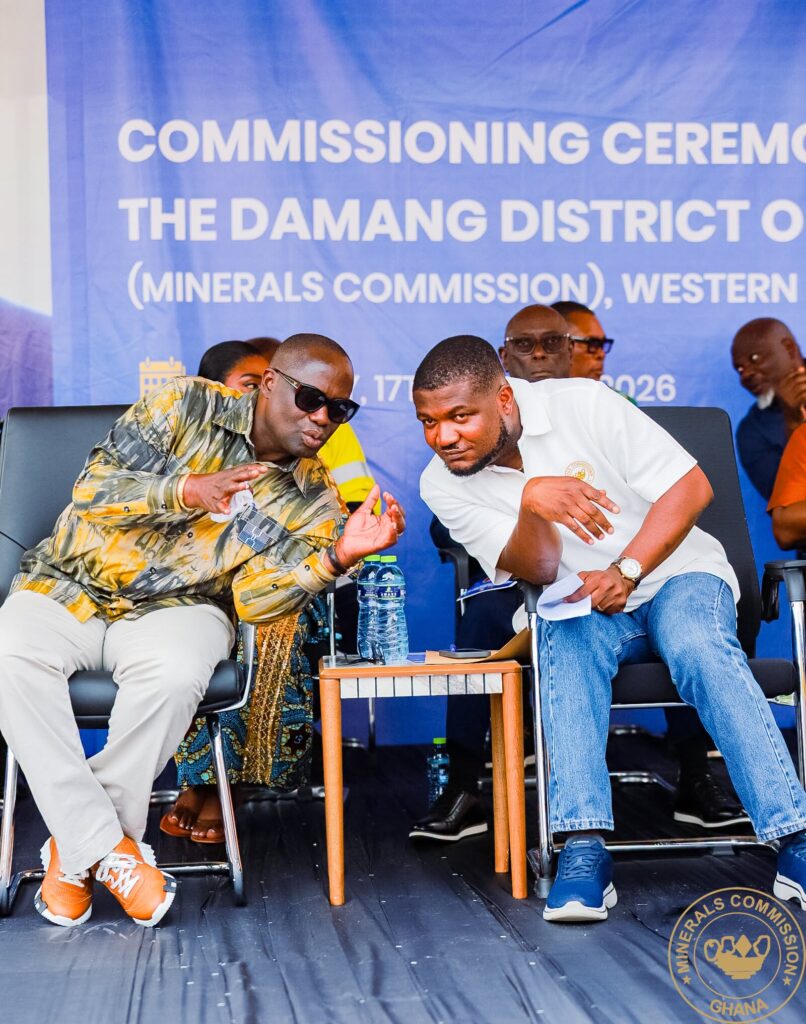
Achieving a full export ban on unrefined gold requires intensive resource mobilization, robust international trade alliances, and world-class technical infrastructure.
Partnering with the United Kingdom a global epicenter for precious metals trading and financial services provides Ghana with direct access to advanced refining tech, international certification frameworks, and institutional liquidity needed to transition up the value chain.
Beyond refining, this bilateral synergy directly supports Ghana’s broader industrialization roadmap.
Transitioning from primary extraction to localized downstream processing generates high-skilled employment, widens the domestic tax base, and insulates the national economy against external commodity price shocks.
Bridging Capital, Technology, and Responsible Resource Governance
The strategic necessity of the Ghana-UK extraction partnership is anchored in the evolving global demand for ethically sourced minerals and green transition metals.
As international markets mandate stringent ESG compliance and supply chain transparency, standard capital investments must be paired with high-level institutional oversight.

The United Kingdom remains a major source of foreign direct investment and technical expertise, making direct diplomatic alignment critical for maintaining capital flows into Ghana’s gold, lithium, and critical mineral deposits.
Conversely, Ghana offers a stable, democratic jurisdiction with rich geological endowments, providing British investors with a reliable supply of ethically governed minerals essential for global industrial and technological supply chains.
By aligning policy frameworks, technical capacity, and commercial interests early, both nations establish a resilient ecosystem capable of driving sustainable economic growth well into the next decade.
READ ALSO: MFWA Boss: Ablakwa Practises in Government What He Preached in Opposition