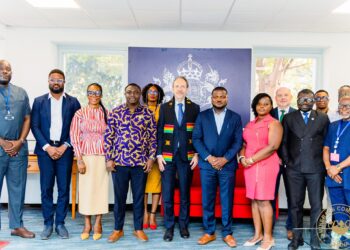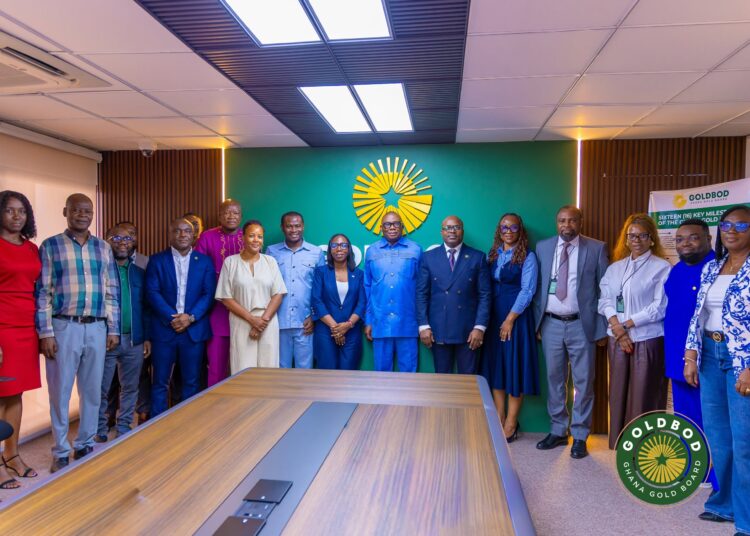
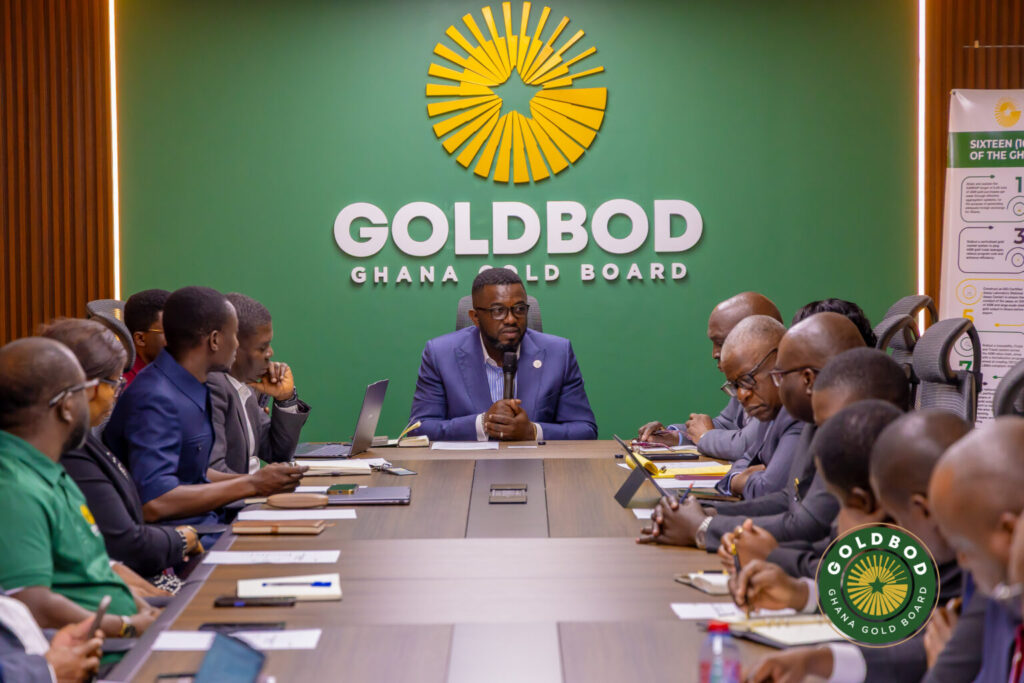
The Ghana Gold Board (GoldBod) has convened a high-level strategic session with the Economic and Organised Crime Office (EOCO) under the auspices of the Ghana-UK Gold Programme to establish a GoldBod-EOCO Operational Collaboration Framework designed to combat gold smuggling, money laundering, and illicit financial flows within the domestic gold sector.
This joint initiative marks a decisive institutional pivot aimed at safeguarding the integrity of Ghana’s precious minerals supply chain while dismantling complex criminal networks that siphon mineral wealth away from the national economy.
“The collaboration reflects a shared commitment by both state institutions to protect the integrity of Ghana’s gold value chain, disrupt criminal networks and ensure that the country derives maximum economic benefit from its gold resources. Through stronger information sharing, coordinated enforcement and institutional cooperation, GoldBod and EOCO seek to build a more transparent, accountable and resilient gold sector.”
Ghana Gold Board (GoldBod)
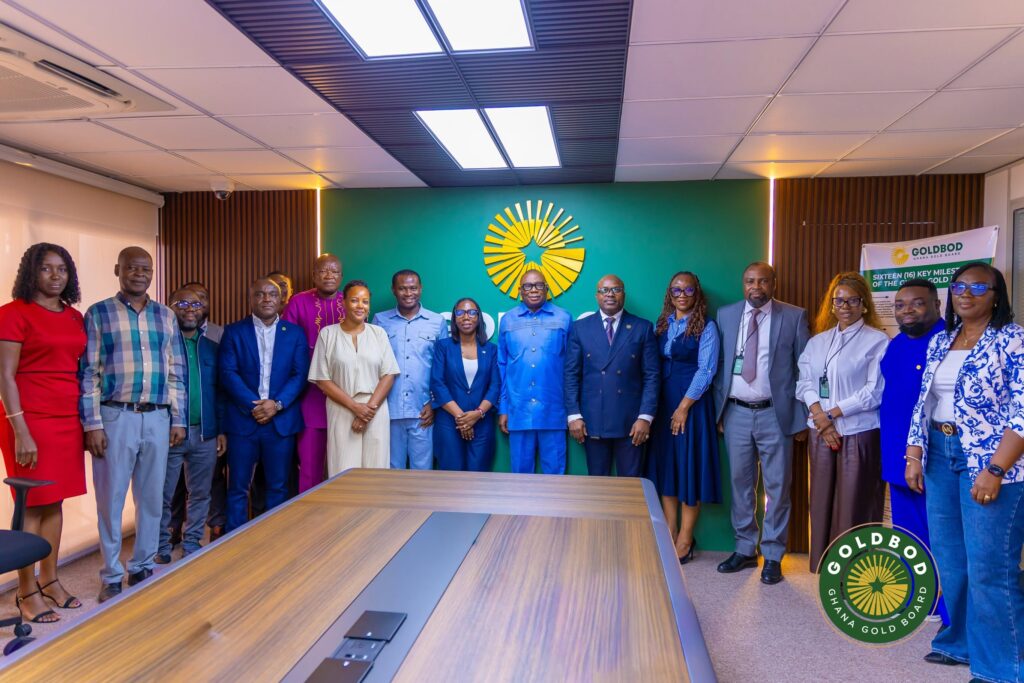
By formalizing this operational mechanism, both state agencies intend to expand their institutional synergy through real-time intelligence exchange, cross-agency enforcement actions, and unified regulatory oversight.
The cooperative agreement establishes a structured pathway for identifying non-compliant actors, tracking suspicious cross-border financial activities, and bolstering the resilience of the local extractive industry.
Through these deliberate enforcement measures, the regulatory bodies seek to enhance structural accountability and ensure that the nation retains the full economic yield and foreign exchange reserves generated by its gold deposits.
Contextual Need for Joint Enforcement Interventions
Ghana’s extractive domain continues to face structural vulnerabilities driven by unrecorded small-scale outputs, illegal trade channels, and sophisticated transnational laundering schemes.
Illegal small-scale mining and unregulated aggregation routes have historically provided ideal coverage for illicit actors attempting to sanitize black-market gold into global trade networks.

As an extractive industry analyst, it is evident that physical containment measures alone cannot solve this issue; effective deterrence requires parallel financial investigations capable of tracking illicit money trails.
Consequently, bridging regulatory oversight with economic crime prosecution addresses a critical gap in the nation’s resource governance agenda, ensuring that illegal mineral movements are traced directly to their financial beneficiaries.
Institutional Framework and Inter-Agency Synergies
The operational framework establishes a multi-layered defence system where GoldBod contributes sector-specific intelligence, trade surveillance data, and regulatory monitoring, while EOCO provides expert investigative capabilities in financial crimes and asset recovery.
This structural division of responsibility eliminates administrative silos that previously allowed criminal entities to exploit jurisdictional gaps between mineral regulators and law enforcement bodies.
Furthermore, support from the Ghana-UK Gold Programme integrates technical assistance and international best practices into the framework, aligning local enforcement standards with global anti-money laundering protocols.
This alignment enhances the domestic tracking of mineral exports while reassuring international off-takers of the legal purity and traceability of Ghanaian gold exports.
Economic Safeguards and Long-Term Value Chain Impact
Reinforcing legal trade corridors directly protects state revenue streams and stabilizes national macroeconomic metrics.
Unchecked gold smuggling undermines foreign exchange earnings, starves the central banking system of necessary reserves, and distorts the local currency valuation.

By cutting off illicit channels and redirecting informal production into formal, fully-traced supply chains, state authorities protect legitimate aggregators, licensed traders, and small-scale miners operating within statutory parameters.
Ultimately, this proactive enforcement partnership establishes a transparent economic ecosystem where Ghana’s gold resources serve as a dependable foundation for sustainable national growth rather than a source of illicit capital flight.
READ ALSO: Ghana Gas Unveils Next-Phase Midstream Investment Projects