The United Nations Environment Programme (UNEP) and the Climate and Clean Air Coalition (CCAC) have found that every US$1 invested in tackling climate change and air pollution together can generate around US$15 in economic benefits, highlighting the substantial financial, health and environmental gains that could be unlocked through integrated action.
According to a new report, the economic returns from addressing climate change and air pollution jointly are greater than those achieved when the two challenges are tackled separately.
The report, Hidden Assets: The Economic and Health Case for Climate and Clean Air Action, is the first comprehensive global economic assessment of integrated climate and clean-air action.
The assessment argues that climate and clean-air policies should not be viewed primarily as costs but as investments capable of generating significant economic and social returns.
The estimated US$15 return for every US$1 invested incorporates both market and non-market benefits, including lower healthcare expenditure, increased labour productivity, avoided physical damage from climate impacts and the economic value of preventing premature deaths and improving quality of life.
The report estimates that the annual economic benefits of implementing 25 identified measures would be equivalent to 2.8% of global GDP by 2035, rising to 4.5% by 2050 and 11.4% by 2100.
By comparison, explicit fossil fuel subsidies accounted for 2.18% of global GDP in 2022, while healthcare expenditure represented 9.3% of global GDP in 2023.
The assessment also warns that delaying action carries a substantial economic cost, with every year of postponed implementation expected to forgo more than US$1.5 trillion in combined market and non-market benefits, equivalent to about 0.5 per cent of global GDP.
Even when non-market welfare benefits are excluded, the measures are estimated to generate around US$4 for every US$1 invested.
According to Inger Andersen, Executive Director of UNEP, “for too long, we have treated climate action as a cost to be managed and air pollution as the unfortunate outcome of development.”

“This report shows the opposite: clean air is a key driver of development, health, food and energy security, and climate stability an asset we must invest in. Proven solutions already exist. What we lack is the decisive leadership from governments, financial institutions, and businesses to deliver them with the speed and coordination this crisis demands.”
Inger Anderson
The findings suggest that the economic benefits of integrated action are often obscured because they accrue across different parts of the economy, including healthcare systems, labour markets and efforts to reduce climate-related damage.
According to Elliott Harris, independent co-chair of the assessment, the scale of the potential returns should make integrated climate and clean-air action an attractive proposition for governments and investors.
“A benefit-cost ratio of 15 to 1 would attract capital instantly in almost any other sector. The only reason it hasn’t on integrated climate and clean air action yet is that the returns are split across health systems, productivity and avoided climate damage rather than landing on a single balance sheet.”
Elliott Harris
He added, “every year of delay costs the world more than USD 1.5 trillion in benefits we will not get back. Finance ministries and investors who keep climate and air quality in separate budget lines are leaving trillions on the table.”
Air Pollution Adds to Global Health and Economic Burden
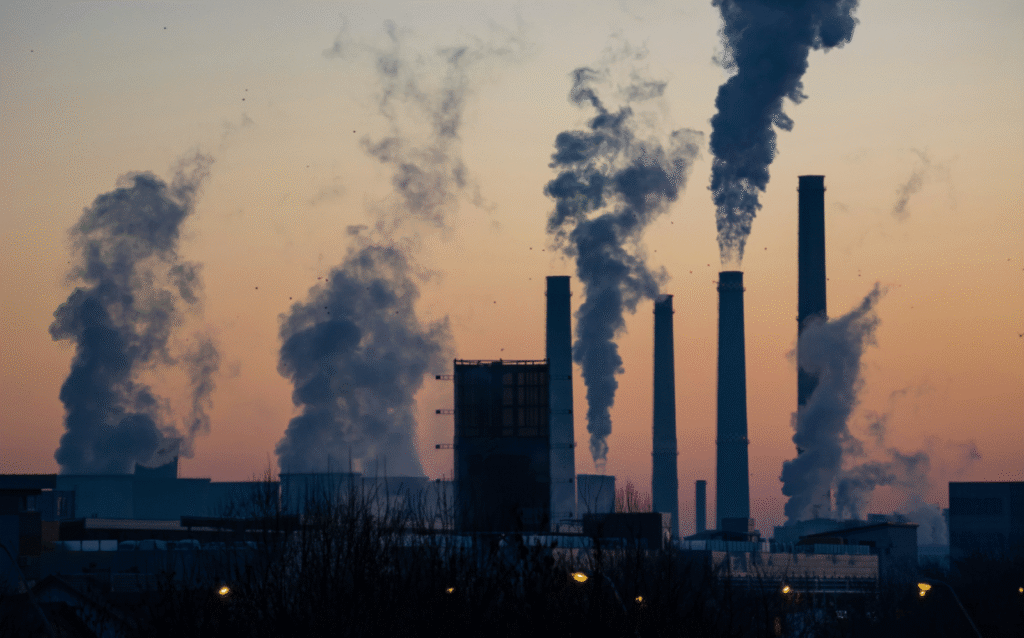
The report’s economic assessment is closely linked to the significant human cost associated with air pollution, which continues to contribute to premature deaths, illness and lost productivity worldwide.
In 2025, exposure to human-caused outdoor air pollution, including PM2.5 and ozone, was linked to an estimated 6.4 million premature deaths globally, while household air pollution contributed to a further two million premature deaths, including around 300,000 children.
Outdoor air pollution is also associated with 5.5 million new cases of childhood asthma and two million new cases of dementia in 2025, alongside millions of cases of heart attack, pulmonary disease, diabetes, stroke and lung cancer.
Unlike previous assessments, the report incorporates the wider economic effects of pollution-related illness, including pressure on health services, productivity losses and impacts on well-being.
The US$15 return therefore extends beyond direct financial gains to include the economic value of healthier lives and fewer premature deaths.
The assessment identifies 25 measures across six sectors that could deliver these benefits, covering energy and fossil fuel systems, industry, transport, agriculture and food systems, residential cooking and heating, and waste management.
The measures include expanding renewable power and energy efficiency, increasing access to clean cooking and heating solutions, strengthening vehicle emissions and efficiency standards, and expanding electric vehicle adoption.
They also include low-sulfur shipping fuels, measures to reduce oil and gas leaks, recovery of associated gas to end routine venting and flaring, improved livestock and manure management, more efficient fertiliser use, improved rice cultivation and alternatives to crop-residue burning.
Better solid waste and wastewater management and the phase-down of hydrofluorocarbons also form part of the proposed package.
By 2050, full implementation of the measures could cumulatively prevent an estimated 144 million air-pollution-related premature deaths, including 96 million from ambient air pollution alone, while also preventing hundreds of millions of cases of chronic disease.
Integrated Measures Can Reduce Global Warming
The assessment also projects significant climate benefits from implementing the 25 measures.
Compared with its baseline scenario, immediate implementation could halve global carbon dioxide emissions by 2050, reduce methane emissions by 60 per cent and cut major air pollutants, including black carbon, sulphur dioxide and nitrogen oxides, by around 70 per cent.
The measures could avoid approximately 0.34°C of global warming by 2050 and 1.4°C by 2100.
Because land temperatures generally rise faster than the global average, the avoided warming in many regions could reach between 1.5°C and 2°C by 2100.
By the end of the century, carbon dioxide emissions under the scenario could become net negative, while major air pollutants could decline by as much as 85 per cent.
According to Simon Dietz, Co-Chair of the Assessment and Professor of Environmental Policy at the London School of Economics, “this report provides the most rigorous evidence yet that treating climate change and air pollution as separate problems causes us to underestimate the benefits of tackling either.”
He added, “when we modelled them together, the returns were larger than each could show alone, because the same sources, sectors and policies so often drive both.”