UK’s decision to impose new measures targeting Israeli settlements in the occupied West Bank represents a significant hardening of its position towards Israel.
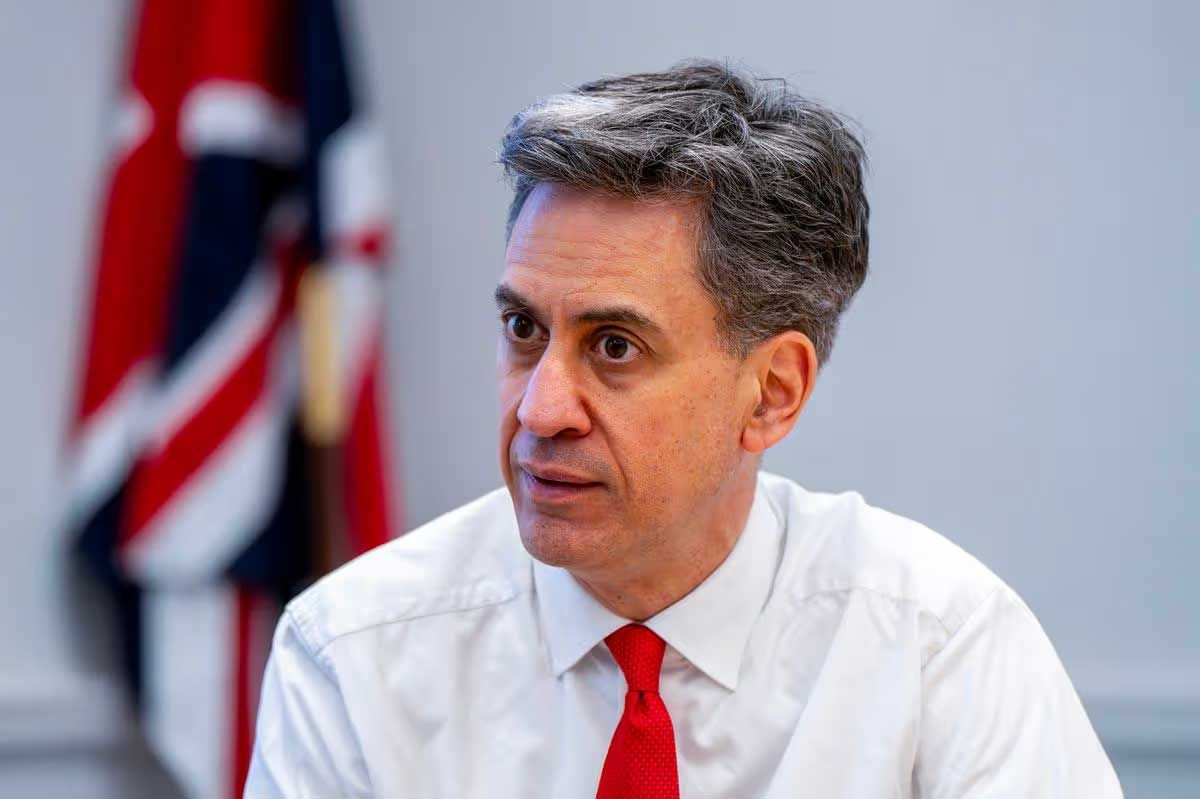
The measures, announced by Foreign Secretary Ed Miliband, are directed specifically at Israeli settlements and the individuals, companies and economic activities that support their expansion.
In an exclusive interview with The Vaultz News, Dr Thom Oliver, Senior Lecturer in Politics at the University of the West of England, Bristol, stated that “UK’s decision represents a significant hardening of its position towards Israel’s conduct in the occupied West Bank.”
“Importantly, these are targeted measures against Israeli settlements and the activities that sustain them, rather than general sanctions against Israel or its population.”
Dr Thom Oliver
Britain has opposed Israeli settlements for decades, maintaining that they violate international law and represent a major obstacle to a negotiated two-state settlement.
What is changing, Dr Oliver argues, is not necessarily Britain’s stated position on settlements but its willingness to attach tangible consequences to it.
The new approach includes banning imports from Israeli settlements, restricting British businesses from financing or providing services to settlement activity, limiting exports that materially support the occupation and imposing sanctions on individuals associated with settler violence.
The British government has also noted that its new powers will allow it to target individuals and companies involved in illegal settlement activity, including the E1 project.
According to Dr Oliver, the significance of the latest action lies less in the volume of trade affected than in the political message it sends.
“The immediate economic impact may be relatively modest because products from the settlements constitute only a small proportion of Israel’s overall trade. The greater significance is therefore political, diplomatic and legal.”
Dr Thom Oliver
He explained that Britain is attempting to establish a clearer distinction between trade with Israel within its internationally recognised borders and economic activity that contributes to an occupation it regards as unlawful.
E1 Becomes a Test of the Two-State Solution

At the centre of the dispute is the E1 settlement project, which has become one of the clearest symbols of the widening disagreement between Britain and the Israeli government.
According to Dr Oliver, “the urgency is partly connected to the proposed E1 settlement development near East Jerusalem.”
“Critics argue that this would divide the West Bank geographically and make a viable, territorially connected Palestinian state increasingly difficult to achieve.”
Dr Thom Oliver
He argues that Britain faces a credibility problem if it continues to endorse a two-state solution while taking no action as the territorial basis for such a settlement is progressively weakened.
“From the British government’s perspective, it is no longer credible to keep endorsing a two-state solution rhetorically while taking no action as the territorial basis for such a solution is steadily eroded.”
Dr Thom Oliver
Israel Retaliates as Diplomatic Relations Deteriorate

According to Dr. Oliver, “Israel’s furious response was predictable, but it is nevertheless consequential”
He warned that Britain’s diplomatic influence could be reduced by Israel’s decision to close the consulate and exclude Britain from certain arrangements involving Gaza, while the suspension of British involvement in training Palestinian Authority personnel could also affect Britain’s practical role in Palestinian institution-building.
Yet he rejected the broader argument that sanctions automatically amount to illegitimate interference.
“Nevertheless, the argument that sanctions constitute illegitimate interference is not entirely convincing. Economic sanctions are an established instrument of foreign policy, and Britain is entitled to determine the conditions under which goods enter its market, and British companies operate abroad.”
Dr Thom Oliver
Economic Pressure Carries Its Own Risks
Despite the political rationale behind the sanctions, Dr Oliver cautioned that the policy is not without risks.
One concern is that some Palestinians depend economically on employment connected to Israeli settlements. A trade ban or restrictions on settlement-linked economic activity could therefore have unintended consequences for Palestinian workers and communities.
According to Dr Oliver, Britain must therefore remain precise about what its measures are intended to target.
“The British government must therefore continue to emphasise that its dispute is with the policies of the Israeli government and violent settlers, not with Israeli citizens or Jewish communities.”
Dr Thom Oliver
He added that, “criticism of Israeli policy must never be allowed to legitimise antisemitism in Britain or elsewhere.”
A New Direction Under Andy Burnham

Moreover, Dr Oliver argues that the sanctions allow Prime Minister Andy Burnham’s government to mark a clearer departure from the caution associated with the previous Labour administration under Keir Starmer.
Similarly, Britain’s measures have been accompanied by action from France, Canada and other countries, indicating that the issue is no longer simply a bilateral disagreement.
He argues that Britain’s credibility as a defender of a rules-based international order could be tested by the extent to which it applies those principles consistently.
“For many countries in the Global South, it is also a test of whether Western governments apply the principles of sovereignty and international law consistently.
“Britain cannot credibly defend a rules-based international order in Ukraine, for example, while appearing unwilling to respond when those principles are violated by an ally.”
Dr Thom Oliver
Dr Oliver therefore characterised the decision as a transition rather than a complete transformation of Britain’s Israel policy.
READ ALSO: Ben Shelton Stuns Alcaraz in US Open Latest-ever Finish to Reach Semis