Ghana’s state-owned enterprise risks are concentrated in a small group of large companies, according to a new International Monetary Fund technical assistance report that puts the ten largest SOEs at about 85% of total sector assets and liabilities.
Aggregate liabilities reached GH¢282 billion in 2024, equivalent to roughly 25% of GDP, after rising from GH¢35 billion, or 19% of GDP, in 2015. The report was published on 9 September 2026, but its accounting evidence is not a snapshot of 2026.
The IMF mission visited Ghana from 24 November to 5 December 2025 and relied mainly on 2023 and 2024 financial information. It therefore diagnoses weaknesses entering the current reform period rather than losses recorded this year.
That diagnosis now sits beside a markedly different 2025 State Ownership Report. SIGA reports that SOEs moved from a GH¢2.25 billion net loss in 2024 to a GH¢19.80 billion net profit after tax in 2025, while revenue rose 28.12% to GH¢176.43 billion.
The rebound matters, but it does not automatically extinguish the liabilities, arrears and foreign-currency exposures identified by the IMF.
Risk Concentrated in a Few Firms
The IMF says SOE assets reached GH¢395 billion in 2024, but liabilities grew faster over the preceding decade. “SOE liabilities have accumulated at a faster pace,” the report says, highlighting why the size and composition of state-company balance sheets matter even when revenue is expanding.
The concentration is equally striking. Ten major SOEs generated almost 80% of total SOE revenue in 2024 but recorded a combined GH¢8.8 billion net loss, more than 90% of aggregate SOE losses. Across the portfolio, net losses reached GH¢9.7 billion, about 0.8% of GDP.
For taxpayers, the risk is practical rather than abstract. When a strategically important SOE cannot meet its obligations, government may ultimately have to inject cash, assume debt, clear arrears or honour guarantees. A weakness on a company balance sheet can therefore migrate onto the public balance sheet.
ECG Remains the Main Pressure Point
The Electricity Company of Ghana dominates the IMF’s risk assessment. ECG carried GH¢71 billion in liabilities in 2024, about 6% of GDP, and recorded a GH¢8.3 billion net loss. The Fund estimates that ECG alone accounted for roughly 85% of aggregate SOE losses that year.
The operating weaknesses are more revealing than the loss alone. ECG’s own assessment, cited by the IMF, indicates that around 40% of electricity placed on its network was effectively unbilled or uncollected because of technical losses, commercial losses and non-metered consumption.
Government payments to independent power producers and related costs on ECG’s behalf totalled about GH¢19.7 billion in 2024, almost half of the company’s reported revenue.
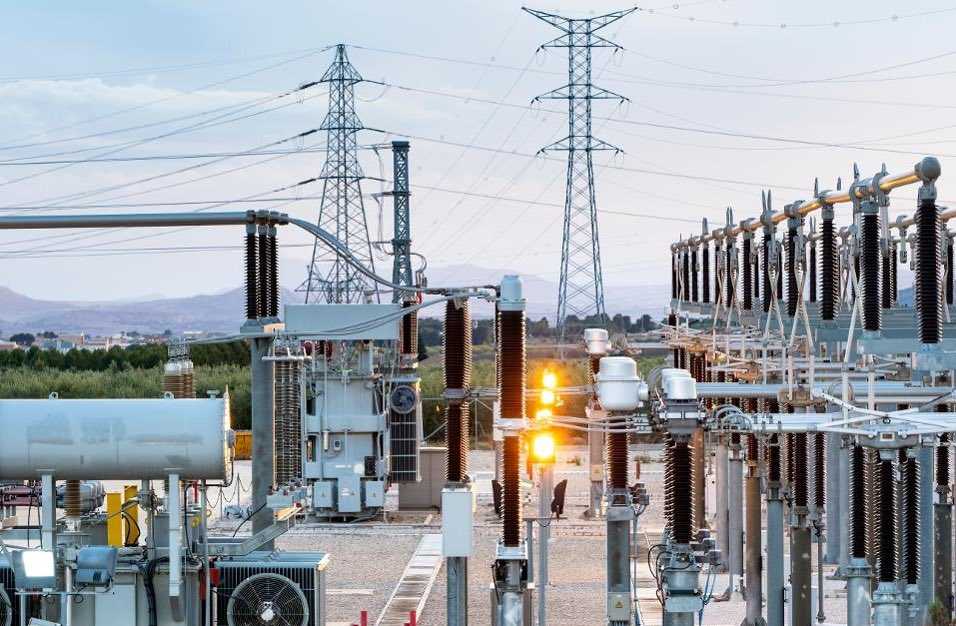
The report says ECG “should be treated as a high-risk SOE within Ghana’s fiscal framework” and calls for a time-bound turnaround plan covering tariffs, loss reduction, collections, debt and arrears restructuring, and governance. That makes the current restructuring of ECG’s operating model a fiscal issue as much as an electricity-sector issue.
Finance Costs Absorb Operating Gains
Financing is another major transmission channel. Aggregate SOE finance costs reached GH¢9.4 billion in 2024, nearly six times earnings before interest and tax of GH¢1.57 billion. Foreign-currency debt and dollar-indexed power contracts also leave large SOEs exposed to exchange-rate movements.
This helps explain why the 2025 turnaround needs careful interpretation. Later SIGA data show about 42.5% decline in consolidated finance costs and GH¢11.72 billion in net exchange gains during 2025. Stronger operating performance may have contributed to the recovery, but more favourable financing and currency conditions also improved the reported result.
The IMF also highlights quasi-fiscal activities, where SOEs carry out public-policy obligations without their full cost being identified or transparently compensated through the budget. Below-cost electricity tariffs, unpaid public-sector bills and commodity-policy obligations can weaken an enterprise while hiding part of the true cost of public policy.
Latest Profit Rebound Does Not Close the File
SIGA’s 2025 profit figures do not invalidate the IMF’s 2024 diagnosis. The newer numbers show substantial improvement, while the IMF identifies exposures that will determine whether it is durable.
GoldBod was not assessed because it was newly established and only six months of abridged financial information were available. The Fund says it should enter regular fiscal-risk assessments as it matures. The IMF report therefore cannot validate or reject GoldBod’s full-year 2025 performance.

Data quality remains another constraint. The IMF found that only 24% to 30% of entities across the different categories met audited financial-statement requirements in 2024. More recent SIGA compliance findings also show gaps in reporting and performance contracting, limiting how quickly fiscal risks can be identified and acted upon.
The 2027 Budget Becomes the Next Test
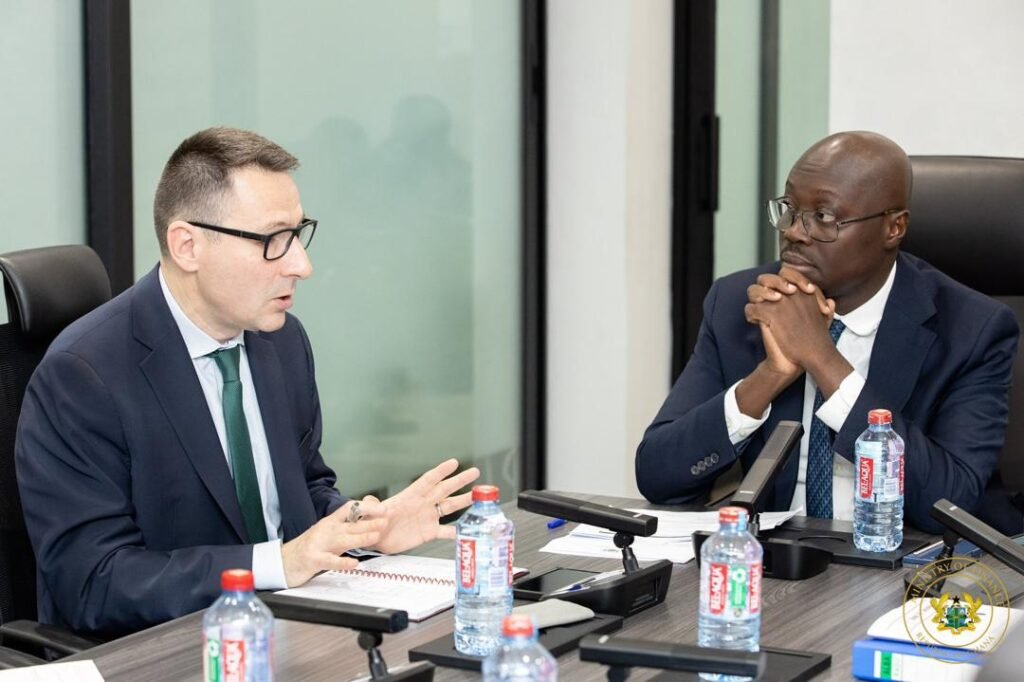
The IMF’s recommendations are immediate. It asks the Ministry of Finance to prioritise analysis of macro-critical and high-risk SOEs and improve reporting of fiscal flows in September 2026. It also calls for forward-looking analysis of key SOEs and a Fiscal Risks Statement that can inform the 2027 budget process by October.
The Fund does identify “positive pockets of performance” in financial services, manufacturing and some smaller enterprises. Its warning is not that every state company is failing. It is that a few large balance sheets carry enough exposure to outweigh improvements elsewhere.
The next measure of progress is whether the Ministry of Finance can identify these exposures early enough to influence guarantees, borrowing, transfers and restructuring before losses become budget costs. That is when stronger SOE performance becomes stronger fiscal management.
READ ALSO: Transaction Report To Shape ECG’s Private Sector Future