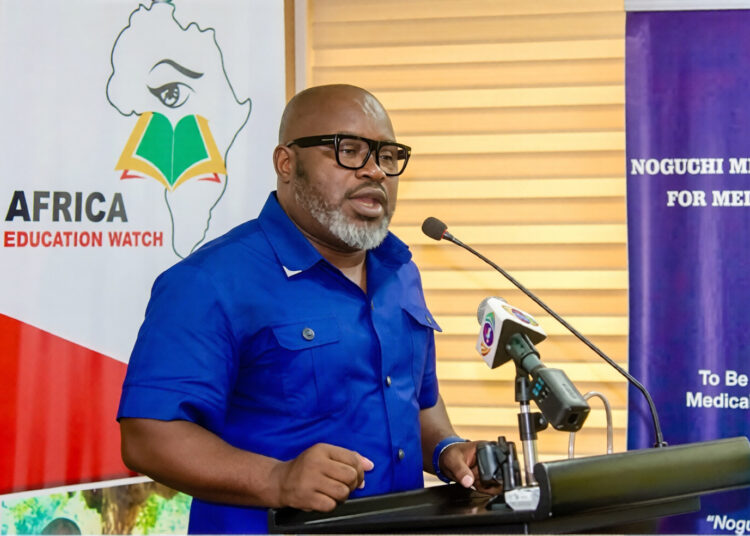
Executive Director of Education Watch, Kofi Asare, has rejected calls to scrap the categorisation system in senior high schools, arguing that removing the system without improving infrastructure would not resolve placement challenges.
Mr Asare explained that some Category C schools struggle to attract students because of inadequate infrastructure, teaching resources and other facilities. However, he contended that changing the classification would not make such schools more attractive if the underlying deficiencies remain unresolved.
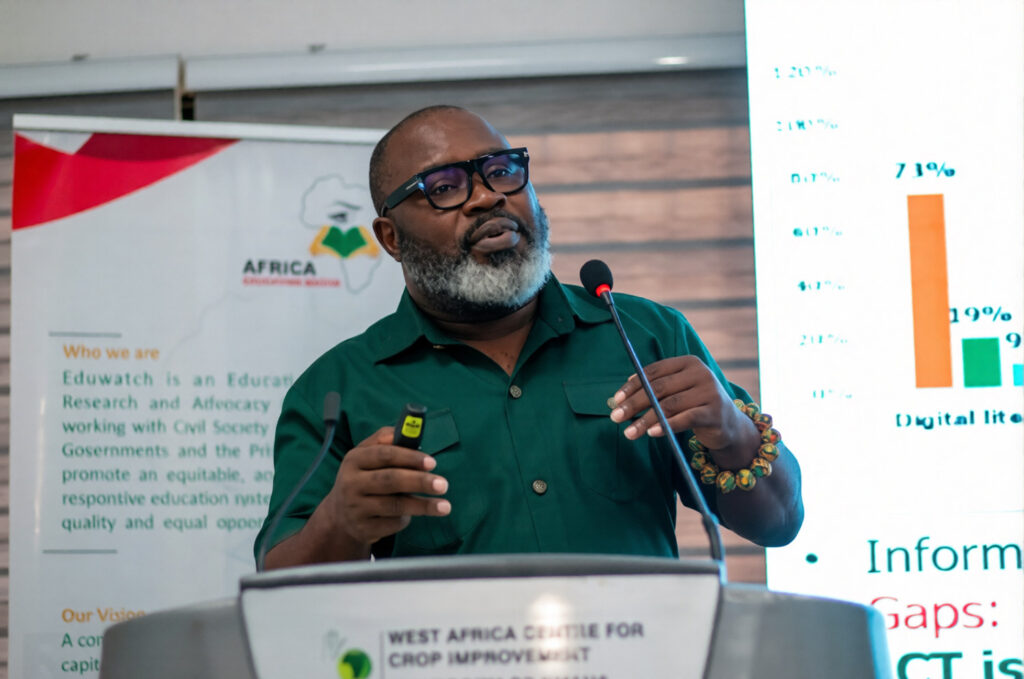
“The solution cannot be scrapping the categorization system. If you scrap the categorization system and a school does not receive an infrastructure upgrade, facilities upgrade, etc. It will still not make a difference.”
Kofi Asare
The Executive Director therefore urged government to sustain efforts to expand and upgrade facilities in lower-category schools. In his view, improving their physical infrastructure and learning environment would gradually reduce the intense demand for Category A institutions.
He noted that about 60 percent of candidates were seeking placement in Category A schools in 2024, even though those institutions had capacity for only about 10 percent of candidates. Currently, he observed, the proportion seeking Category A schools has reduced to about 52 percent, while their capacity has increased to approximately 14 percent.
According to Mr Asare, the improvement has partly resulted from the addition and expansion of some Category A schools. He envisaged that continued investment could eventually move more Category B schools into higher classifications while making Category C schools increasingly attractive.
He cited the rapid rise in demand for STEM schools as evidence that infrastructure and facilities can transform the attractiveness of an institution. Mr Asare recalled that Bosomtwe Girls STEM School could previously be accessed with an aggregate of 32, whereas competition had intensified considerably within two years.
Beyond categorisation, however, the Executive Director questioned Ghana’s continued reliance on boarding education. He described the system as a colonial relic, arguing that modern day schools can provide opportunities for students from different ethnic and religious backgrounds to interact.

Mr Asare therefore maintained that upgrading facilities across schools should take precedence over simply changing their categories. He believes such investment would provide parents and students with more viable options across the placement system.
Day School Placement Rules Need Stronger District Based Controls Now
Education Watch Executive Director, Kofi Asare, also called for stronger controls within the Computerised School Selection and Placement System to prevent students from being assigned day schools outside their districts.
Mr Asare explained that the challenge of placing students in distant schools as day students had previously been addressed through software restrictions. He recalled that before 2021, the system prevented candidates from selecting day schools located beyond a specified distance from their junior high schools.
He gave the example of a student attending Madina Estate Primary School who would previously have been restricted to day schools within 15 kilometres of the junior high school location. According to him, that arrangement worked effectively during the 2022, 2023 and 2024 placement exercises.
The Executive Director, however, noted that the restriction appears to have weakened in recent placement exercises. He indicated that students from locations such as Tefle and those attending Jawkwa Junior High School could now select institutions such as Bosomtwe Girls as day students despite the considerable distance involved.
He acknowledged that candidates and parents can make mistakes during school selection. Nonetheless, Mr Asare argued that the placement system should not leave such decisions entirely to individuals when government has an established policy governing day school placements.
“If there is failure, whether it was caused by people’s indecision or poor choices, it will still come and bite the policy owner.”
Kofi Asare

The Executive Director therefore urged authorities to configure the placement software so that candidates can only select day schools within their districts or an appropriately defined geographical radius. He described the technical solution as straightforward and questioned why the problem continues to affect placements.
Mr Asare linked the issue to the number of students who fail to honour their placements. He noted that only about 82 percent of students placed last year reported to their assigned schools, while approximately 18 percent did not.
He attributed part of the difficulty to minors being assigned to distant locations where they may need to secure hostels or rented accommodation. Mr Asare consequently urged the Education Minister to address the district placement problem decisively to improve the effectiveness of the placement process.
READ ALSO: Ghana Modernises Geological Database to Advance Intelligent Mining Capabilities