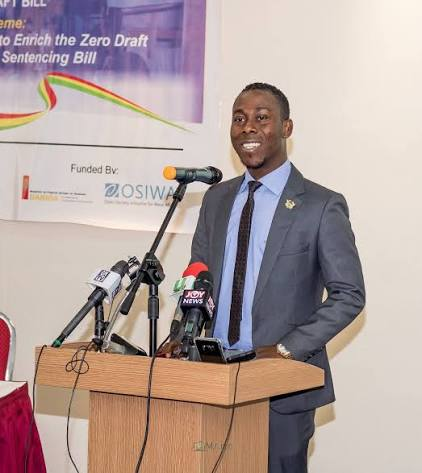
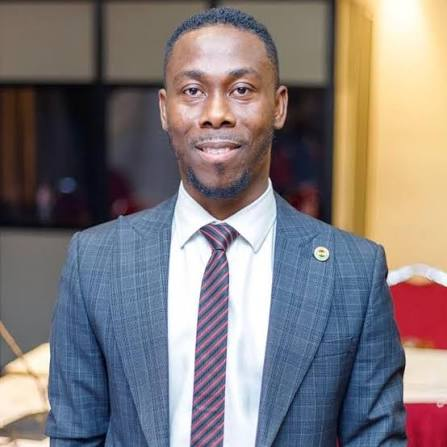
The Founder and Executive Director of POS Foundation, Ghana, Jonathan Osei Owusu, has called for urgent prison health reforms, warning that overcrowding, inadequate healthcare, poor feeding and deteriorating living conditions are undermining the welfare of inmates and prison officers.
Speaking on the health of inmates and conditions in Ghana’s prisons, Mr Owusu urged the state to commit resources to prison facilities, stressing that imprisonment does not strip people of their fundamental human rights. He also called for better support for officers who risk their lives caring for prisoners.
“Imprisonment should never mean the loss of human dignity. Every inmate deserves access to quality healthcare, adequate feeding and humane living conditions. The welfare of prison officers must also be prioritised. How a nation treats its prisoners reflects its values, humanity and commitment to justice.”
Jonathan Osei Owusu
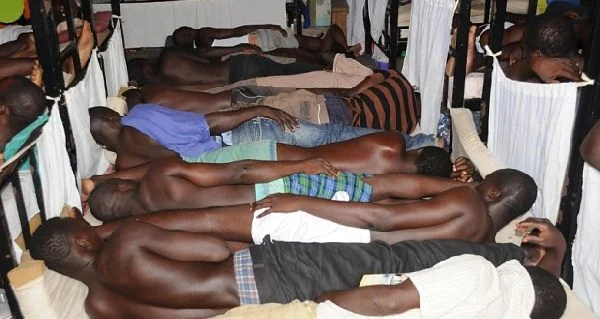
Mr Owusu cited Ankafu Maximum Security Prison, which has an authorised capacity of 850 inmates but currently accommodates about 3,300, according to prison statistics.
He further pointed to overcrowding rates exceeding 200% in some facilities, including prisons in Kumasi and Sunyani. Previous national statistics placed overall overcrowding at around 43 or 32 per cent, but he cautioned that aggregate figures could conceal severe congestion in individual facilities.
The women’s prison, for instance, reportedly has an authorised capacity of about 200 but holds approximately 75 inmates.
Mr Owusu explained that lower occupancy in some facilities could reduce the national average, masking the conditions elsewhere.
Inadequate Feeding Compounds Prisoners’ Welfare Challenges
Mr Owusu questioned whether the increase in the daily feeding allowance from GH¢1.80 to GH¢5 could provide inmates with adequate meals.
He noted that POS Foundation was yet to establish whether the increased amount was reaching the Prisons Service, adding that an investigation was needed to determine whether the government was providing the allocation.
“But what can GH¢5 do for an inmate?” he asked, highlighting concerns about the nutritional value of prison meals.
Inmates without food from visitors may have to depend on prison meals, which he described as unhealthy. Poor nutrition, he warned, could leave prisoners sick and undermine their rehabilitation before they return to society.
Prison Infirmaries Need Medicines and Emergency Support
Beyond feeding and accommodation, Mr Owusu called for improvements in healthcare delivery, particularly the provision of medicines and better-equipped infirmaries.
Drawing on visits under the Justice for All Programme, he described poor sleeping conditions and raised concern that some prisoners fall sick and die in custody. He recounted instances where an inmate scheduled for an interview ahead of a court sitting was later found to have died.
The reported absence of ambulances, if confirmed, would further complicate emergency treatment. Mr Owusu described the situation as a serious concern, insisting that people in custody must receive appropriate medical attention.
Prison Officers Also Face Difficult Living Conditions
Mr Owusu stressed that reforms must also address officers’ welfare because they maintain security and care for inmates under difficult conditions.
He recounted reports of officers carrying bedbugs home from prison patrols and having to fumigate their apartments. The poor condition of officers’ bungalows and shortages of facilities and resources were also raised.
The speaker questioned the practice of blaming officers when jailbreaks occur without adequately equipping them to prevent such incidents. He argued that officers also put their lives at risk while performing their duties.
He also questioned how often public announcements about resources for other security agencies included comparable provisions for prison officers, despite their responsibility for supervising inmates and maintaining order in facilities where overcrowding places both groups at risk every working day.
POS Foundation Calls for Dignity and Prison Reform
Mr Owusu recalled Nelson Mandela’s comments on cruel and inhumane treatment during his visit to Ghana, arguing that the conditions in prisons require renewed national attention.
He maintained that inmates, whether convicted, innocent or awaiting trial, remain entitled to humane treatment. Although certain rights, including conjugal rights, may not be practised in custody, prisoners retain other fundamental rights.
“It is not debatable”. Wontumi is not the only person who has been to prison,” he stated, urging the public to use the discussion to expose conditions affecting inmates and press the state to provide the necessary resources.
Mr Owusu described the situation as an urgent national concern, rather than an issue involving one individual. He called for sustained investment in prison facilities, healthcare, feeding and officers’ welfare to support rehabilitation and prepare inmates to return to society.
“As the saying goes, if you want to see the progress of a nation, look at how it treats its prisoners.”
Jonathan Osei Owusu
He maintained that the treatment of prisoners reflects a country’s values and should concern every citizen.
READ MORE: Gilead Medical Director Warns Late Breast Cancer Diagnosis Reduces Survival