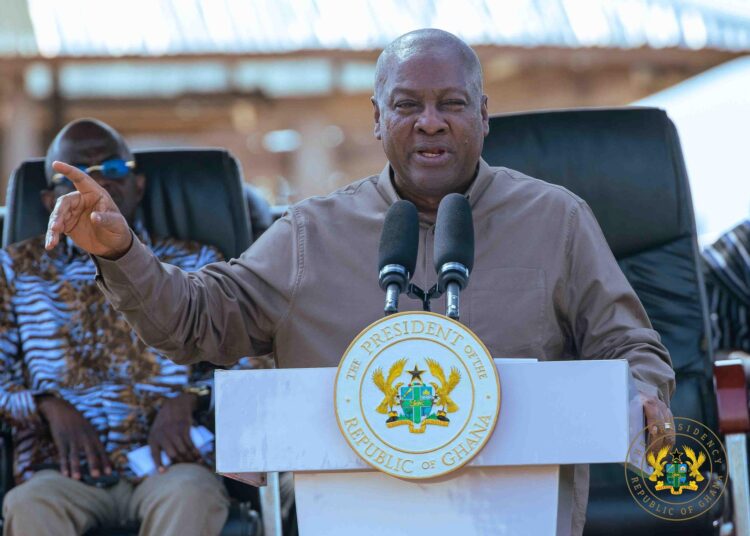
President John Dramani Mahama has ruled out the use of taxpayers’ money to build the National Cathedral, telling citizens during his Reset Tour of the Upper West Region that Ghana’s Christian community is large enough to finance the project on its own.
He said at the same gathering that the forensic audit into the stalled project is complete and now sits with the Attorney-General. The President framed his objection as one of method and siting rather than principle, saying he holds nothing against a national cathedral and is himself a Christian.
His argument is that the community should pay for a facility built for a faith community, and that the chosen site has already cost the state more in demolished property than the project has delivered in construction.
A bill for the faithful, not the Treasury
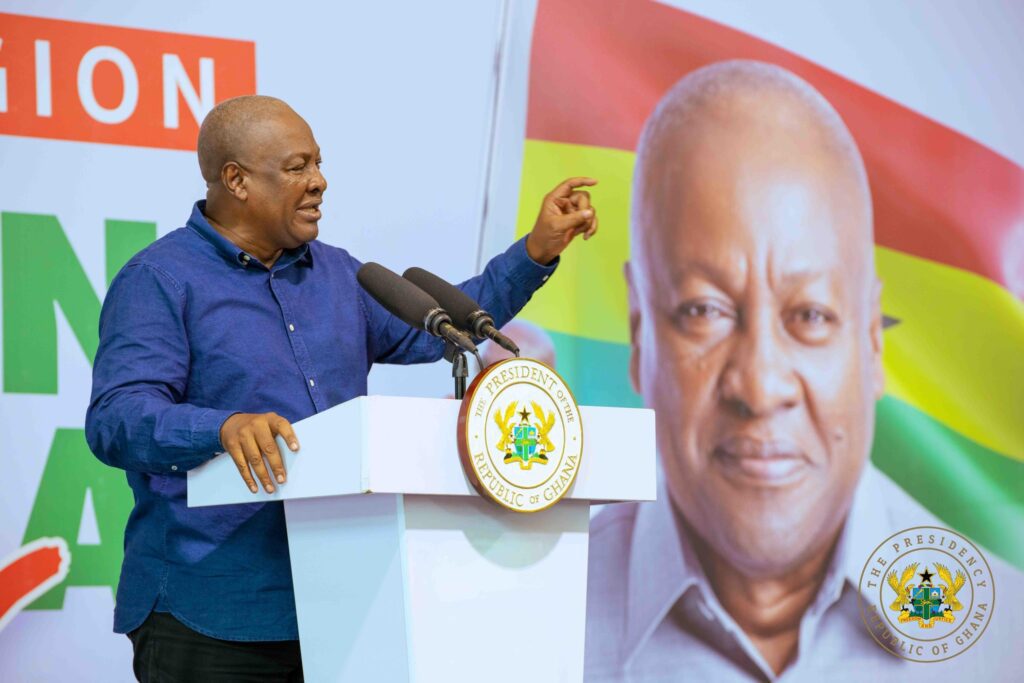
President Mahama put the funding question to his audience as simple arithmetic, asking, “How many Christians are in this country? If we all pay 1,000 cedis each,” the community could raise enough to put up the building.
He pointed to the National Mosque as the model he has in mind. Muslim groups in Ghana approached a Turkish Muslim organisation for support and secured the funding without the state financing construction. Christian groups, in his view, could pursue the same route through their various denominations and through individual giving.
The comparison does useful work for him politically. It lets him decline state funding without appearing to single out Christians, since he can point to a completed place of worship built the way he is proposing.
Why the site still troubles him
The President’s second objection concerns where the cathedral sits. He said the area already carries a heavy concentration of major public institutions, listing Parliament, the International Conference Centre, the Greater Accra Regional Hospital and the National Theatre among facilities in the immediate vicinity.
“My principle has always been that the location has been a problem,” he said. His practical concern is congestion during national occasions. With the stadium nearby and Black Star Square serving as the traditional ceremonial route, adding a structure of that scale would constrict the entire area.
He reserved his sharpest criticism for what clearing the site cost. Ten judges’ residences came down. So did the residence of the Malian Ambassador, which he said has still not been replaced. The old passport office and several other properties were also demolished to make room for a building that was never completed.
Nearly ninety million dollars and an audit with the Attorney-General
The forensic audit President Mahama ordered has now been delivered. He told the gathering it is ready and with the Attorney-General, and that he intends to give a copy to the Christian Council of Ghana so church leaders can examine how the money was spent and agree with government on any corrective action.
He put the sum at almost 90 million dollars. That audit follows an earlier review by Deloitte and Touche covering the National Cathedral Secretariat’s operations between 2021 and 2023, completed in May 2025, which found financial irregularities, breaches of procurement procedure and a general absence of due process.
Government subsequently disclosed a variance of GH¢4,932,091.14 between what the Office of the President recorded paying the architectural firm Sir David Adjaye and Associates and what the firm said it received.
President Mahama dissolved the Cathedral Secretariat in July 2025, backdated to 1 May, and directed the Attorney-General to begin legal steps toward lawfully terminating the contract.
A personal pledge, not national policy
The President has repeatedly committed to continuing projects inherited from the previous administration where they serve the public interest. He drew a line around this one.
The National Cathedral, he argued, never constituted national policy. It began as a personal pledge made by former President Nana Addo Dankwa Akufo-Addo to God, which in his reading, places it outside the category of state commitments a successor government is obliged to honour.
That distinction carries the weight of his whole position. If the cathedral is a private vow, the state has no duty to fund it and Christians who wish to see it built must find the money themselves.
What the Christian Council is now weighing
The church has begun organising its own answer. On Friday, 11 September 2026, the Christian Council of Ghana announced a technical committee drawn from councils representing the various Christian groupings, tasked with examining “the practical dimensions of funding and location” alongside other outstanding questions.
Council Chairman Rev. Enoch Nii Narh Thompson said the committee has one month to complete its work. Its findings go first to Mahama Ayariga, Minister for Local Government, Chieftaincy and Religious Affairs, and then to the President to guide a decision on the project’s future.
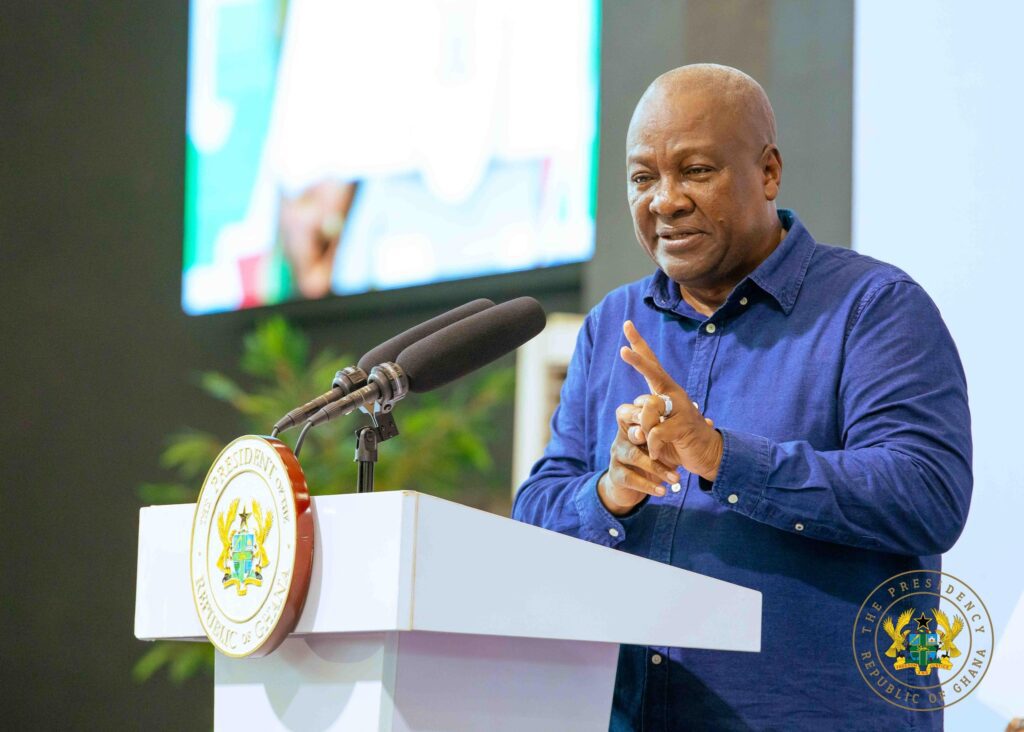
Hon Mahama Ayariga has told church leaders that consensus within the Christian community on location, cost and financing is a precondition for progress, and has indicated he would help mobilise funds if the President wishes the project to proceed.
Whether that consensus materialises within a month is doubtful. The committee must settle a funding model the state has now formally declined to underwrite, reconcile the Council’s own earlier view that the original 400 million dollar estimate was excessive, and take a position on a site the President has said twice in as many years that he does not support.
READ ALSO: IMF Flags Concentrated Fiscal Risks Across Ghana’s Largest SOEs