
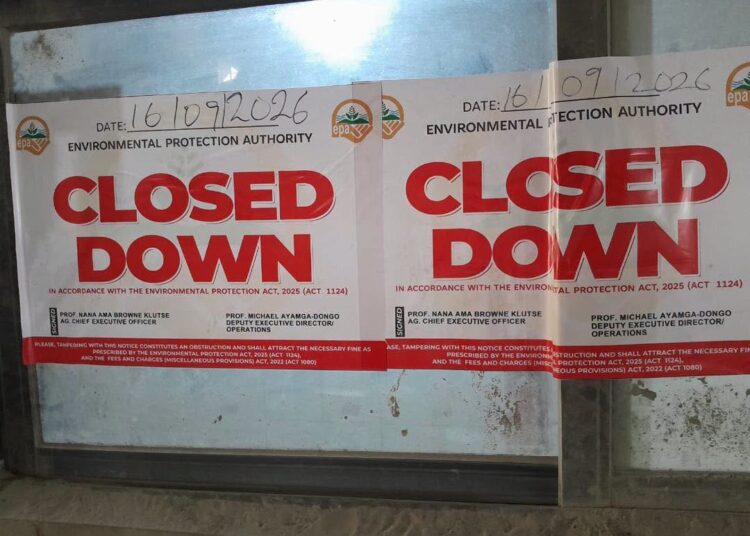
The Environmental Protection Authority (EPA) has ordered Empire Cement Ghana Limited to immediately halt all operations over severe air pollution from its factory at Weija in the Greater Accra Region.
The shutdown notice, which the EPA published on its Facebook page, is dated September 16, 2026, and follows several public complaints about air pollution and nuisance linked to the company’s operations.
The Authority said its investigations uncovered sustained particulate and gaseous emissions, a failure to submit quarterly environmental monitoring returns, and a failure to install modern pollution control systems.
It has directed the cement manufacturer to remain closed until it complies with national environmental standards, addresses the impact of its operations on affected communities, and obtains written clearance from the EPA.
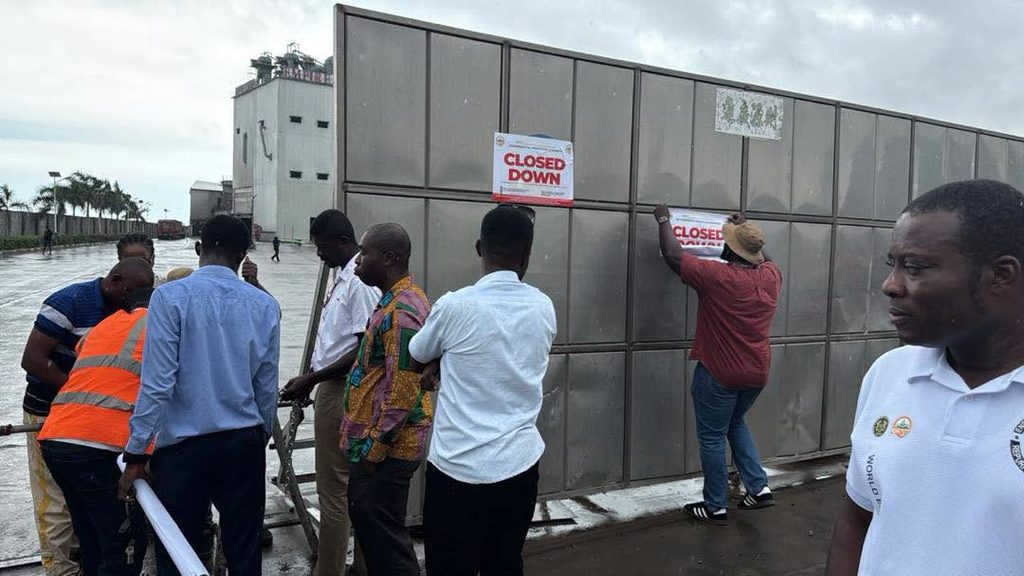
EPA Investigation Uncovers Sustained Emissions at Empire Cement
The EPA launched its probe after residents raised concerns about the quality of air around the facility. According to the regulator, the investigation confirmed that the plant had been releasing particulate matter and gases on a sustained basis.
Reports on the notice indicate the Authority found visible particulate matter, gases and other pollutants coming from the factory, and that it considered these emissions harmful to the environment, adjoining land uses and public health.
Particulate matter from cement production is a known concern for communities living close to such plants, as fine dust can settle on homes, farms and water sources and linger in the air people breathe.
Empire Cement Breached Environmental Permit Conditions
Beyond the emissions, the EPA found that Empire Cement had not kept up with the reporting duties attached to its environmental permit. The company failed to submit its quarterly environmental monitoring returns as required under Condition 9.1 of the permit.

The regulator also cited the firm for ignoring requirements on pollution control. Under its permit, the company was expected to fit modern control systems on all its pollution discharge units to ensure compliance with the Ghana Standard for Environment and Health Protection requirements for ambient air quality and point source or stack emissions, GS 1236:2019.
The EPA said the failure to do so amounted to a breach of Condition 5.1(1)(a) of the environmental permit. Investigators further found problems with the equipment already on site, and the company has been told to bring its existing pollution control systems and auxiliary equipment into good working condition.
Conditions for Empire Cement to Resume Operations
The shutdown takes effect immediately and covers every aspect of the company’s operations. The EPA has made clear that production cannot restart on the company’s own terms.
Empire Cement must first bring its operations in line with national environmental standards. It is also required to deal with the effects its activities have had on nearby communities, and only a written clearance from the EPA will permit it to reopen.
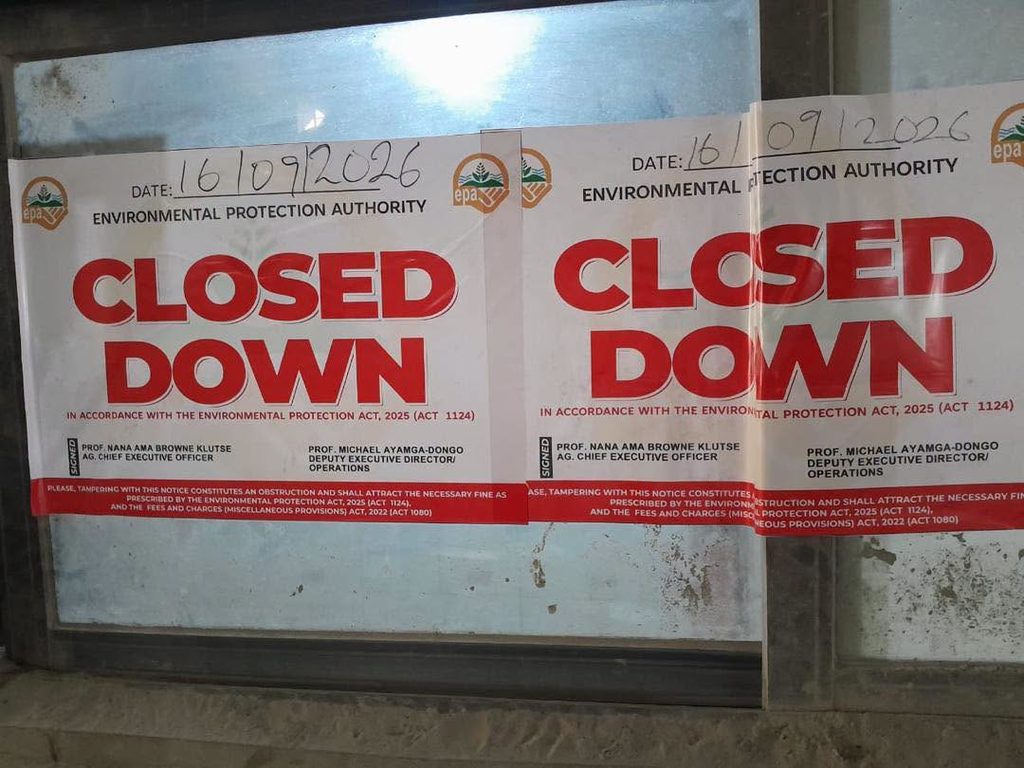
These conditions place the burden on the company to prove that it has corrected the breaches before the regulator reconsiders its position. In its notice, the Authority framed the shutdown as part of a broader push to hold industrial operators accountable. “Environmental compliance is not optional,” the EPA stated.
The regulator added that safeguarding public health and the environment depends on accountability, responsible industrial practices and strict adherence to regulatory requirements. The message suggests the EPA intends to act firmly against companies that treat permit conditions lightly.
Empire Cement’s Long Dispute with Regulators and Residents
This is not the first time Empire Cement has run into trouble with the EPA. In June 2021, the EPA, with support from the Police, closed down the factory at McCarthy Hills in Accra for operating without a permit.
At the time, the company had been given an interim permit by the EPA to manufacture cement paper but went into cement production without approval. Residents have long opposed the project. The McCarthy Hill Residents Association protested against the project, which is sited near the Pambros salt mines enclave, over fears of pollution.
In 2022, the group accused the company of failing to adhere to the EPA’s directive to cease operations. The dispute later reached the courts.
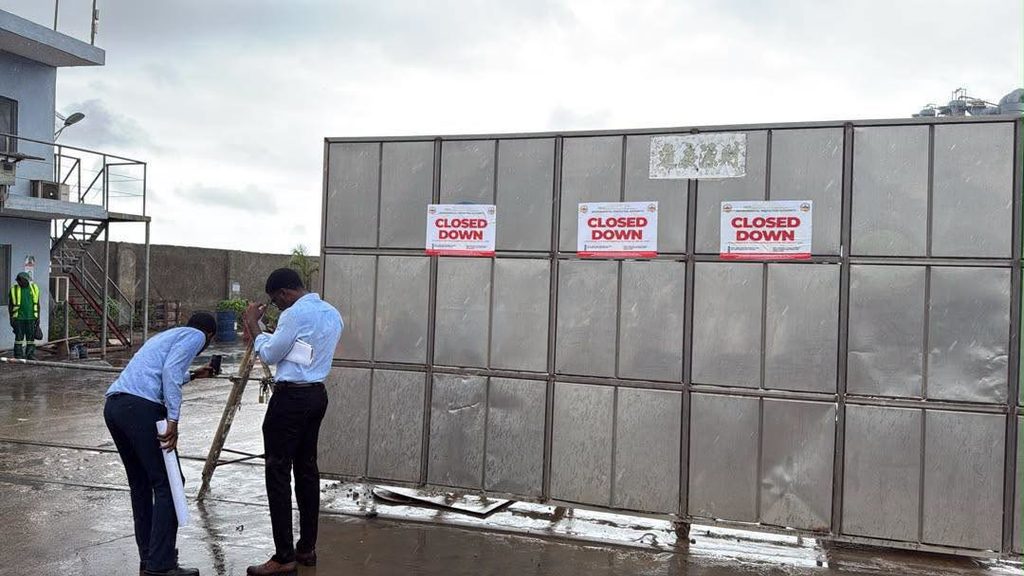
A court presided over by Justice Boampong held that the company had no EPA permit to operate and ordered it to stop operations immediately, with the injunction to remain in force until the final determination of a suit by the residents’ association.
The company has since obtained an environmental permit, which is now at the centre of the latest breaches. For residents who have fought the factory for years, the fresh shutdown will test whether the EPA’s enforcement can finally deliver cleaner air around Weija.