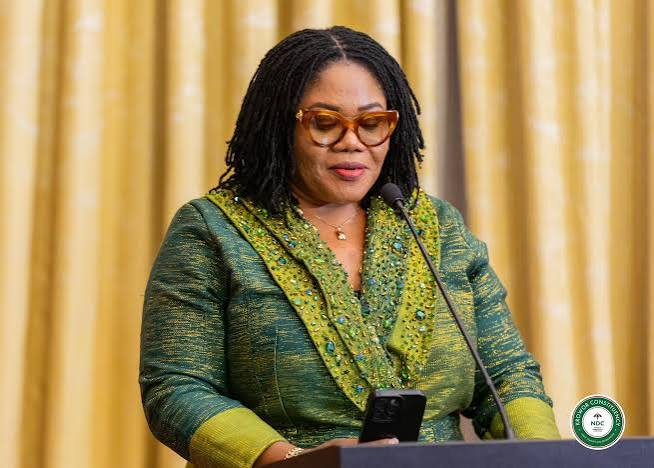
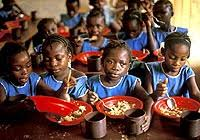
Minister for Gender, Children and Social Protection, Agnes Naa Momo Lartey, has announced that the Ghana School Feeding Programme now reaches over 4.527 million schoolchildren daily, disclosing that government has fully cleared all outstanding caterer arrears from 2024 and settled payments for the first and second terms of the 2025-2026 academic year.
Describing the programme as one of the most visible ways her Ministry touches the lives of Ghanaian schoolchildren, Hon. Lartey said, they have cleared all caterer arrears from 2024 and paid the first and second terms of the 2025-2026 academic year, addressing a longstanding source of frustration for caterers who have historically faced delayed payments under the programme.
Tracing the programme’s financial trajectory, Lartey explained that in 2024, government allocated GH¢1.393 billion to the School Feeding Programme, feeding 4,029,580 pupils at a grant rate of GH¢1.50 per meal.
She noted that in 2025, under President John Dramani Mahama’s administration, the meal grant was increased to GH¢2.00, marking the first such increase in years, backed by a budget of GH¢1.788 billion and reaching 4.23 million pupils nationwide.

2026 Allocation Sees Further Increase
According to the Minister, this year’s allocation has grown further to GH¢1.982 billion, representing a 42 percent increase, while maintaining the grant rate at GH¢2.00 per meal.
She said this expanded funding now allows the programme to reach over 4.527 million children daily, describing the growth as a clear demonstration of government’s sustained commitment to the initiative.
“The Ghana School Feeding Programme remains one of the most visible ways this Ministry touches the lives of Ghana’s school children every single school day,”
Agnes Naa Momo Lartey
Beyond funding and payment figures, Lartey disclosed that the Ministry has substantially scaled up its compliance monitoring efforts under the programme, expanding coverage from 4,490 schools in 2025 to 8,270 schools in 2026.
This near-doubling of monitored schools suggests a deliberate push to strengthen oversight and accountability across a much wider network of participating institutions.
Training For Caterers and Head Cooks
The Minister further revealed that the Ministry has trained 20,171 caterers and head cooks in practical nutrition standards, an initiative aimed at improving the quality and nutritional value of meals served to schoolchildren under the programme.
This training component reflects a broader effort to ensure that expanded funding and reach are matched by consistent quality standards at the point of meal preparation.
Taken together, the figures presented by the Minister paint a picture of a programme experiencing consistent year-on-year growth in both financial commitment and beneficiary reach since 2024.
The clearing of caterer arrears, in particular, addresses a recurring point of tension within the programme, as delayed payments have historically strained relationships between government and the caterers responsible for daily meal preparation across thousands of schools nationwide.
Addressing A Historical Pain Point
The confirmation that all 2024 arrears have been cleared, alongside payments for two terms of the current academic year, signals a deliberate effort by government to stabilise the financial relationship between the Ministry and caterers, many of whom rely on timely payments to sustain their operations and continue purchasing food supplies for daily meal preparation.
With compliance monitoring now extended to nearly double the number of schools previously covered, and caterer training programmes actively underway, attention will likely turn to how consistently these improvements translate into reliable meal delivery and sustained payment timelines going forward.

The steady increase in both funding allocation and meal grant value over consecutive years suggests that the Ghana School Feeding Programme remains a continued policy priority, with its expanding reach to over 4.5 million children daily reinforcing its position as one of the government’s most extensive social intervention programmes currently in operation.
READ MORE: TTAG Calls for Transparent Framework on Teacher Recruitment