
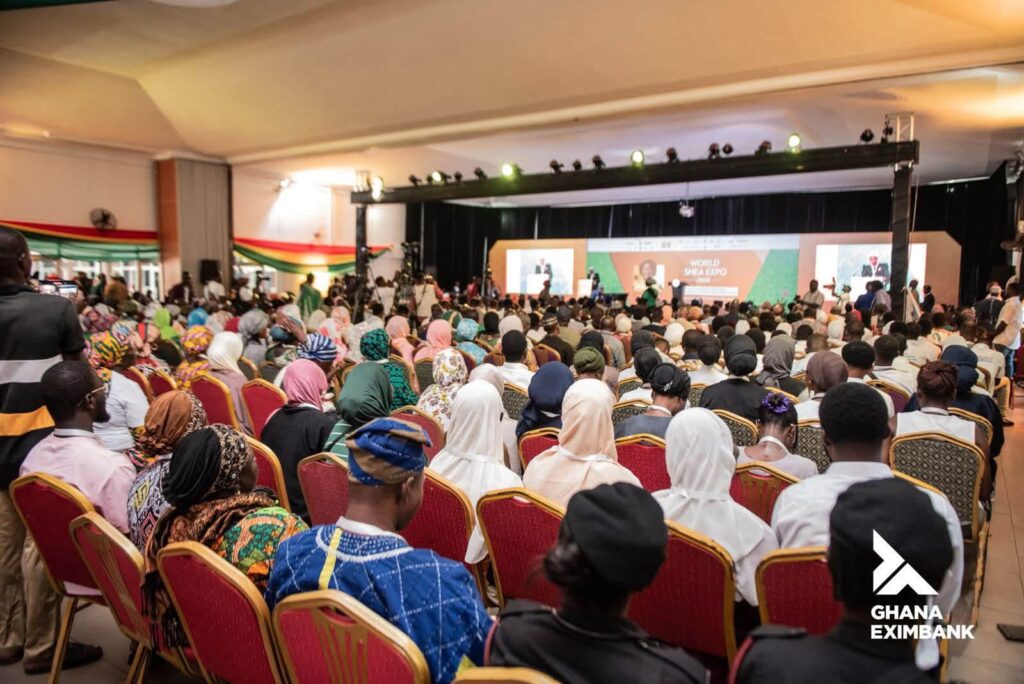
Vice President Prof. Jane Naana Opoku-Agyemang, officially opens the World Shea Expo 2026, says Ghana must stop exporting raw shea nuts and importing finished products made from the same resource.
She declares, “Ghana Must Stop Exporting Raw Shea and Importing Finished Products,” at the ongoing World Shea Expo 2026, in Tamale. A call for a major shift in Ghana’s shea industry towards local processing, product development and indigenous business growth.
Speaking at the opening, on the theme: ‘’ From Local Commodity to Global Brand: Accelerating Women and Youth- Led Value Addition in Shea.’’
The Vice President emphasizes the need to ensure that women, who play a significant role across the shea value chain, receive a fair share of the value they help create.
“Women need to benefit more from the value they create. Addressing this imbalance is not only a matter of equity, but essential for improving productivity and ensuring the sector’s long-term sustainability.”
H.E. Prof Opoku-Agyemang
Prof. Opoku-Agyemang notes that in Ghana alone, hundreds of thousands of women are engaged in shea activities, particularly in the northern part of the country. Shea trees are part of everyday life, providing food and income and contributing to exports.
“In Ghana alone, hundreds of thousands of women are engaged in shea activities, particularly in the northern part of our country. Shea trees are part of everyday life, providing food and income and contributing to exports.”
H.E. Prof Opoku-Agyemang
She says her visit to the Expo is preceded by a tour of Nuts for Growth Limited, a woman-led shea enterprise working with thousands of women across the value chain.
She inspects the company’s laboratories and processing facilities and says the range of products developed from shea demonstrates the potential for greater value addition in Ghana.
“This is Precisely the Kind of Transformation We Need,” she says, stressing the need to move beyond the export of raw materials. The Vice President says Africa leaves significant revenue on the table by shipping out unprocessed material instead of capturing the value that refining and manufacturing add to the product.
The Global Demand for Shea
Global demand for shea continues to expand as the food, confectionery, and cosmetics industries increase their use of shea derivatives. “Global demand for shea continues to expand as the food, confectionery, and cosmetics industries increase their use of shea derivatives.”
She says, urging governments across the continent to design policies that transform their countries from raw material suppliers into exporters of finished and semi-finished shea goods.
“Transforming shea kernels into butter and then into ingredients for the food and cosmetics sectors enables our countries to add more value, generate more jobs, and strengthen rural economies.”
H.E. Prof Opoku-Agyemang
As global demand for shea continues to rise, Ghana must be deliberate in capturing greater value through processing, innovation, and expanded market access,” she says.
She links the shea sector to Ghana’s 24-hour economic policy and government’s Reset Agenda, initiatives aimed at sustaining productivity through continuous production, processing, and trade across key industries.
24-Hour Economy and Accelerated Development a Vital Role in Productivity
She says the 24-hour economy policy will play a vital role in boosting productivity, creating jobs, and strengthening value chains within the sector. She also emphasizes the need for sustainability, calling for the protection of shea parklands, improved soil fertility, and enhanced support for farmers within the savannah ecological zones.
“Protecting them is both an economic necessity and an environmental responsibility,” she says, describing shea parklands as unique agroforestry systems that support biodiversity, improve soil fertility and enhance climate resilience across the savannah.
She stresses that sustainable management is key to meeting rising global demand while preserving environmental integrity.
“By increasing local mobilisation and encouraging investment in processing, we create more jobs for women and young people while ensuring that the greater share of the value generated by this industry remains within our economies.”
H.E. Opoku-Agyemang
The Vice President also cites evidence from Nigeria, where a government moratorium on the export of raw shea nuts has produced measurable results, lifting farm-gate prices, expanding domestic processing capacity, and attracting growing interest from international buyers seeking local processing partnerships.
She expresses optimism that deliberations at the World Shea Expo 2026 will yield practical solutions and foster stronger partnerships to drive the next phase of growth in the sector.
Ghana EXIM a Key Partner in Ghanaian Businesses
As a key partner, Ghana EXIM Bank continues to support the sector through financing and technical assistance for value addition, processing, branding and market access, helping Ghanaian businesses scale and compete.
The Bank’s interventions are supporting women-led cooperatives and SMEs to upgrade from traditional processing to industrial scale operations capable of meeting international quality standards for cosmetics and food markets.
The Expo, which brings together stakeholders from across the 21 shea-producing regions and international buyers, features exhibitions of shea butter, cosmetics, food products, machinery, packaging solutions and financial services.
Sessions focus on investment opportunities, quality standards, climate-smart parkland management, and youth entrepreneurship in the shea value chain. The three-day event is expected to generate new offtake agreements, investment pledges and policy recommendations to accelerate women and youth-led value addition, positioning Tamale as the hub of Ghana’s shea industrialization drive.
READ ALSO:BOSTenergies Takes Ghana’s Electrification Agenda To Gastech