Government’s planned engagement with the Public Utilities Workers Union (PUWU) over proposed private-sector participation in the Electricity Company of Ghana (ECG) and Northern Electricity Distribution Company (NEDCo) has reopened a central question in Ghana’s power-sector reform: whether recent improvements in ECG’s finances are strong enough to justify continued public-sector-led restructuring, or whether deeper private participation is still required.
The consultation scheduled for Monday, September 28, gives PUWU an opportunity to formally present alternatives to the proposed arrangement. The union argues that stronger revenue mobilisation shows ECG can improve through internal reforms, investment and tighter management rather than a broader private operating role.
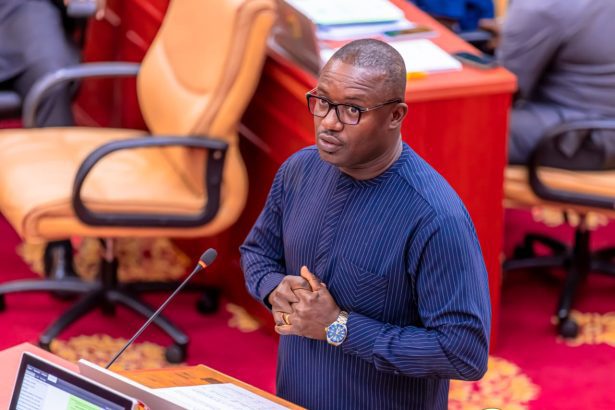
Government says the process remains open and the transaction adviser must hear workers and other stakeholders before recommendations are submitted. Deputy Energy Minister Richard Gyan-Mensah told an interviewer that workers “will be involved all through the process; they will not be left out.”
The economics go well beyond ownership. ECG sits at the cash-collection end of a power system in which weak collections, distribution losses, expensive generation contracts and investment needs can eventually become fiscal obligations.
Ghana therefore faces a reform choice with implications for electricity reliability, business costs and public expenditure. The key test is whether the chosen model can convert electricity supplied into sufficient cash, reduce losses and limit repeated government support. PUWU’s earlier homegrown reform argument provides part of the context for Monday’s talks.
Revenue Gains Have Not Closed the Gap
ECG’s 2025 accounts show a substantial improvement. Revenue rose 16.2% to GH¢22.109 billion, while loss after tax narrowed to GH¢2.521 billion from GH¢8.256 billion in 2024. The turnaround strengthens the argument that operational reform can produce results before a new management structure is introduced.
Yet recent monthly figures show that the utility has not reached financial balance. Gyan-Mensah said on September 25 that ECG was averaging about GH¢1.8 billion in monthly collections, around GH¢700 million below an approximately GH¢2.5 billion benchmark previously used for meeting obligations. Government is now working with a higher monthly requirement of roughly GH¢2.9 billion.
Higher collections improve liquidity, but a utility remains vulnerable if cash receipts repeatedly fall short of power purchases, transmission, operations and network investment. This is why the earlier debate over ECG’s private-sector future has increasingly shifted from ownership to the durability of its revenue-recovery model.
Fiscal Exposure Still Runs Into Billions
The wider energy-sector numbers remain difficult. The International Monetary Fund estimates the sector’s 2026 financing shortfall at about US$1.1 billion, comprising an estimated US$925 million power-sector gap and US$178 million gas-sector gap. It also reports that net payables to independent power producers and fuel suppliers fell from US$2.1 billion at end-2024 to US$1.7 billion by end-March 2026.
Government’s 2026 Budget allocates GH¢15.2 billion for energy-sector shortfall payments and another GH¢4.8 billion for legacy IPP debt. Those allocations demonstrate why electricity reform is a public-finance issue. Resources used to cover recurrent sector gaps compete with infrastructure, health, education and other priorities.
The improvement is nevertheless real. The IMF says the sector shortfall declined from US$1.6 billion in 2024 to US$1.4 billion in 2025 as tariff adjustments, better ECG collections, stronger payments through the Cash Waterfall Mechanism, cedi appreciation and reduced reliance on liquid fuels eased pressure. The challenge is to convert that progress into a structurally lower fiscal burden.
Private Participation Must Solve More Than Collections
Private participation will add economic value only if it tackles the underlying sources of the gap rather than merely changing who performs billing or revenue collection. PUWU says private firms already participate in parts of ECG’s operations, including software, meter installation and new service connections.
A successful reform model therefore needs measurable targets for collection efficiency, technical and commercial losses, network investment, service quality and payment discipline. It must also allocate risk clearly enough to prevent future liabilities from returning to the state.
The transaction adviser’s initial findings are expected in early October. The government has not yet settled the final scope of private participation, and whether reform focuses narrowly on billing and collections or extends into broader distribution operations will shape its fiscal and operational impact.
Reform Choice Carries Wider Economic Consequences
For households, the outcome affects reliability and electricity costs. For firms, it affects production costs, outages, competitiveness and investment decisions. For government, it determines how much fiscal space continues to be absorbed by the power sector.
ECG’s stronger 2025 performance shows that improvement under public ownership is possible. The remaining collection and sector-wide financing gaps show that the job is incomplete. Monday’s engagement should therefore be judged by whether it moves Ghana closer to a distribution model that can sustain investment, improve service and reduce the recurring transfer of power-sector weaknesses onto the public balance sheet.
READ ALSO: UK-Ghana Highlights Economic Growth and Free Zones Opportunities