
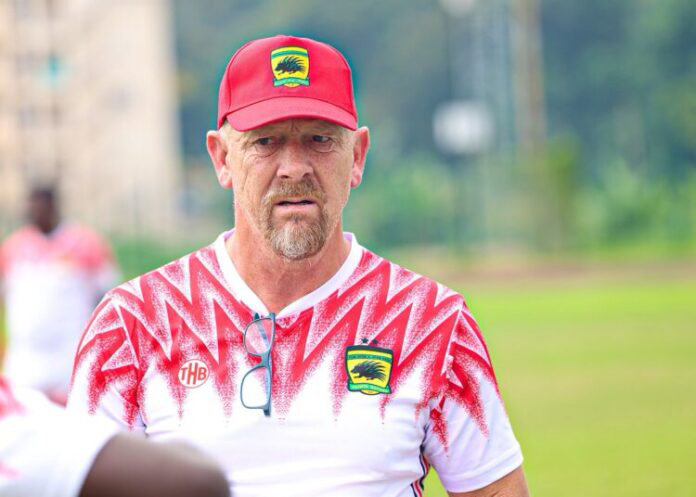
Eric Tinkler’s decision to leave Asante Kotoko after just four Ghana Premier League matches has raised an obvious question: has the South African coach made the right call?
Tinkler requested to be released from his contract for personal reasons, bringing an unexpectedly early end to a relationship that began with considerable expectations during the off-season.
His departure follows a difficult opening to the campaign. Kotoko have managed just one victory from their first four league matches, drawing twice and losing once.
The Porcupine Warriors began with a 2-2 draw against Debibi United before beating Heart of Lions 2-1. Another 1-1 draw against FC Samartex followed, before Sunday’s 2-0 home defeat to Aduana FC exposed more problems.
Five points from four matches has left Kotoko 13th on the table, far below where a club of their stature would want to be.
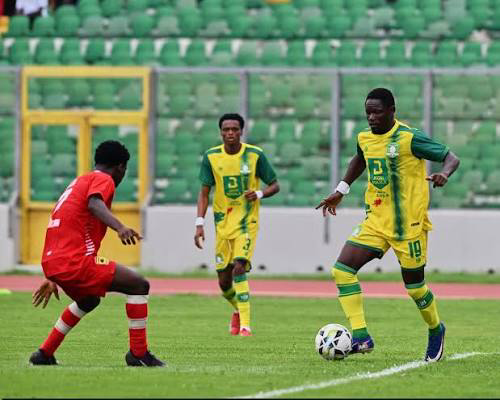
Yet the bigger issue is whether four matches provide enough evidence to justify walking away from a project that had only just started.
Kotoko’s official statement confirms that the initiative came from Tinkler. The club said its Board “has agreed to the request of its Head Coach, Mr. Eric Tinkler, to be released from his contract with the Club effective immediately for personal reasons.”
The club also revealed that attempts were made to prevent the separation, stating that both sides engaged in “meaningful negotiations” but eventually had to respect Tinkler’s decision.
Why Tinkler May Feel Leaving Is Necessary
There is a reasonable argument that Tinkler’s decision is understandable, even if it is difficult to defend purely on footballing grounds.
A coach needs the right environment to implement his ideas. Tinkler had already raised concerns about the condition of pitches in Ghana, arguing that the playing surfaces make it difficult for players to develop properly.
That concern becomes more relevant when considering the way he wants his teams to play and the demands placed on a coach at a club like Kotoko.
If Tinkler believed the conditions surrounding the team were inconsistent with his footballing philosophy, remaining simply because the season had just started may not have solved the underlying problem.

There is also the question of expectations.
Tinkler was brought in with the responsibility of helping Kotoko challenge for the Premier League title. Instead, the team has struggled to turn possession and opportunities into consistent results, while Sunday’s defeat to Aduana came at home.
However, there is a danger in using four matches as the complete assessment of his work. A new coach needs time to establish his tactical principles, build relationships with players and understand the league.
Kotoko’s five points are poor in the context of their ambitions, but the season is still at its beginning.
Leaving now means Tinkler will never know whether the team could have improved significantly once his methods became fully established.
Was It Too Early to Walk Away?
This is where Tinkler’s decision becomes difficult to assess.
If the personal reasons he cited are serious enough, then the football results become secondary. Neither Kotoko nor Tinkler has publicly suggested that the sporting situation alone caused the separation, so it would be speculative to claim otherwise.
But if the decision was primarily influenced by the disappointing results or concerns about the football environment, then walking away after four matches represents a significant gamble.

Kotoko have not completely collapsed under Tinkler. They have lost only once in four league games, although two draws mean valuable points have already been dropped.
More importantly, there are still many matches available to correct a poor start particularly with the club trailing the league leaders FC Samartex 1996 by just three points and their bitterest rivals Hearts of Oak by two points.
This suggests that the decision to walk away is purely on performance in the four games and on footballing reasons.
The club itself appears to recognise the importance of continuity. Its statement stressed that “professionalism, unwavering commitment and total focus” are required to achieve its performance objectives.
Kotoko also confirmed that the technical team will continue its work under Director of Football Stanley Purl Menzo.
For Tinkler, however, staying would also have carried risks. Remaining in a position where he was increasingly uncomfortable could have produced a longer and more damaging separation later in the season.
The fairest conclusion, therefore, is that Tinkler’s decision cannot be judged simply by Kotoko’s league position.
From a purely footballing perspective, four matches appears too small a sample to determine whether his project would succeed or fail.
From a personal and professional standpoint, however, Tinkler may have had reasons that make an early exit logical.
The real question is not whether leaving after four matches looks premature. It clearly does. The more important question is whether Tinkler had enough confidence in the environment and circumstances around him to believe he could successfully complete the job.
His answer appears to have been no.
Whether that proves to be the right decision will depend less on Kotoko’s current five points and more on what happens next, both to the Porcupine Warriors and to Tinkler’s coaching career.
READ ALSO: Mahama Bets On Listing To Keep Political Hands Off State Firms