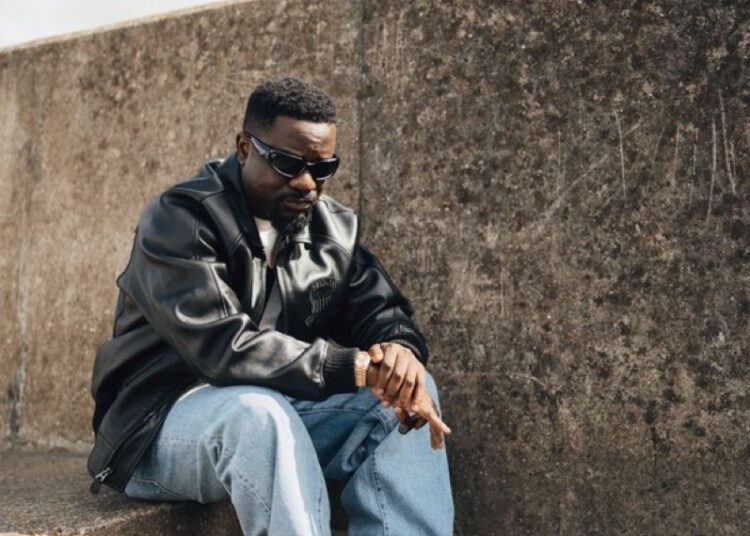
Ghanaian rapper Sarkodie sparked intense online debate after posting a message of gratitude to President John Dramani Mahama for rejecting a proposed United States health compact that the president described as humiliating. The rapper’s short statement, accompanied by a video, read: “Thank you Mr President … Hopefully one day we gain back the full respect deserved,” and quickly drew thousands of likes, reposts and replies that mixed praise with sharp political jabs.
The post came after Mahama publicly explained why Cabinet discarded the agreement in record time. According to the president, the compact required Ghana to hand over its pathogen profile and citizens’ medical records, commit counterpart funding, and allow medical products into the country without inspection by the Food and Drugs Authority.
Mahama called the conditions humiliating and said the document was thrown out faster than anything he had seen in Cabinet.
Sarkodie’s endorsement of that decision was celebrated by many supporters who saw it as a rare moment of national unity on an issue of sovereignty. Yet the comments section under his post and related discussions quickly turned political.
Public Reactions
Several users reminded the rapper of his past associations with the New Patriotic Party and questioned the consistency of his stance.
One widely noticed reply declared, “Thank God today you’ve seen the light and realizing that Nana Addo and Mahama are not the same. NPP artist!” Another user wrote, “I like what you just did but though u be ma guy I still for remind you say u were supporting and campaigning for a criminal cartel group called the NPP, whose leader would have accepted this USA compact with open hand just because of the money.” A third commenter simply asked, “Yawa guy!!!! What happened to 4more for Nana??”
These reactions reflect the polarised nature of Ghanaian political conversation on social media. Sarkodie has long occupied an ambiguous space in partisan debates. While he has never formally declared for any party in recent election cycles, past statements and perceived leanings have left him open to accusations from both sides.
Supporters of the current administration seized on his latest post as validation, while critics of Mahama and defenders of the previous government used the moment to revisit old scores.
Other commenters focused less on party labels and more on the substance of the rejected deal. Some expressed relief that Ghana had refused to surrender sensitive health data or waive regulatory oversight.

Others questioned whether the decision would affect future cooperation with the United States on health funding, particularly after the earlier withdrawal of certain USAID support. A number of users simply thanked Sarkodie for using his large platform to highlight the issue of national dignity.
The volume of engagement under the post highlighted Sarkodie’s enduring influence beyond music. With hundreds of thousands of views in a short period, the conversation spilled into broader discussions about how Ghana should negotiate with powerful partners and what “respect” means in international relations.
Some fans urged the rapper to stay consistent on matters of sovereignty regardless of which party holds power. Others treated the exchange as entertainment, posting memes that juxtaposed his earlier comments with the new statement.
Mahama’s own explanation of the Cabinet decision had already generated significant coverage. By describing the compact as humiliating and emphasising the speed of its rejection, the president framed the episode as a defence of national pride. Sarkodie’s public agreement amplified that framing and brought it to a younger, highly engaged audience that follows the rapper more closely than formal political channels.
The comments also revealed fatigue with the constant politicisation of every public statement by celebrities. A portion of users appealed for the discussion to remain focused on the principle of protecting Ghana’s data and regulatory independence rather than using the moment to settle electoral scores. Nevertheless, the partisan framing proved difficult to escape.
References to “NPP artist,” past campaigns and the slogan “4more” repeatedly surfaced alongside expressions of support for the president’s stance.
As the conversation continues, the episode illustrates both the power and the limitations of celebrity intervention in policy debates. Sarkodie’s call for Ghana to regain “the full respect deserved” resonated with many who feel African nations are often presented with unequal terms in international agreements. At the same time, the rapid turn to party politics in the replies showed how quickly issues of national interest can be absorbed into existing electoral narratives.
For now, the rapper’s brief message has succeeded in placing the rejected health compact and the question of national respect firmly in the centre of public conversation.
READ ALSO:Rubio Meets Lebanon PM As US Pushes For Ceasefire Framework