The Ghana cedi has suffered a sharp setback, emerging as Africa’s worst-performing currency in the second quarter of 2026, according to the World Bank’s October 2026 Africa Economic Update.
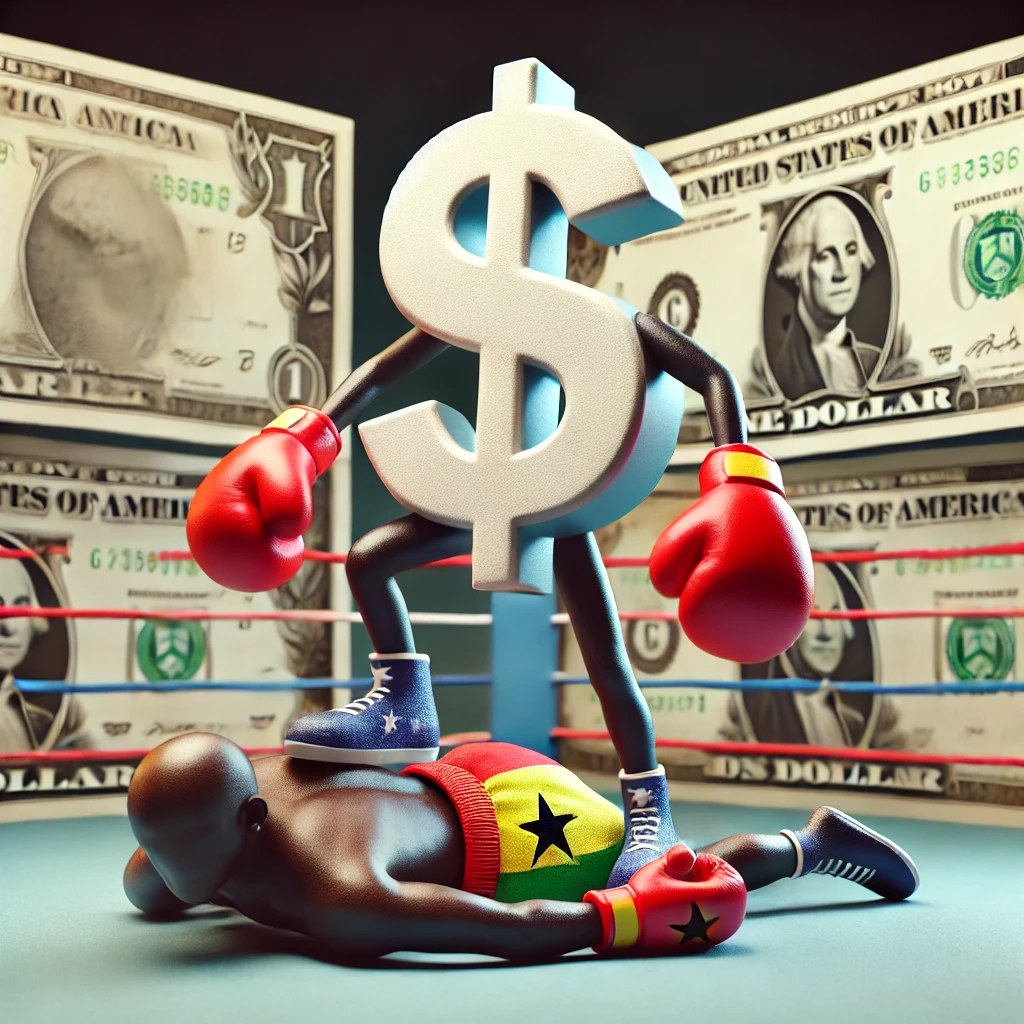
The report showed that the cedi depreciated by nearly 10% against the US dollar between March and June 2026, placing it at the bottom of the currencies monitored across the continent during the period.
The performance came as financial markets across Africa absorbed the shockwaves from the escalating conflict in the Middle East, which triggered renewed pressure on currencies, increased energy costs and strengthened demand for the US dollar.
Ghana’s performance was significantly weaker than that of several other African currencies. The Lesotho loti, Namibia dollar, South Africa rand and Swaziland lilangeni each recorded depreciations of more than 6% during the period.
Middle East Conflict Triggers Currency Pressure
According to the World Bank, the conflict initially created broad-based pressure on African currencies as investors reacted to heightened geopolitical uncertainty and rising commodity prices.
“Most countries with available daily exchange rate data recorded currency depreciations during the second quarter of 2026 relative to end-February, before the conflict intensified. In seven of the 22 countries monitored (excluding the CFA franc zone), the maximum depreciation exceeded 5.0%, including in the Democratic Republic of Congo, Ghana, the Seychelles, and South Africa”.
The World Bank noted that the situation subsequently improved across much of the continent.
“By end-August, however, much of this pressure had eased, with only 10 currencies remaining weaker than their end-February levels”, it added.
Ghana’s sharp decline nevertheless highlights the vulnerability of the cedi when external shocks collide with domestic financial pressures.
The currency’s weakness was not driven by a single factor. The World Bank explained that exchange rate movements reflected the interaction between external shocks and existing domestic vulnerabilities.
Oil Shock Adds Fresh Pressure on Cedi
One of the biggest concerns was the surge in oil and energy prices following the escalation of tensions in the Middle East.
Higher energy prices raised import bills for net energy-importing economies, forcing businesses and importers to seek more US dollars to finance purchases.
That increase in dollar demand can quickly translate into pressure on local currencies, particularly when foreign exchange reserves are under strain.
The World Bank explained that the sharp increase in oil and energy prices raised import bills across net energy-importing economies, increasing demand for U.S. dollars, weakening reserve positions, and intensifying depreciation pressures.
The development also carried consequences beyond the foreign exchange market.
Supply disruptions in the Middle East pushed up the cost of key agricultural inputs, particularly fertilizers. Higher fertilizer prices could increase production costs for farmers while also adding to imported inflation pressures.
That creates a difficult environment in which currency depreciation and higher global commodity prices can reinforce one another.
Capital Flight Adds to Emerging Market Pressure
The World Bank also pointed to investor behaviour as another source of pressure.
As geopolitical risks intensified, global investors shifted toward safer assets, leading to capital reallocation away from emerging and frontier markets.
Such movements can reduce foreign currency inflows into economies like Ghana while increasing demand for the US dollar.
The combination of weaker capital flows, higher import costs and stronger dollar demand created a challenging environment for African currencies during the second quarter.
The impact was particularly important for countries with significant external debt obligations.
The World Bank warned that currency depreciation can amplify fiscal vulnerabilities because governments must spend more in local currency to service debt denominated in US dollars.
Cedi Remains Under Pressure
The latest performance of the cedi suggests that the currency’s difficulties have extended beyond the second quarter.
The cedi remained under pressure over the last two weeks, pushing its year-to-date depreciation against the US dollar to 10.04%.
In the interbank market, the currency weakened by 1.39% against the dollar to GH¢11.62.
Its performance against other major currencies was comparatively stronger. The cedi gained 0.70% against the pound and 0.47% against the euro, reaching GH¢15.40 and GH¢13.24 respectively.
The retail forex market delivered a mixed picture.
The cedi appreciated by 0.21% against the US dollar and 0.91% against the euro, trading at GH¢11.93 and GH¢13.73 respectively. Against the pound, however, it weakened by 0.31% to GH¢15.88.
Currency Stability Becomes Critical
The World Bank’s assessment puts renewed attention on the cedi’s performance at a time when Ghana’s economy remains exposed to movements in global commodity prices, investor sentiment and foreign exchange demand.
A weaker cedi can raise the local currency cost of imported fuel, machinery, raw materials and other essential goods. It can also increase the cost of servicing foreign currency obligations.
The challenge is therefore not limited to the forex market. Persistent currency weakness can feed into business costs, inflation expectations and household purchasing power.
The cedi’s nearly 10% depreciation during the second quarter makes Ghana’s currency performance one of the most striking developments highlighted in the World Bank’s latest assessment of African economies.
With the currency already recording a 10.04% year-to-date decline against the US dollar, developments in global energy markets, capital flows and domestic foreign exchange conditions will remain crucial to its performance in the months ahead.
READ ALSO: Argentina Ease Past Benin in Messi Farewell Match