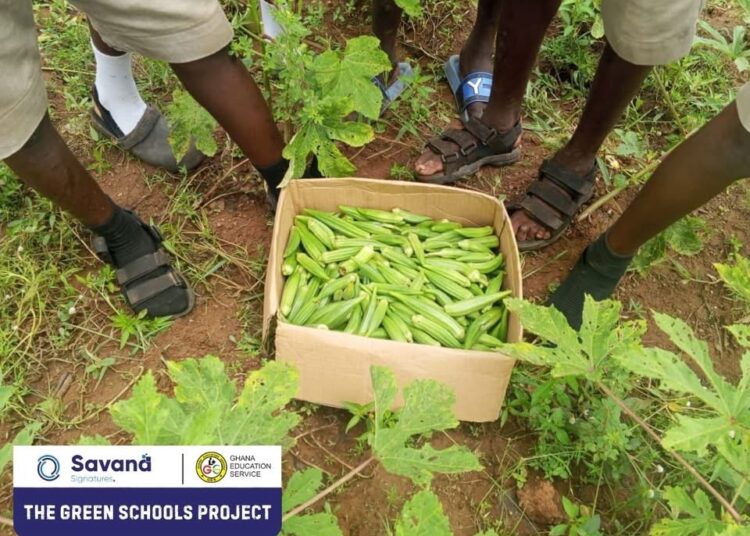
The Bagabaga Primary Block A and St. James R/C Primary and Junior High School (JHS) have begun harvesting crops cultivated under the Green Schools Project by the Savana Signatures to demonstrate how school gardens can combine practical agricultural education with environmental sustainability and income generation.
The harvest marks a tangible outcome of the schools’ gardening activities, which provide learners with opportunities to experience food production beyond classroom lessons.
Learners participation in cultivation and harvesting helps them gain practical exposure to agricultural processes while learning about the importance of sustainable food systems.
The initiative also introduces learners to the economic value of agriculture, as harvested crops are being sold to generate funds to support the needs of the participating schools.
The approach demonstrates how relatively small scale agricultural activities can contribute to educational development while encouraging young people to appreciate farming as a productive economic activity.
”The Green Schools initiative is turning school gardens into practical learning spaces where pupils experience food production, environmental responsibility and the economic value of agriculture.”
Savana Signatures
Agriculture as a Practical Learning Tool
The School gardens offer an opportunity to connect classroom education with practical knowledge of crop production, soil management, plant growth and food security.
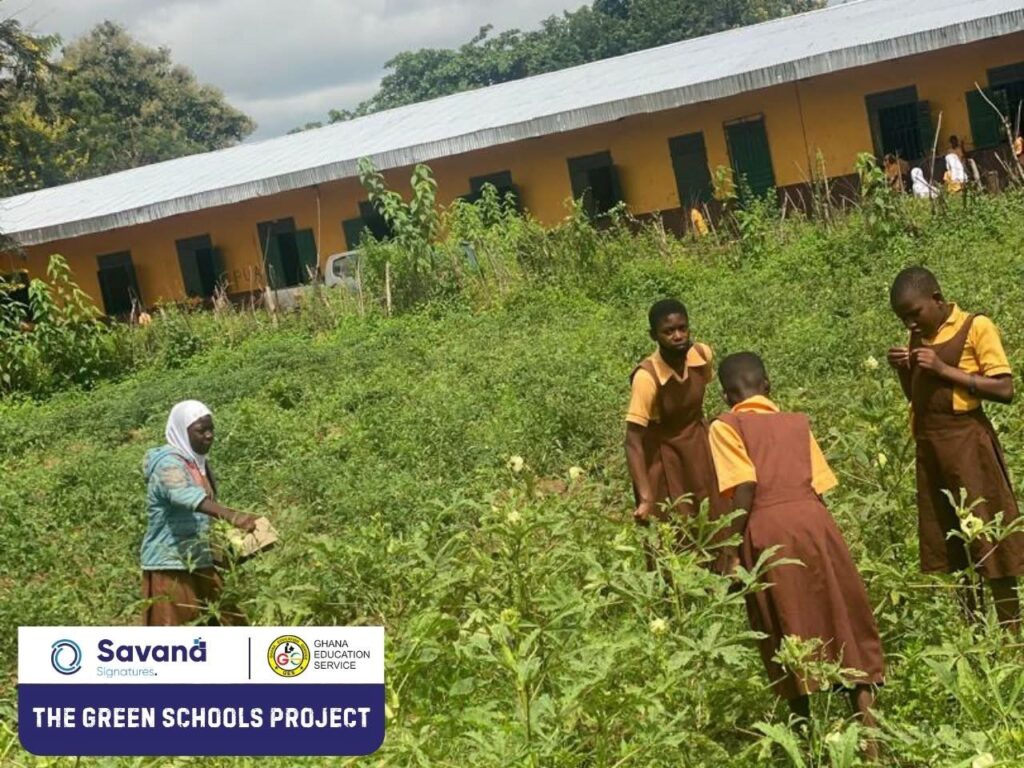
Rather than learning about agriculture exclusively through textbooks, pupils can observe the different stages of production and understand the work required to bring crops from planting to harvest.
Research by the Food and Agriculture Organization of the United Nations (FAO) identifies school gardens as useful platforms for teaching agricultural skills, nutrition, environmental management and other life skills.
Its guidance on establishing school gardens explains that such initiatives can also encourage children to apply what they learn at school to household gardens and community farming activities.
For Bagabaga Primary Block A and St. James R/C Primary and JHS, the harvesting activities provide an opportunity to reinforce these lessons through direct participation in food production.
Learners can develop an understanding of the relationship between land preparation, planting, watering, weed control, crop maintenance and harvesting. These experiences can also introduce them to the importance of planning, teamwork, resource management and responsibility in agricultural production.
Such practical exposure is relevant to Ghana’s efforts to encourage greater youth participation in agriculture. Introducing children to farming at an early age can help them recognise opportunities across the agricultural value chain, including crop production, processing, marketing, distribution and agribusiness entrepreneurship.
However, the long term educational benefits depend on whether school gardens are incorporated into regular teaching activities and maintained beyond individual harvest seasons.
Harvests Create Opportunities for School Funding
The decision to sell harvested crops provides an additional dimension to the Green Schools Project by introducing learners and school communities to the commercial aspects of agriculture.
Agriculture involves more than growing food. Producers must also consider input costs, labour, water availability, harvesting, storage, transportation, pricing and access to markets. School gardens can provide a basic setting in which learners begin to understand these interconnected activities.
The proceeds from the harvested crops are intended to support the needs of the participating schools, demonstrating the potential for garden based production to contribute to institutional development.
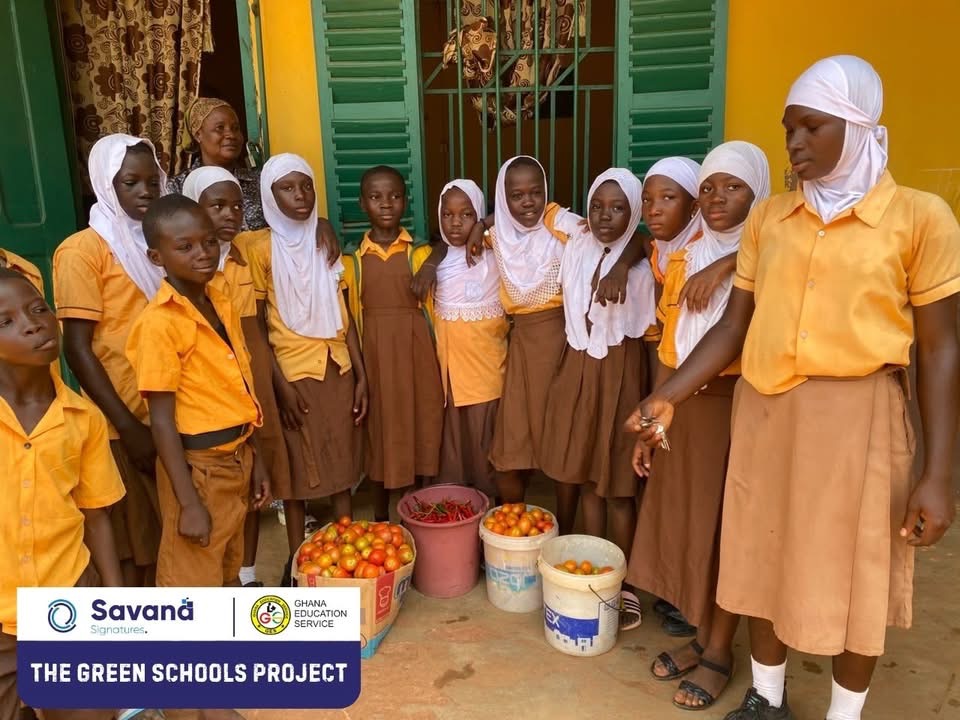
”The harvested crops are also being sold to raise funds to support the needs of the schools. The amount generated from the sales has not been disclosed, the initiative illustrates how schools can explore modest income-generating activities alongside their educational responsibilities”
Savana Signatures
For such activities to remain effective, schools would benefit from keeping records of expenditure, harvest volumes, sales and the use of proceeds. These records would help establish whether the gardens are financially sustainable and identify areas for improvement during subsequent planting cycles.
The project could also provide opportunities to introduce learners to basic enterprise management, including budgeting, calculating production costs, determining selling prices and understanding revenue.
These skills are relevant to future participation in agribusiness, where financial planning and market awareness are important to the viability of agricultural enterprises.
The FAO similarly recognises that school gardens can help learners understand how food production connects with marketing and income generation, while emphasising that their primary purpose should remain education and improved well-being rather than large-scale commercial production.
Climate Adaptation and Sustainable Food Systems
The Green Schools Project also provides a platform for introducing learners to environmental protection and climate change adaptation.
Agriculture is vulnerable to changing rainfall patterns, drought, flooding, rising temperatures and other weather-related risks. Teaching children about these challenges through school gardens can help them appreciate the importance of responsible natural resource management and resilient agricultural practices.
A 2025 study examining 153 climate-smart agriculture initiatives across Ghana’s 16 regions found that crop production accounted for 56 per cent of the initiatives reviewed.
The research highlights the importance of crop production within Ghana’s broader climate-smart agriculture efforts, although it does not specifically evaluate the Green Schools Project.
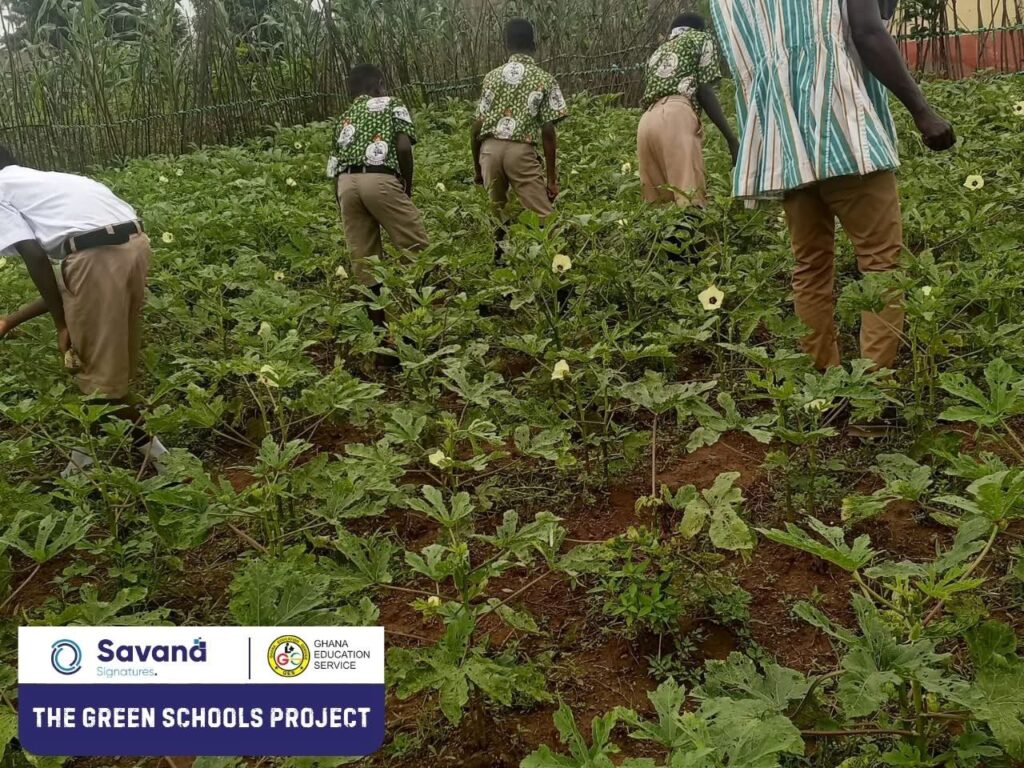
School gardens can introduce practical measures such as mulching to conserve soil moisture, composting to improve soil fertility, water-efficient irrigation and the appropriate management of organic waste.
”These practices can help learners understand how agricultural productivity and environmental protection can complement each other. Through practical experience, learners can develop skills they may apply at home and in their communities while contributing to sustainable agriculture and climate change adaptation.”
Savana Signatures
The benefits could extend beyond the school grounds if pupils share their knowledge with parents and households. Home gardening, responsible water use and composting are examples of practices that can be adapted to different household circumstances.
The University of Environment and Sustainable Development has also highlighted school-based organic gardening as a means of promoting food security, environmental awareness and climate-smart agricultural practices.
Its 2026 Community Development Challenge involves 30 basic schools in the Eastern Region, illustrating the growing use of school gardening as an educational and community engagement tool.
For the Green Schools Project, continued cultivation, appropriate technical guidance and access to basic gardening resources will be important to sustaining these benefits.
The commencement of harvesting at Bagabaga Primary Block A and St. James R/C Primary and JHS therefore represents more than the completion of a growing cycle. It demonstrates how school gardens can bring together agricultural education, environmental awareness and modest income generation.
Maintaining the gardens across successive planting seasons could strengthen these outcomes, helping learners develop practical skills while building an early appreciation of agriculture’s contribution to livelihoods, enterprise development and sustainable food production.
READ ALSO:Ghana Eyes IMF Backing to Sustain Economic Recovery