The Bank of Ghana (BoG) has moved to calm growing concerns about its foreign exchange operations, insisting that the establishment of the Ghana Gold Board (GoldBod) has not stripped the central bank of its authority to intervene in the forex market when necessary.
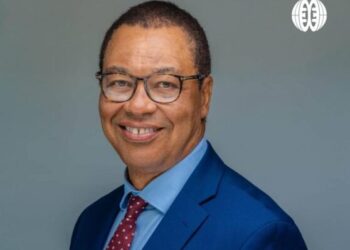
Governor of the Bank of Ghana, Dr Johnson Asiama, has dismissed suggestions that the central bank has handed over its foreign exchange responsibilities to GoldBod, maintaining that the arrangement is designed to strengthen market supply while allowing the Bank to concentrate on rebuilding the country’s international reserves.
His comments come at a sensitive time for Ghana’s currency market, with the cedi recording a year-to-date depreciation of 10.33 per cent despite showing marginal signs of stability over the past two weeks.
The Governor’s assurance is intended to reassure investors and market participants who have questioned how responsibilities are being shared between the central bank and GoldBod, particularly regarding foreign exchange intermediation and the management of currency volatility.
BoG Draws the Line on GoldBod’s Forex Role
Speaking at a meeting with institutional investors, brokers and fund managers organised by Standard Bank at the Conrad Hotel in Bangkok, Thailand, on the sidelines of the annual IMF and World Bank meetings, Dr Asiama explained that GoldBod’s involvement should not be mistaken for a transfer of the central bank’s statutory responsibilities.
“We want to focus on reserve build-up while Goldbod supports with FX intermediation as well as some level of intervention for the market,” he said.
The Governor’s remarks highlight the division of responsibilities under the revised foreign exchange framework. GoldBod supports the supply of foreign currency to the market, while the Bank of Ghana retains the ability to intervene when market conditions threaten orderly trading.
Dr Asiama stressed that the central bank would not hesitate to act if excessive volatility emerged, reinforcing its position as the institution responsible for safeguarding monetary and exchange rate stability.
The clarification follows questions from market watchers about GoldBod’s authority under the Bank of Ghana Act, the foreign exchange operations framework and the Constitution.
The issue has also attracted parliamentary attention, featuring at a recent hearing of Parliament’s Public Accounts Committee, where GoldBod’s Chief Executive appeared.
Despite the scrutiny, the Governor maintained that GoldBod was supporting the central bank rather than replacing it.

GoldBod’s $452 Million Forex Push Draws Attention
GoldBod’s expanding role in the foreign exchange market is already producing substantial transactions.
Since the beginning of October 2026, the institution has sold approximately US$452 million to commercial banks through its GoldBod Forex platform, known as GoFX, which conducts foreign exchange sales twice a week.
The platform is designed to improve the organisation and transparency of forex transactions through electronic submissions, allocation processing, time-stamping, transaction histories and audit trails.
These features are intended to provide a clearer record of transactions and strengthen oversight of foreign currency allocations.
The programme operates under the regulatory supervision of the Bank of Ghana. The central bank will have real-time access to the platform, while GoldBod is required to submit transaction reports after each sale.
Under the revised programme, GoldBod plans to generate approximately US$1.5 billion in October. Of that amount, US$1 billion is earmarked for sale to commercial banks, while US$500 million is expected to be transferred to the Bank of Ghana to support reserve accumulation.
Dr Asiama expressed strong support for the initiative, suggesting that the institution’s contribution had become particularly valuable under current economic conditions.
“I have been wondering why we had not set up Goldbod long ago,” he said, adding that developments so far justified its establishment.
His endorsement signals confidence in GoldBod’s contribution to foreign exchange supply, even as questions about the institutional division of responsibilities remain part of the public debate.
Cedi’s 10.33% Depreciation Keeps Pressure on BoG
The debate over forex responsibilities comes against the backdrop of continued pressure on the Ghanaian cedi.
The currency has recorded a year-to-date depreciation of 10.33 per cent, highlighting the challenges confronting the authorities as they seek to maintain stability in the foreign exchange market.
Although the cedi has stabilised marginally over the past two weeks, the recent weakness has kept investors attentive to developments in foreign currency supply, market demand and the central bank’s intervention strategy.
Dr Asiama described the latest pressure as a marginal blip and expressed confidence that conditions would normalise.
He attributed some of the pressure to profit-taking by multinational companies and other businesses, adding that ongoing reforms should help restore stability.
However, the Bank of Ghana’s position suggests that maintaining an orderly market will require more than increased foreign exchange supply. The timing of demand, investor behaviour and external economic conditions could also influence the currency’s performance.
The central bank has indicated that it does not anticipate operating a routine foreign exchange intermediation programme under the current arrangement. Nevertheless, it remains prepared to intervene when necessary.
In a September communication to market participants, the Bank reiterated its readiness to undertake foreign exchange interventions while preserving overall exchange rate flexibility.
$12.04 Billion Reserves Face New Test
Beyond the immediate pressure on the cedi, the Bank of Ghana is working to strengthen the country’s external buffers.
Ghana’s gross international reserves stood at approximately US$12.04 billion as of September 22, 2026. Dr Asiama acknowledged that payments linked to the energy sector had placed pressure on reserves in recent months but maintained that the country remained on track to meet its year-end targets under the Policy Coordination Instrument.
The Governor said Ghana would achieve the programme’s target of six months of import cover by December.
Building reserves is a key part of the central bank’s strategy to protect the economy against external shocks, including a significant decline in global gold prices.
A stronger reserve position would give Ghana greater capacity to meet external payment obligations and respond to periods of heightened foreign exchange demand without placing excessive pressure on the cedi.
The strategy also reflects the importance of balancing immediate currency market needs with the longer-term objective of strengthening external resilience.
Investors Watch BoG’s Next Move
The central bank’s assurance that it retains its intervention powers provides an important clarification as GoldBod expands its participation in the foreign exchange market.
Yet the effectiveness of the revised framework will ultimately depend on whether increased forex supply, stronger reserve accumulation and timely interventions translate into more stable market conditions.
Investors will be watching the cedi’s performance, the pace of reserve growth and GoldBod’s ability to deliver the planned foreign exchange inflows.
While Dr Asiama remains confident that current pressures will ease, the currency’s recent depreciation demonstrates that stability cannot be taken for granted.
The Bank of Ghana is therefore seeking to maintain a delicate balance: allowing GoldBod to support foreign exchange supply while preserving the central bank’s ability to respond when market conditions deteriorate.
As the year-end approaches, the outcome will be measured not only by the reserves Ghana accumulates but also by the resilience of the cedi and the confidence the foreign exchange market places in the new arrangement.