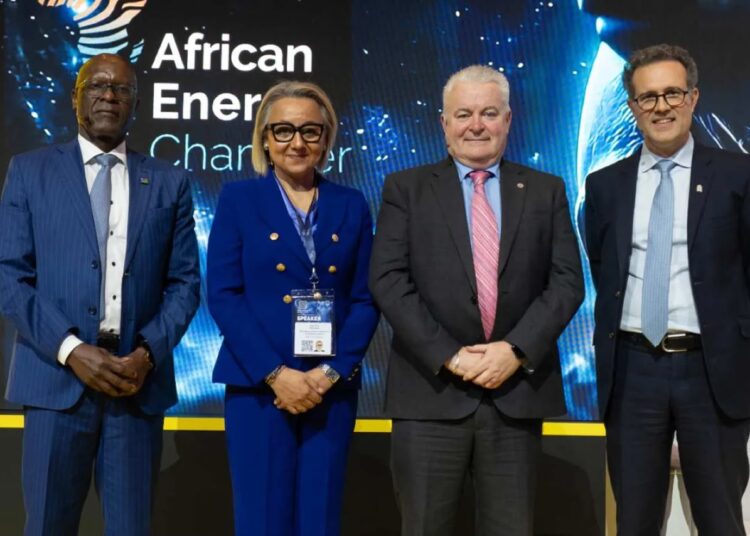
Global energy capital is increasingly moving towards jurisdictions that offer predictable fiscal terms, regulatory stability and credible partnerships, a message from bp and Standard Chartered that carries significant implications for Ghana as it seeks to reverse declining oil production and attract fresh upstream investment.
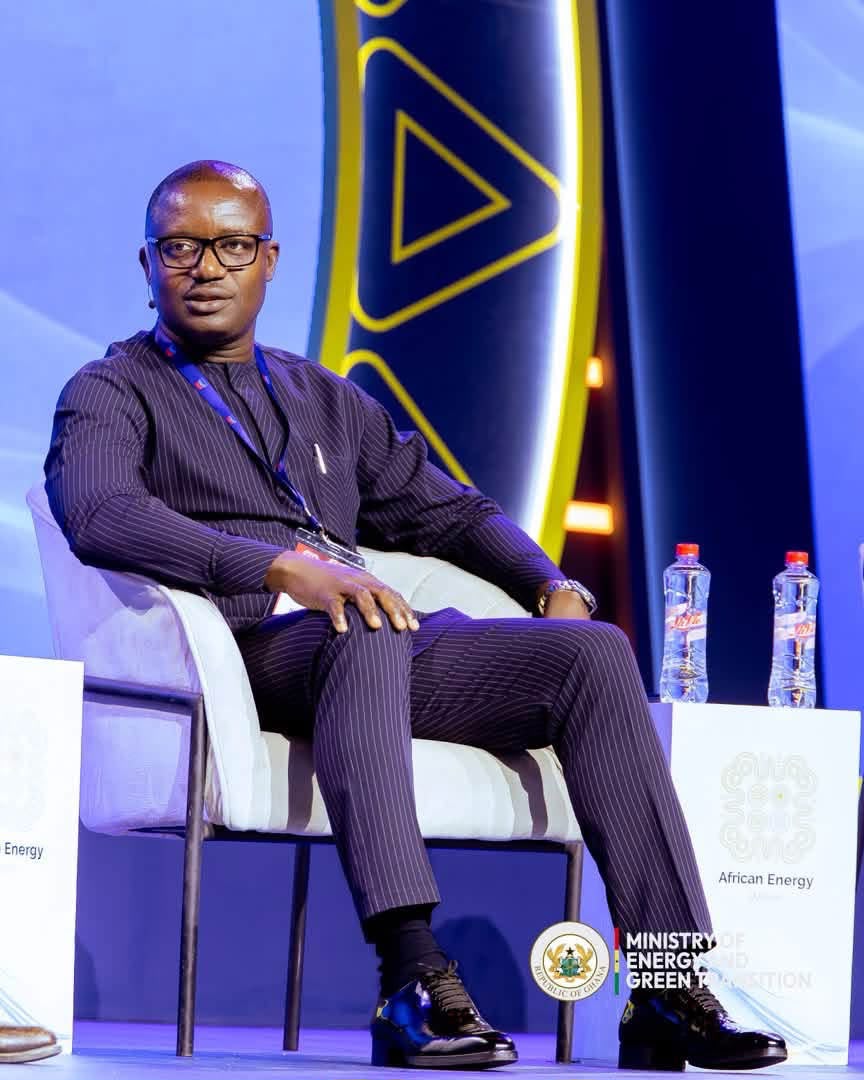
Speaking at African Energy Week (AEW) 2026, David Campbell, bp’s Senior Vice President for Mauritania and Senegal, former Namibian Minister of Mines and Energy Tom Alweendo, and Quentin Savinaud, Standard Chartered’s Managing Director and Global Head of Energy, Corporate Coverage, highlighted how geopolitical tensions and market volatility are reshaping investment decisions across the oil, gas and liquefied natural gas (LNG) industries.
Their remarks point to a potential opening for African producers as investors reassess exposure to different regions. But for Ghana, the opportunity will depend on whether ongoing regulatory reforms translate into a petroleum investment environment that can compete with other destinations for capital.
The warning comes as Ghana works to revitalise its upstream industry, where declining production and limited investment have intensified pressure to attract exploration, sustain existing fields and develop new sources of oil and gas.
Fiscal Stability Is Becoming an Investment Test
Campbell cited bp’s Greater Tortue Ahmeyim (GTA) LNG Phase 1 project, located offshore Mauritania and Senegal, as an example of the long-term commitments required to develop major energy infrastructure.
He said projects of that scale depend on fiscal stability and predictability from host governments, alongside trust and collaboration among stakeholders, to ensure that the benefits are shared across the partnership.

The GTA project illustrates the importance of policy credibility in a sector where investment decisions can commit capital for decades. Investors must assess not only the geological potential of a resource but also the likelihood that the commercial and regulatory conditions underpinning a project will remain workable over its life.
For Ghana, that consideration is especially important as it reviews its upstream petroleum laws and fiscal framework to attract new investment.
A competitive regime must provide sufficient returns to justify exploration and development risks while ensuring that the state receives a fair share of the value generated from its resources.
The challenge is to establish terms that investors can assess with confidence without unnecessarily limiting the government’s ability to respond to changing economic and public-interest priorities.
Stability Does Not Mean Frozen Fiscal Terms
Alweendo reinforced the importance of predictable investment conditions but cautioned against interpreting stability as a requirement that project agreements remain unchanged regardless of circumstances.
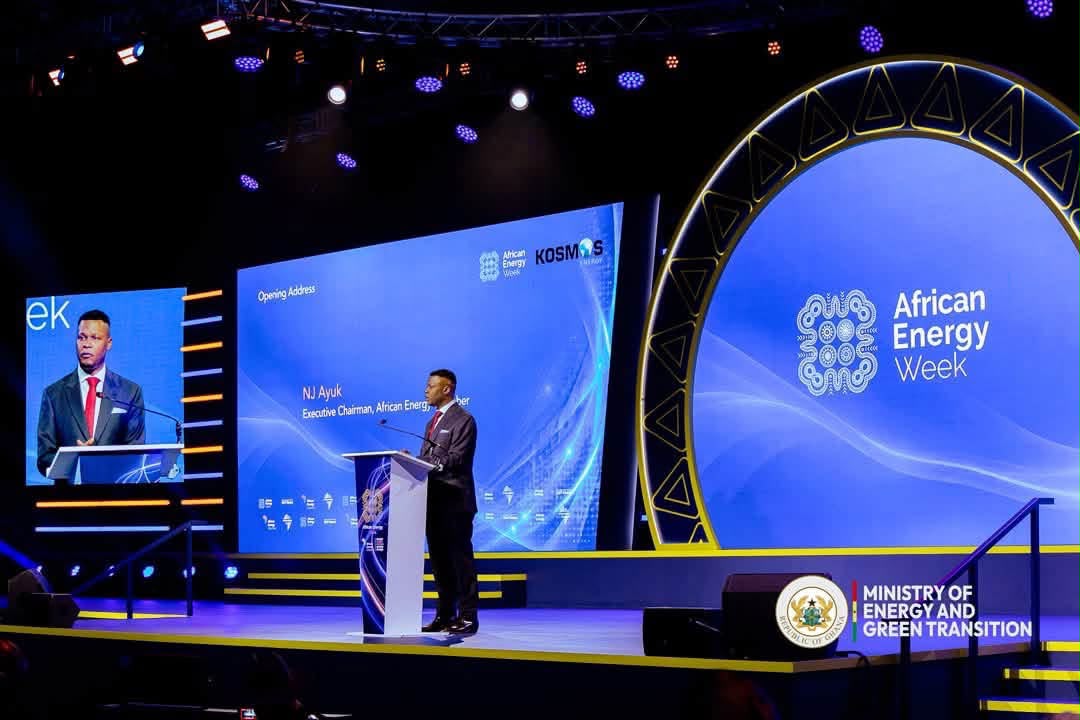
“It is highly unrealistic to demand that project terms remain the same if the environment in which you have agreed to the terms may have drastically changed,”
He argued that where changes become necessary, the parties should clearly define the parameters within which adjustments can be made.
His position highlights a central tension in petroleum investment policy. Governments need the flexibility to respond to shifts in costs, markets and national priorities, while investors need safeguards against arbitrary or unpredictable changes that could undermine project economics.
For Ghana, the distinction matters as policymakers consider changes to the upstream fiscal and regulatory framework. Excessive rigidity could make agreements difficult to adapt to genuine economic shocks, but poorly defined discretion could increase uncertainty and discourage long-term investment.
The policy objective should therefore be a transparent framework that establishes how fiscal terms are determined, when they may be reviewed and how disagreements are resolved. Such clarity can help reduce uncertainty for investors while preserving the state’s ability to protect the public interest.
Ghana’s Production Challenge Raises the Stakes
The need to attract capital is not merely a question of competing for new projects. Ghana must also encourage reinvestment in producing fields and support exploration that can replenish its declining petroleum reserves.
The Petroleum Commission’s 2026 Ghana Upstream Petroleum Business Outlook identifies the need to strengthen upstream infrastructure, promote exploration opportunities, open frontier basins and improve the regulatory environment for investors.
The government has also been pursuing a review of the sector’s legal, regulatory and fiscal framework.
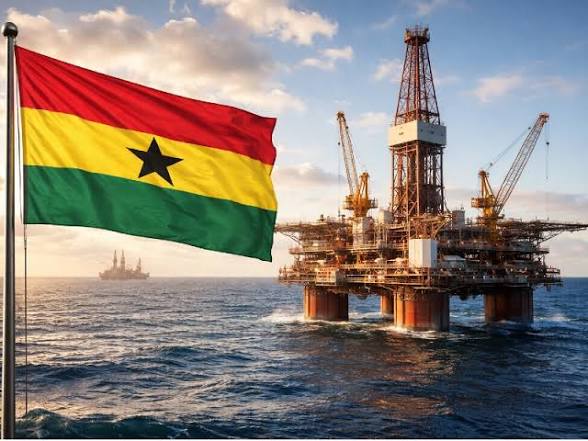
The scale of the production challenge is significant. Ghana’s crude oil output declined from 71.4 million barrels in 2019 to an estimated 36 million barrels in 2025, according to figures presented by the Finance Minister in the 2026 Budget.
Government announced approximately US$3.5 billion in investment commitments for the upstream sector in November 2025, including a US$2 billion framework agreement relating to the Jubilee and TEN fields and a US$1.5 billion memorandum of intent involving partners in the Offshore Cape Three Points project.
Those commitments provide a potential route towards additional drilling, field development and gas supply. However, announced investment commitments should not be confused with capital already deployed or production increases already achieved. Their ultimate contribution will depend on execution, project economics and the delivery of planned activities.
The lesson from the AEW discussion is that attracting commitments is only part of the task. Ghana must maintain the conditions that allow projects to proceed from agreements to financing, drilling and sustained production.
Geopolitical Shocks Could Redirect Capital
The speakers also considered how economic shocks and conflict in the Middle East could influence global energy investment.
Alweendo argued that capital would gravitate towards regions able to offer stability. Savinaud suggested that market disruption could accelerate the development of African projects, while Campbell observed that economic shocks were becoming more frequent and could lead to a rebalancing of capital allocation.
These views suggest that volatility may create opportunities for African producers, particularly where investors seek to diversify their portfolios and reduce exposure to concentrated supply risks.
However, capital does not automatically flow to a region simply because other markets become more uncertain. Investors still compare fiscal terms, infrastructure, financing risks, project delivery capacity and the expected returns from competing opportunities.
For Ghana, that means geopolitical uncertainty could create a window to attract additional attention, but it will not compensate for unresolved domestic barriers to investment.
The country will need to demonstrate that its petroleum agreements are commercially workable, its regulatory processes are credible and its projects can be executed within realistic cost and timeframes.
Decarbonisation Is Part of the Financing Equation
Investment decisions are also being shaped by financial institutions’ climate policies.
Savinaud said Standard Chartered supports oil and gas and other energy-sector clients within a framework of decarbonisation policies and emissions-reduction targets.
He emphasised that the bank has a responsibility to ensure its clients are progressing towards those objectives.
“It is part of our duty to ensure that our clients are on the right path towards decarbonisation,” Savinaud said.
He added that a high proportion of the bank’s African clients were moving in the right direction on decarbonisation and took emissions-reduction targets seriously.
For Ghana, this introduces another consideration into efforts to attract petroleum investment: projects must be commercially attractive while responding to the changing expectations of lenders and financial institutions.
The implications extend beyond oil production. Gas projects may be positioned as part of efforts to support power generation and industrial development, but their financing and long-term viability will still depend on market demand, infrastructure, emissions performance and the broader direction of energy policy.
Ghana will therefore need to demonstrate how new petroleum investments fit within its economic development and energy-transition priorities, rather than treating production growth and decarbonisation as entirely separate agendas.
The Opportunity Depends on Policy Execution
The AEW 2026 discussion reinforces the view that global oil and gas capital remains mobile, giving countries with credible investment frameworks an opportunity to attract projects when conditions change elsewhere.
For Ghana, the priority is to turn that potential opportunity into sustained investment, higher recovery from existing fields and new exploration activity.
That will require a fiscal framework that balances investor returns with national benefits, regulatory processes that provide clarity and a credible approach to managing changes in project conditions.
The country also needs to distinguish between securing investment announcements and delivering the drilling, infrastructure and production outcomes required to reverse declining output.
Ultimately, Ghana’s competitiveness will be determined not by its participation in international energy discussions alone, but by whether investors can see a clear, stable and commercially viable path from exploration opportunities to production.
As capital becomes more sensitive to policy risk and geopolitical uncertainty, the message from bp, Standard Chartered and Alweendo is that Ghana cannot assume its petroleum resources will attract funding on their own.
The country must make the case for investment through credible rules, practical partnerships and consistent implementation.
READ ALSO: Ato Forson Vows Ghana Will Outgrow IMF’s 5.7% Forecast