The Founder and Chief Executive Officer of Tamanaa Company Limited, producers of Nasia Star Rice, Alhaji Shaibu Braimah, has called for stronger policy support for Ghana’s domestic rice industry.
He highlighted the need for improved market access, stronger partnerships between farmers and processors, and increased consumption of locally processed rice in public institutions.
His recommendations come as Ghana intensifies efforts to increase domestic rice production, reduce dependence on imports and expand investment in agro-processing.
”Stronger market access, effective partnerships between farmers and processors, and increased institutional consumption of Ghanaian rice are among the priorities identified by Tamanaa Company Limited for developing the domestic rice industry.”
Founder, CEO of Tamana Company Ltd.,Alhaji Braimah
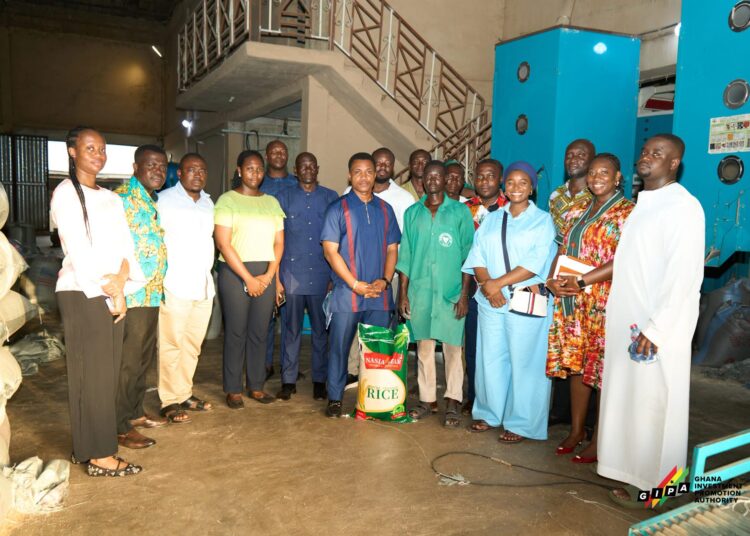
The call was made during an engagement with a delegation from the Ghana Investment Promotion Authority (GIPA), led by the Head of the Investment Promotion and Business Development Division, Mr Kwame Kesse-Agyepong, as part of preparations for the North East Regional Investment Roadshow.
The engagement provided an opportunity to examine the investment potential of rice processing and the policy measures needed to strengthen local businesses operating within Ghana’s agricultural value chain.
Policy Support for Domestic Rice
Alhaji Braimah emphasised the importance of consistently implementing policies designed to support locally produced rice, arguing that a stronger domestic market is essential for sustaining investments in processing infrastructure and improving the competitiveness of Ghanaian rice.
His recommendations reflect longstanding challenges within Ghana’s rice industry, where domestic production has struggled to meet growing consumer demand, leaving the country reliant on imports to bridge the supply gap.
According to Ghana’s Ministry of Food and Agriculture, rice consumption has increased alongside population growth, urbanisation and changing consumer preferences.
The ministry has consequently identified domestic rice production as a strategic priority for food security, import substitution and foreign exchange savings.
”The scale of the challenge remains significant. In October 2026, the Ministry of Food and Agriculture reported that Ghana’s milled rice production had increased to approximately 960,000 tonnes in 2025, but domestic output still met only about 56 per cent of national demand.”
Ministry of Food and Agriculture
The ministry estimated that rice imports cost the country between US$320 million and US$500 million annually.
These figures underscore the economic importance of improving the competitiveness of local rice producers and processors. Greater domestic production could reduce import dependence, retain more value within the economy and create opportunities for businesses involved in farming, processing, packaging, transportation and distribution.
Ghana’s Ministry of Food and Agriculture estimates that domestic rice production meets approximately 56 per cent of national demand, leaving a substantial supply gap that is filled through imports.
For businesses such as Tamanaa, consistent policy implementation and reliable demand are important considerations in determining production levels, expanding processing capacity and investing in improved technology.
However, increasing the availability of locally produced rice must also be accompanied by efforts to ensure that the product meets consumer expectations regarding quality, consistency, packaging and price.
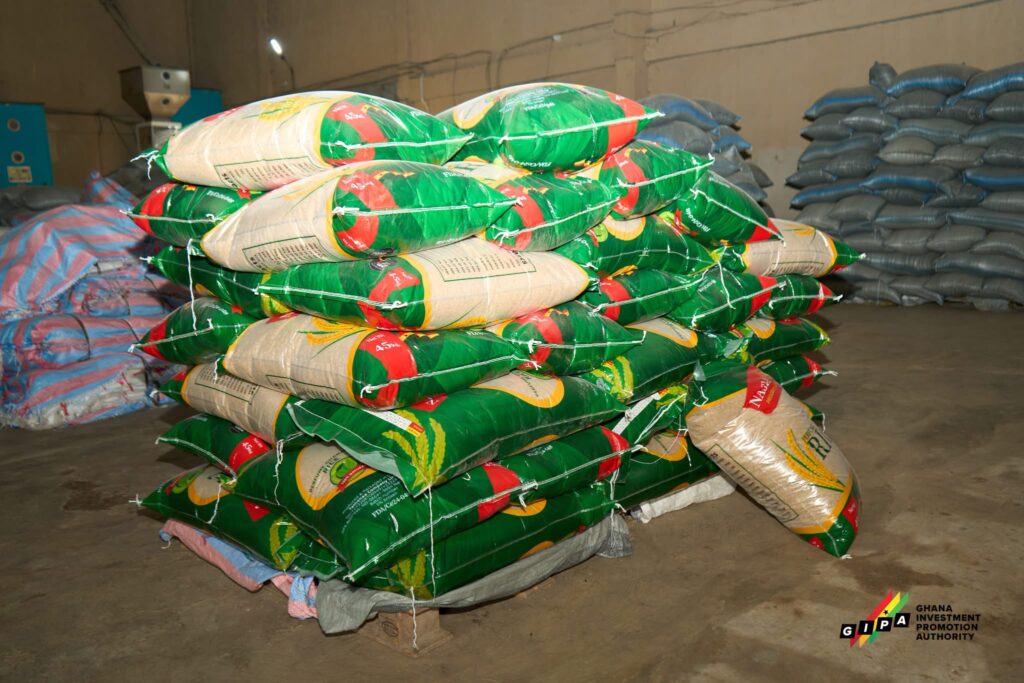
These factors are essential to building consumer confidence and strengthening the position of Ghanaian rice in the domestic market.
Processing Capacity and Investment Potential
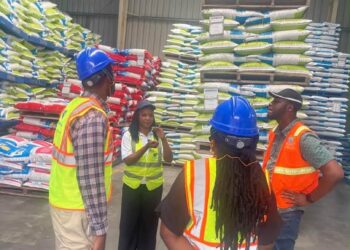
During the visit, the GIPA delegation toured Tamanaa Company Limited’s processing facility at Nasia in the North East Region, where the company has established infrastructure for processing locally produced rice.
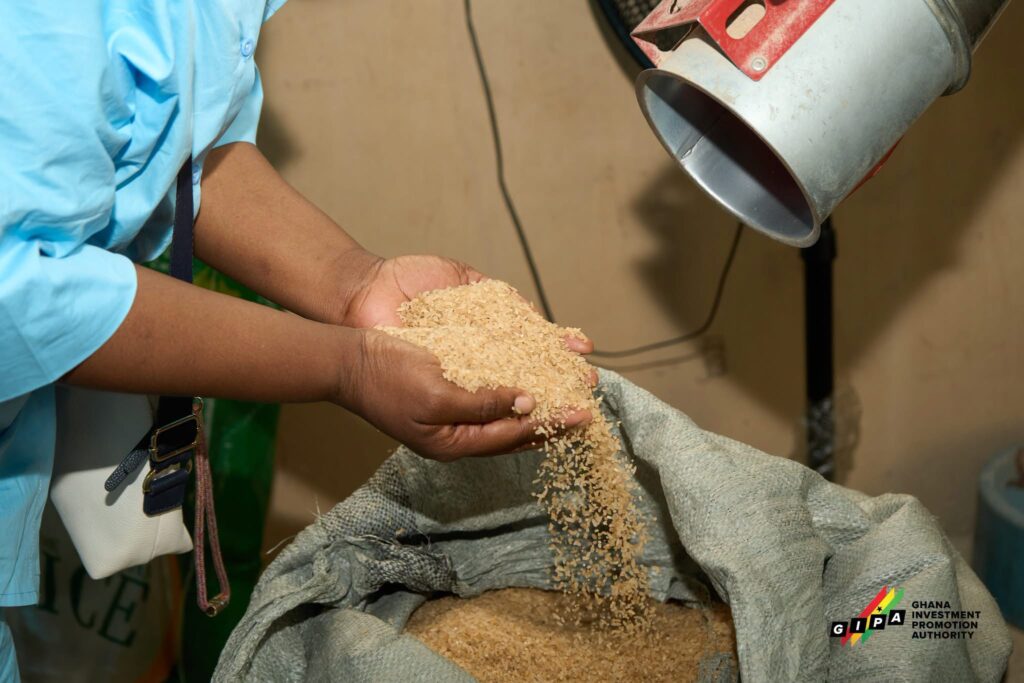
The facility has a reported processing capacity of up to 10 tonnes of rice per hour and drying capacity of 33 tonnes. These figures demonstrate the scale of the company’s processing operations and highlight the potential for agro-industrial investment to support agricultural production in northern Ghana.
”Rice processing facilities play an important role in connecting farmers to commercial markets by converting harvested paddy into a product suitable for distribution and consumption. Their operations can also support employment and create business opportunities across the agricultural supply chain.”
Ghana Investment Promotion Authority
Nevertheless, processing capacity alone does not guarantee profitability. Facilities require reliable supplies of quality paddy, dependable energy, efficient logistics, adequate storage and consistent demand for their finished products.
Stronger partnerships between rice farmers and processors could help address some of these challenges by improving coordination between production and processing.
Arrangements involving agreed quality standards, predictable purchasing conditions and better production planning could make it easier for farmers to identify markets while enabling processors to manage their raw-material requirements.
For investors, these relationships can improve the commercial viability of agro-processing projects by reducing supply uncertainty and strengthening links between agricultural production and market demand.
Tamanaa’s Nasia facility has a reported capacity to process up to 10 tonnes of rice per hour and dry 33 tonnes, highlighting the role of processing infrastructure in Ghana’s domestic rice value chain.
Mr Kesse-Agyepong commended Tamanaa for its investment in rice processing and assured the company that the concerns raised during the engagement would be communicated to relevant government stakeholders.
The assurance provides an avenue for the company’s recommendations to inform discussions on investment promotion, agricultural development and support for domestic agro-processing businesses.
Public Procurement and Regional Investment
One of the key proposals raised by Alhaji Braimah was the need to increase the consumption of Ghanaian rice in public institutions.
Public procurement could provide a more predictable market for local processors if purchasing arrangements prioritise eligible Ghanaian produced rice while maintaining appropriate standards for quality, food safety, pricing and reliable supply.
”Schools, prisons and other public institutions represent potential institutional buyers. However, translating this opportunity into sustainable commercial demand would require effective procurement arrangements, adequate production volumes and timely payments to suppliers.”
Founder and CEO of Tamana Company Ltd.,Alhaji Shaibu Braimah
The government has already identified institutional demand as part of its broader rice development agenda. Under the Regional West Africa Resilient Rice Value Chains Development (REWARD) Project, the Ministry of Food and Agriculture has outlined plans to support the supply of quality locally produced rice to schools, prisons and other public institutions.
Ghana’s rice development agenda includes supplying quality locally produced rice to schools, prisons and other public institutions, linking domestic production with institutional demand.
The engagement with Tamanaa also aligns with GIPA’s wider investment mobilisation drive across northern Ghana. The authority’s regional roadshow, running from October 11 to 23, 2026, is intended to connect investors with opportunities across the Northern, North East, Upper East, Upper West and Savannah regions.
The initiative follows GIPA’s Investment Opportunities Mapping Project, which has identified more than 600 investment-ready project profiles nationwide.
The summit is expected to bring together investors, businesses, policymakers and financial institutions to explore investment opportunities and partnerships across Ghana’s priority sectors, including agriculture and agro-processing.
For Tamanaa and other local processors, the broader investment drive offers an opportunity to highlight the commercial potential of Ghana’s rice industry and identify partnerships that could support expansion.
Ultimately, the sector’s growth will depend on the alignment of agricultural production, processing capacity, market access and investment. Consistent policy implementation, stronger farmer-processor relationships and effective institutional procurement.
This could help create a more reliable domestic market, allowing local rice businesses to expand while contributing to employment, import substitution and Ghana’s wider industrial development.
READ ALSO:IMF Warning Raises Fresh Concerns for Ghana’s Economic Recovery