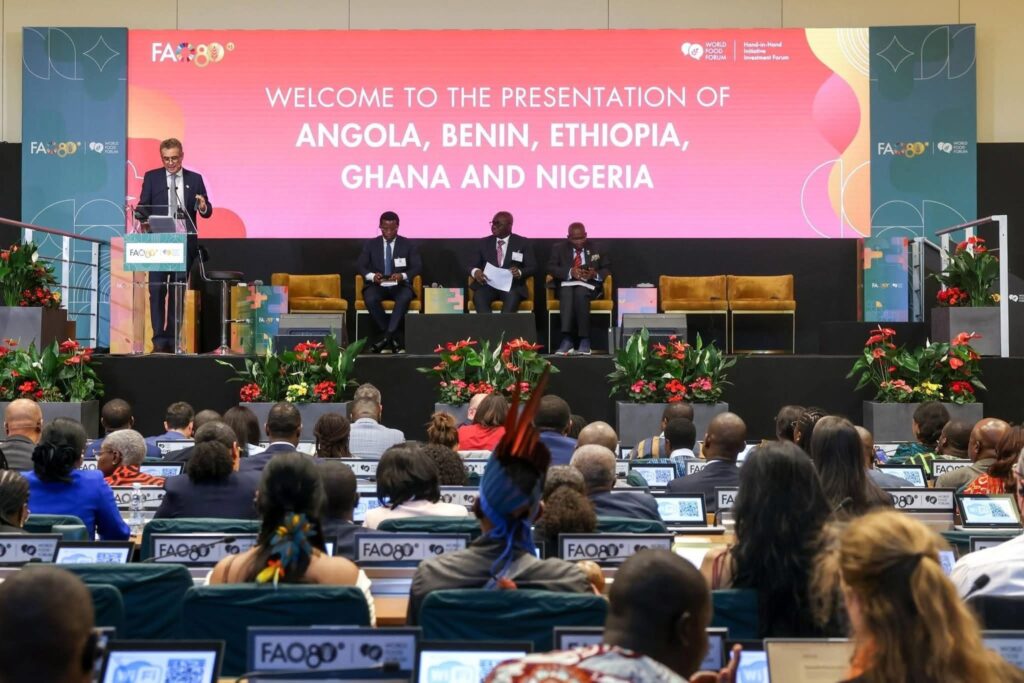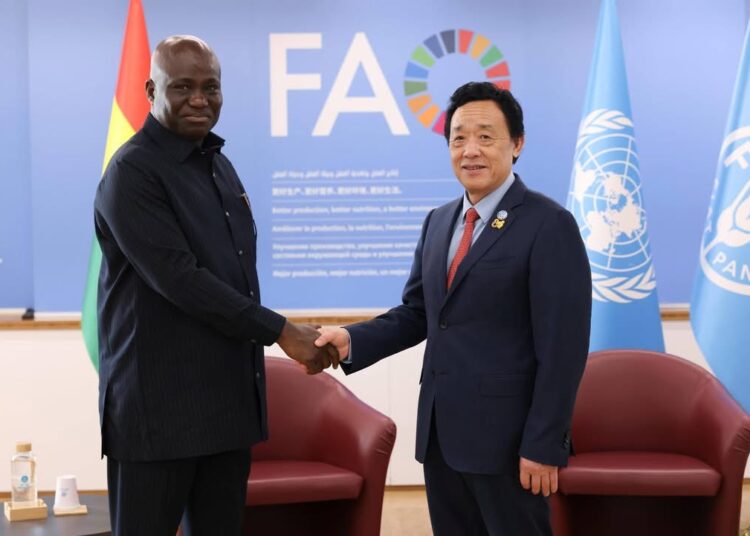
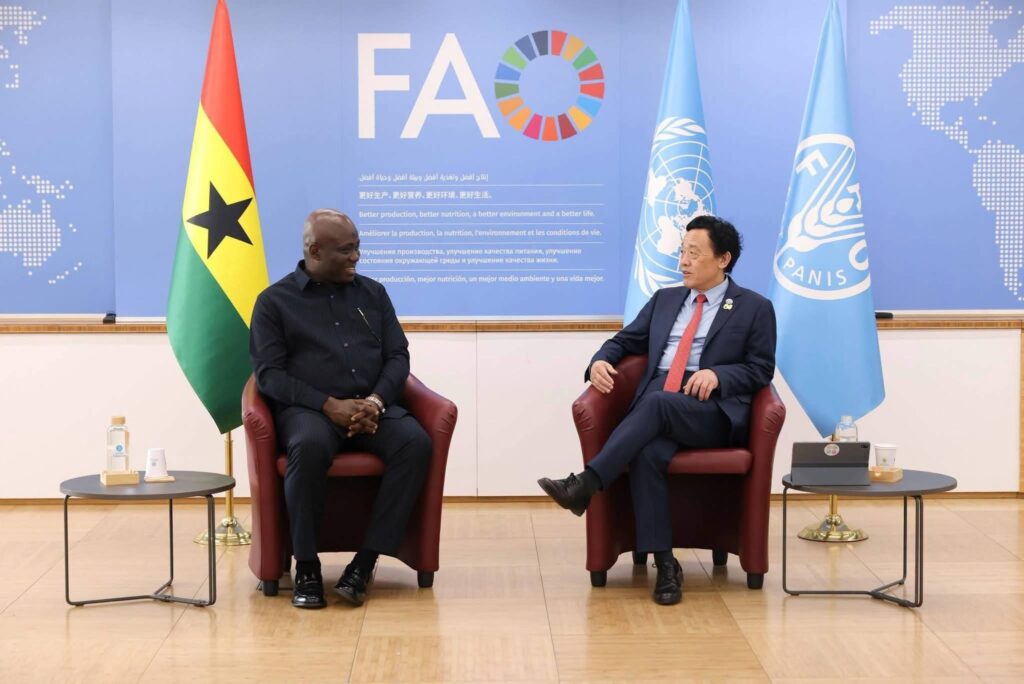
Ghana is seeking to strengthen its agricultural transformation agenda through enhanced cooperation with the Food and Agriculture Organization of the United Nations (FAO), following a high-level meeting between the Minister for Food and Agriculture, Hon. Eric Opoku, and the FAO Director-General, Dr. Qu Dongyu, in Rome, Italy.
The meeting focused on strengthening institutional cooperation, mobilising investment into the agrifood sector and accelerating agricultural transformation to improve productivity, strengthen food security and create sustainable economic opportunities.
The engagement reflects Ghana’s efforts to deepen international partnerships in support of a more productive, resilient and competitive agricultural economy.
The discussions also underscore the importance of international cooperation in addressing persistent challenges facing agriculture, including limited access to financing, climate related risks, productivity constraints and the need to improve value addition across agricultural value chains.
“Ghana and FAO are working to unlock agricultural potential, strengthen food security and drive sustainable growth.”
Minister for Food and Agriculture, Hon. Eric Opoku
For Ghana, closer collaboration with FAO could support efforts to modernise production systems, strengthen market access and improve the livelihoods of farmers and other agribusiness operators.
Strengthening Ghana–FAO Partnership
The engagement between Hon. Eric Opoku and Dr. Qu Dongyu highlights the importance of sustained cooperation between Ghana and FAO in advancing national agricultural development priorities.
As a specialised agency of the United Nations, FAO works with governments and development partners to improve agricultural productivity, enhance nutrition, promote sustainable food systems and strengthen rural livelihoods.
Its technical expertise and international partnerships can support Ghana in addressing structural challenges across crop production, livestock, fisheries and other segments of the agrifood economy.
Strengthened cooperation could also provide opportunities for technical assistance, knowledge exchange and the development of programmes tailored to Ghana’s agricultural priorities.
Such collaboration is particularly important as the country seeks to increase domestic food production, reduce post-harvest losses and improve the efficiency of agricultural supply chains.
For farmers and agribusinesses, effective partnerships can help bridge gaps in technical knowledge, access to improved production methods and connections to reliable markets.
Smallholder farmers, who remain central to Ghana’s agricultural economy, stand to benefit from initiatives that improve access to extension services, modern technologies and climate-resilient farming practices.
The meeting also provides an opportunity to align Ghana’s agricultural development objectives with broader international efforts to build sustainable food systems.
Achieving these goals requires cooperation among governments, research institutions, development organisations, financial institutions and private-sector participants.
”Stronger institutional cooperation can help translate agricultural development priorities into practical interventions that benefit farmers, agribusinesses and consumers.”
Minister for Food and Agriculture, Hon. Eric Opoku
Mobilising Investment for Agrifood Growth
Mobilising investment was a central focus of the discussions, reflecting the need for financing to expand agricultural production, strengthen processing capacity and improve the infrastructure supporting agribusiness development.
Agriculture remains an important source of employment and income in Ghana, particularly in rural communities. However, unlocking its full economic potential requires investment beyond primary production.
Also, storage facilities, irrigation systems, transport infrastructure, agro-processing plants and efficient distribution networks are essential to building competitive agricultural value chains.
Investment in these areas can help reduce post-harvest losses, improve the quality of agricultural produce and increase the proportion of farm output processed locally.
Greater value addition can also create employment opportunities for young people, women and entrepreneurs engaged in food processing, packaging, logistics and agricultural services.
The discussions on mobilising agrifood investment are therefore significant for Ghana’s broader economic ambitions. Well targeted financing can support the transition from predominantly raw agricultural production towards a more integrated system in which farmers, processors, distributors and exporters benefit from stronger commercial linkages.
Public investment and development financing can help address infrastructure gaps, while private-sector participation can introduce capital, technology, management expertise and access to markets.
Development partners such as FAO can contribute through technical cooperation and support for programmes designed to attract investment and improve the performance of agricultural value chains.
”Mobilising agrifood investment is essential to expanding production, strengthening processing capacity and creating commercially viable opportunities across agricultural value chains.”
Minister for Food and Agriculture, Hon. Eric Opoku
Accelerating Sustainable Agricultural Transformation
Accelerating agricultural transformation requires Ghana to combine increased productivity with sustainable resource management, improved technology adoption and stronger participation by private enterprises.
Climate change, changing rainfall patterns, land degradation and pressure on natural resources continue to create risks for agricultural production. Addressing these challenges requires investment in irrigation, improved seeds, efficient water management, climate-smart agriculture and research that responds to local farming conditions.
Strengthening agricultural extension services is equally important. Farmers need timely access to practical information on improved production methods, pest and disease management, soil health, post harvest handling and market requirements.
Better access to such services can improve yields, reduce avoidable losses and increase the profitability of farming.
Digital innovation also presents opportunities to transform agricultural operations. Digital platforms can improve access to market information, weather forecasts, financial services and agricultural advisory support.
Their respective roles and contributions to specific agreements or commitments would, however, require further confirmation.
”Sustainable agricultural transformation depends on coordinated investment, modern production systems and stronger partnerships that connect farmers to profitable markets.”
Minister for Food and Agriculture, Hon. Eric Opoku
Ultimately, the Rome meeting signals Ghana’s continued interest in strengthening international cooperation to advance its agrifood ambitions.
The effectiveness of the engagement will depend on how discussions on cooperation and investment translate into practical programmes, financing arrangements and measurable improvements across the agricultural sector.
For Ghana, the priority remains building an agricultural economy that produces more food, supports competitive agribusinesses, creates employment and improves the resilience of farming communities.
Stronger cooperation with FAO could contribute to these objectives by helping mobilise expertise and investment in support of a more sustainable and productive food system.
READ ALSO:Dr Asiama Urges IMF to Help Africa Harness AI for Economic Growth