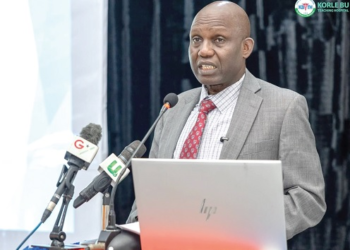
IMANI Centre for Policy and Education has backed narrowing Ghana’s Agenda 111 hospital programme to 35 priority sites and rolling out an electronic bed-tracking system for emergency care. Research Associate Ransford Brobbey reviewed the measures Health Minister Kwabena Mintah Akandoh outlined in a briefing on October 6, 2026.
Mr Brobbey argues that the original rollout spread about GH¢4.8 billion across dozens of sites without delivering a working facility, and that barcoded beds and ambulance diversion tackle the information gaps behind long waits for emergency beds. He also urges gazetted partnerships so that church and private operators can finish the stalled hospitals.
“The current policy rationalisation represents a necessary exercise in public expenditure prioritisation.”
Ransford Brobbey, IMANI Research Associate
Mr Brobbey describes the programme’s early phase as a case of spatial dispersion and severe fiscal overextension. Government committed roughly GH¢4.8 billion across dozens of sites, he reports, yet it delivered no operational facilities.
Scattered spending left many projects unfinished at the same time, and the report presents that pattern as the problem the Ministry set out to fix.
Thirty-Five Sites and Ten Starts in 2026
Under the new approach, state funding goes only to 35 projects that are nearing completion. Ten of them are prioritised for active construction in 2026, according to the report. The change concentrates money where a hospital can open soonest and stops the funds from spreading thin again.

For the remaining facilities, the Ministry is turning to partners. The report describes arrangements with the Christian Health Association of Ghana and private consortiums under Build-Operate-Transfer and Build-Equip-Operate-Transfer models.
These would let the facilities be completed and run without placing the whole capital cost on the public balance sheet.
Regional Hospitals, Cardiac Labs and Maternal Care
The report places the consolidation alongside investments aimed at regional gaps. It notes new 160-bed regional hospitals across the Oti, Western North and Savannah regions, and The Vaultz News has covered the regional referral hospitals planned for them.
Government is also building cardiology and catheterisation laboratories. The Korle Bu lab is being brought into operation, Mr Brobbey reports, while the labs at Tamale and Komfo Anokye have reached 70% completion.
He explains that they are meant to prevent fatal transfer delays for patients with acute heart attacks. At Korle Bu Teaching Hospital, a dedicated 400-bed Mother and Child Centre is under construction to ease tertiary obstetric congestion, though the report gives no cost or completion date.
Bed Tracking Targets the No-Bed Problem
Mr Brobbey frames the bed system as a response to a different kind of failure. “The chronic, deadly “no-bed syndrome” at tertiary emergency departments is as much an information asymmetry problem as it is an infrastructure deficit.”

The Electronic Emergency Bed Management System is anchored at a command centre at the Greater Accra Regional Hospital in Ridge. Emergency beds at Korle Bu, Komfo Anokye, Tamale and 37 Military Hospital now carry physical barcodes.
Managers can see in real time how many beds are occupied, how patients are staged at triage and how long each patient has stayed beyond the critical 24-hour window. The system also connects to the National Ambulance Service dispatch. Crews can be sent to facilities with confirmed capacity instead of arriving at a full emergency room.
In Mr Brobbey’s assessment, that link should prevent deaths in transit. He treats the tool as a cheap complement to new buildings, since it improves use of the beds the country already has.
Gazetted Partnerships for Stalled Hospitals
Mr Brobbey goes beyond describing the Ministry’s plans. He recommends standardised concession and management contracts, gazetted, so that the Christian Health Association and other non-profit private providers can complete, equip and run stalled Agenda 111 district hospitals.
The contracts would set defined service-level agreements and include state-backed payroll coverage. That backing, he suggests, would give operators a reason to take on facilities the state cannot finish alone.

The report is an analysis built largely on the Minister’s own briefing, so its figures await independent confirmation. It does not name the 35 sites, give completion dates for the labs or the Mother and Child Centre, or say when the bed system will reach every emergency department. It also does not explain how the state will pay for the payroll cover it recommends.
Those details will decide whether the narrower programme opens working hospitals faster than the first attempt did, and whether the bed tracking system changes what patients meet at the emergency door.
READ ALSO: UK Commits £17m for Chornobyl Repairs