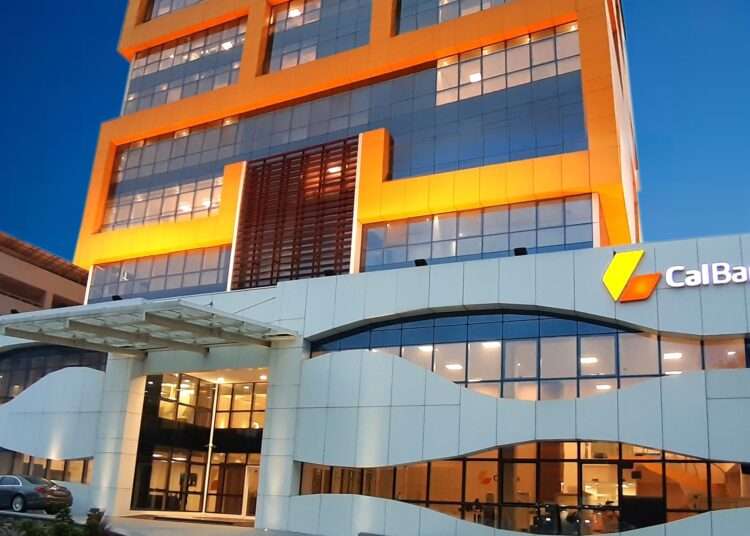
CalBank PLC is preparing for a fresh growth phase after escaping regulatory restrictions that once severely limited its ability to extend credit, with improving capital strength and falling lending rates creating new opportunities for the indigenous Ghanaian bank.
The bank’s unaudited financial results for the nine months ended September 30, 2026, reveal a remarkable turnaround, positioning it to pursue renewed lending growth as Ghana’s banking industry increasingly shifts attention towards the private sector.
After raising GH¢1.164 billion through a Rights Issue and Private Placement in November 2025, CalBank has strengthened its capital position, reduced its non-performing loans ratio and secured the removal of regulatory restrictions that previously constrained its lending activities.
The timing could prove significant. Ghana’s average commercial lending rate fell to 15.94% in August 2026, its lowest level in 25 years, creating conditions that could encourage businesses and households to seek more credit.
CalBank Breaks Free From Regulatory Constraints
CalBank’s recovery marks a sharp reversal from the difficulties it faced throughout much of 2025, when its financial position placed it under intense regulatory scrutiny.
The bank’s Capital Adequacy Ratio had fallen to negative 1.6%, triggering the Bank of Ghana’s Prompt Corrective Action regime. Its non-performing loans ratio also stood at 26.5%, reflecting the pressure associated with troubled credit exposures.
Under those conditions, expanding lending was severely constrained, leaving the bank with limited room to pursue growth while addressing its capital deficiencies.
The turning point arrived in November 2025 when CalBank launched a capital-raising exercise targeting GH¢900 million. The offering ultimately generated GH¢1.164 billion, exceeding the target by 29.4%.
The injection lifted stated capital from GH¢545.8 million to GH¢1.4215 billion and pushed the Capital Adequacy Ratio from negative territory to 18.4%.
Meanwhile, the non-performing loans ratio dropped from 26.5% to 8.5%, moving below the Bank of Ghana’s 10% year-end target.
With its capital position restored, the regulator lifted the restrictions that had prevented the bank from lending freely. CalBank now has greater room to pursue credit opportunities, although maintaining prudent underwriting standards will remain essential.
Falling Lending Rates Open a New Window
Ghana’s declining borrowing costs are creating a potentially favourable environment for banks seeking to expand their loan books.
The average commercial lending rate dropped to 15.94% in August 2026 from 20.58% in January, marking a substantial reduction in the cost of borrowing.
Lower interest rates can make loans more affordable for businesses seeking working capital, manufacturers planning expansion and households financing major purchases. They can also encourage companies that previously postponed investment decisions because of expensive credit to reconsider borrowing.
Private sector credit growth reached 29% in August 2026, signalling stronger lending activity across the economy.
The trend also reflects a changing direction in bank lending, with financial institutions increasingly looking beyond government securities towards private sector borrowers.
CalBank’s established presence in corporate and retail banking could help it benefit from this shift. However, the opportunity will depend on whether the bank can identify creditworthy borrowers and price loans appropriately without rebuilding the bad debts that contributed to its earlier difficulties.

Profit and Lending Figures Signal a Strong Comeback
CalBank’s latest financial results suggest that the recovery is already translating into stronger business activity.
Loans and advances to customers increased by 61% to GH¢2.05 billion in the nine months to September 2026, indicating a substantial expansion in the bank’s credit exposure.
Customer deposits also rose by 24.5% to GH¢10.63 billion, strengthening its deposit base and providing an important foundation for banking operations.
At the same time, bank-level profit increased by 39.4% to GH¢321.7 million.
The bank also recorded a 185% increase in net trading income, while net interest income climbed by 70.6% compared with the corresponding period in 2025.
These figures point to improving earnings capacity and renewed momentum following the capital injection.
Nevertheless, sustaining this performance will require more than increasing loan volumes. The bank must ensure that new facilities generate sufficient returns, remain repayable and contribute to long-term profitability.
Management Signals Ambition, but Caution Remains
CalBank’s leadership has expressed confidence in the institution’s renewed prospects following the successful capital raise.
Board Chairman Daniel Nii Kwei-Kumah Sackey described the oversubscription as “a clear vote of confidence in Brand CalBank, its governance and its long-term strategy”.
Managing Director Carl Selasi Asem described the capital injection as “the final catalyst required to trigger the renewed strategy”.
He has also emphasised the bank’s improved capacity to pursue growth, stating that “CalBank today is in a far better position than it has ever been to go out and pursue growth aggressively but responsibly”.
However, analysts have cautioned against interpreting the recovery as an invitation to expand lending without restraint.
A July 2026 IC Africa Securities report stated that CalBank “has effectively completed the stabilisation phase of its recovery”, while indicating that management was expected to prioritise credit quality over rapid loan growth.
The report also highlighted the bank’s negative retained earnings, suggesting that sustained profitability and balance-sheet strengthening remain necessary before shareholder returns can be considered.
Ghana’s Borrowers Could Benefit, but Execution Matters
CalBank’s return to lending freedom could intensify competition among Ghanaian banks for creditworthy businesses and individual borrowers.
As more lenders pursue private sector opportunities amid declining interest rates, customers with strong repayment capacity could benefit from improved access to financing and potentially more competitive lending terms.
Small and medium-sized enterprises, which frequently struggle to secure affordable credit, could also benefit if CalBank directs part of its renewed lending capacity towards viable businesses that need funding to expand operations and create jobs.
Yet the bank’s next chapter will be judged by the quality of its lending, not simply the amount of money it distributes.
CalBank has rebuilt its capital position, reduced its non-performing loans ratio and returned to stronger profitability. Its challenge now is to convert those gains into sustainable growth without compromising the financial discipline that made its recovery possible.
The regulatory shackles are gone, and Ghana’s lower interest rates have opened a promising window. Whether CalBank can turn that opportunity into lasting success will depend on how carefully it lends, manages risk and builds profitability.
READ ALSO: Ghana’s Economy Surges 7.4% as Services Sector Leads Growth