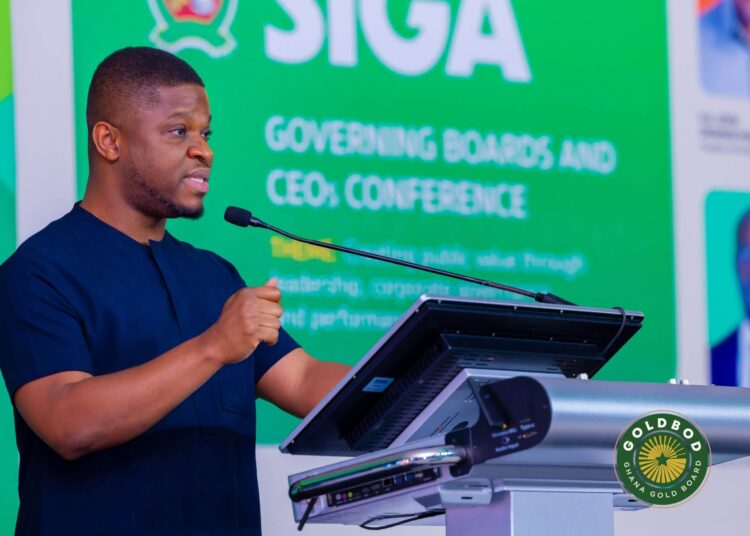
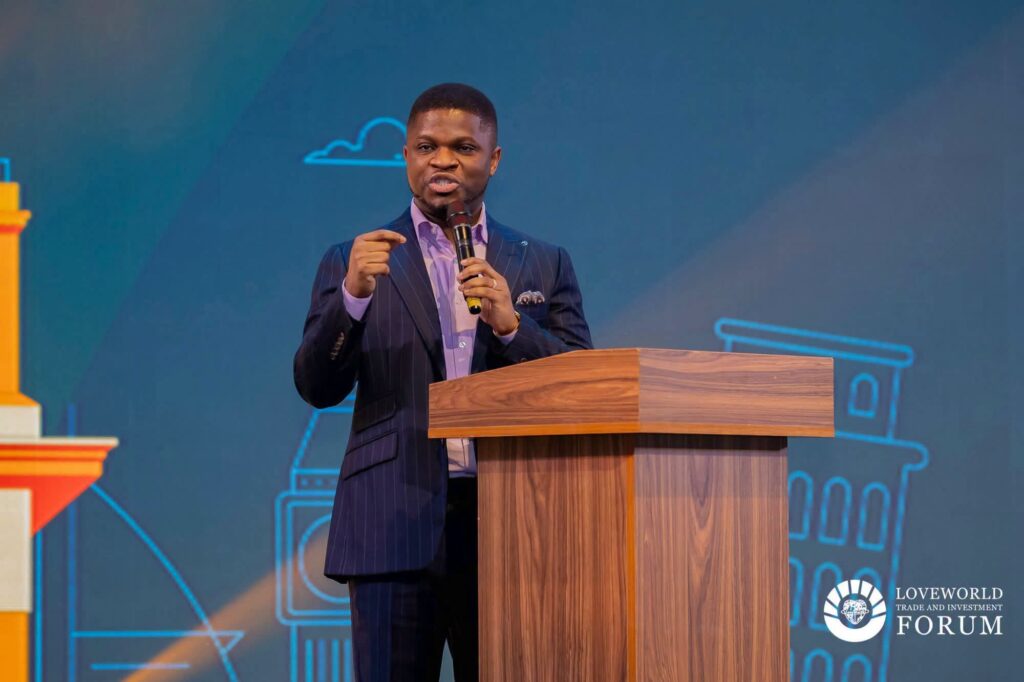
The Chief Executive Officer of the Ghana Gold Board, Sammy Gyamfi Esq., has articulated a transformative strategy dubbed the “GoldBod Model” aimed at transitioning Ghana and the broader African continent from raw resource extraction to comprehensive national prosperity through mineral sovereignty and local value addition.
Speaking at the 2026 African Minerals Policy Forum Mining in Motion, hosted under the auspices of the Asantehene, His Royal Majesty Otumfuo Osei Tutu II, and organized by the Ashanti Green Initiative under Nana Kwaku Duah, Sammy Gyamfi detailed how the newly established framework seeks to fundamentally restructure the governance of precious minerals.
The model targets an aggressive shift away from historical extraction-export dynamics by ensuring that mineral resources serve as primary anchors for domestic economic stabilization, revenue optimization, and long-term industrialization.
“Africa’s success in gold and other precious minerals cannot be measured only by the tonnes we extract but by the revenue, value, jobs, industries and shared prosperity that such minerals create for our people. Our mineral wealth must become more than an export statistic; it must strengthen our reserves, stabilize our foreign-exchange markets and currencies, power African enterprise and create dignified work for our growing youth population. If our minerals continue to create greater value abroad than at home, Africa will lose more than revenue: we will lose the confidence, potential and patience of the generation that must build our future.”
Sammy Gyamfi Esq
Whi8ke expanding on this strategic blueprint, the GoldBod framework establishes systemic mechanisms to retain mineral value within the domestic economy rather than surrendering wealth through the unrefined export of gold and other precious metals.
Under this vision, the Ghana Gold Board acts as a pivotal state vehicle to systematically integrate raw extraction with downstream processing, national reserve accumulation, and employment creation.
By strategically channeling local mining outputs into domestic refineries and state financial architecture, the initiative addresses systemic economic vulnerabilities, such as foreign exchange volatility and currency depreciation, while simultaneously fostering domestic enterprise and creating structured economic pathways for local actors within the resource value chain.
The Resource Paradox and Economic Imperatives
For decades, Ghana and many African mineral-exporting nations have wrestled with what economic historians describe as the resource curse a structural anomaly where significant subterranean mineral wealth exists alongside persistent socioeconomic underdevelopment.
Historically, raw gold exports have yielded minimal local retention, leaving resource-rich host nations vulnerable to global market shocks, minimal fiscal return, and severe currency instability.
The GoldBod framework directly confronts what Gyamfi described as an “age-long paradox,” addressing structural gaps where African minerals have historically “fuelled industries, strengthened economies and generated fortunes across the world,” while host communities retained only a marginal fraction of the resulting economic surplus.
Furthermore, the urgency for this institutional shift is driven by demographics, particularly the pressuring demands of a rapidly expanding youth cohort across the continent.
With thousands of young graduates and skilled laborers entering the labor force annually, raw mineral export models fail to absorb domestic labor or foster specialized technical skills.
Sammy Gyamfi noted that Africa’s vast underground wealth currently exists “alongside a rapidly growing youth population that is faced with high unemployment and deep underdevelopment,” rendering institutional reforms paramount to prevent widespread economic disillusionment.
Overcoming Legacy Policy and Structural Failures
The imperative for the GoldBod framework stems from a historical failure of governance and institutional design across the continent’s extractive sector.
Rather than a scarcity of geological deposits, the central bottleneck facing African mineral governance has been a chronic “failure to match our mineral resources with the resolve, policies, institutions, systems and leadership required to convert mineral wealth into lasting prosperity.”

Past regulatory regimes routinely prioritized rapid concession licensing and raw mineral royalty extraction over strategic value addition, domestic industrial linkages, and aggressive local content enforceability.
By establishing robust state-led institutions tailored for mineral sovereignty, Ghana aims to correct these legacy policy missteps.
The GoldBod model replaces fragmented, purely export-oriented oversight with a unified sovereign policy mechanism designed to capture high-value market segments including refining, bullion trading, jewelry production, and central bank reserve backing thereby insulating the national balance sheet from historical resource exploitation.
Driving Mineral Sovereignty and Youth Integration
Achieving true mineral sovereignty requires transforming precious metals into active leverage for national monetary policy and sustainable development.
By systematically utilizing locally mined gold to back national reserves and balance foreign currency requirements, the GoldBod model creates a self-sustaining financial cushion that directly fortifies the national currency against external economic pressures.
This institutional integration ensures that raw resources are converted into tangible, domestic balance-sheet strength before reaching global markets.
Ultimately, the model establishes concrete mechanisms for youth integration, moving young Africans from marginal roles in informal extraction into high-value industrial careers.
By forcing downstream processing and localized supply chain integration within Ghana, the initiative creates specialized technical positions, fosters indigenous entrepreneurship, and ensures that Africa’s mineral wealth delivers genuine socioeconomic mobility and lasting national prosperity.