Rachael Dede-Lathbridge never imagined her career would centre on nails. After finishing national service in 2019 and struggling to secure formal employment, she decided to learn a practical skill that would keep her occupied.
What began as a cautious response to uncertainty has grown into a full-time profession that she approaches with both technical precision and a clear-eyed understanding of the beauty industry’s realities.
“I just thought to myself, maybe I should learn a skill just in case I never actually get a job. I just need to know something so that I’m never left like destitute or anything like that”
Rachael Dede Lathbridge, CEO of Nailed by Bambi
She had planned to enrol in cosmetology school in 2019, but the COVID-19 pandemic delayed her training until 2021. Five to six years later, she runs her own space and continues to expand her knowledge while challenging persistent stereotypes about women in the beauty trade.

Family reactions were largely supportive, though not without reservation. Her mother encouraged her to keep seeking corporate work. Former schoolmates and others sometimes offered comments that reflected broader social attitudes.
“People passed comments mainly because I was always good in school. Everybody was saying that, okay, if you are good in school, you are going to do like corporate work or whatever”
Rachael Dede Lathbridge, CEO of Nailed by Bambi
Rachael is particularly firm about one misconception she encounters regularly.
“Business or salon owners are not uneducated women. That is a crazy misconception. I have two degrees. I have multiple language certificates. My cosmetology certificate is a diploma. I don’t like that idea that those of us in this industry are uneducated or we are just women who like to gossip”
Rachael Dede Lathbridge, CEO of Nailed by Bambi
A typical working day begins early. She wakes between 5:30 and 6 a.m., arrives at the shop, cleans the space and prepares for clients. Demand is usually lighter at the start of the week and intensifies from Wednesday through Saturday, with occasional Sunday bookings. Services vary widely pedicures, gel polish, acrylic sets sometimes all in a single day.
Yet Rachael has observed that many clients seek more than a finished set of nails. “People come for the conversation. Some people are here for the vibes. They really like to talk to someone. And I’ve noticed that with most of my clients, they come and they can just talk.” She describes the interaction as a form of mutual support.
“For me as a nail tech, it’s more or less like a mini therapy session for myself and then for others. With older women, I like the conversations with them because they are learning a lot. Especially those who are married, those who are mothers. You hear so many things and you’re picking small things here and there. So it’s actually more than just doing nails”
Rachael Dede Lathbridge, CEO of Nailed by Bambi
Sterotypes on state of Nails
In contemporary Ghanaian society, well-kept nails often function as a visible marker of self-care. One regular client insists she cannot go a full month without an appointment because of her frequent events. Rachael notes that many women feel pressure to appear polished in at least one area; nails, hair or skin to signal that they take care of themselves.
“For a Ghanaian woman right now, it’s more like a status symbol. You have to show that, okay, me too. I’m a well kept lady. I also do my nails, I also do my hair”
Rachael Dede Lathbridge, CEO of Nailed by Bambi
Not every request is purely personal. Some clients arrive determined to match trends they see others wearing.
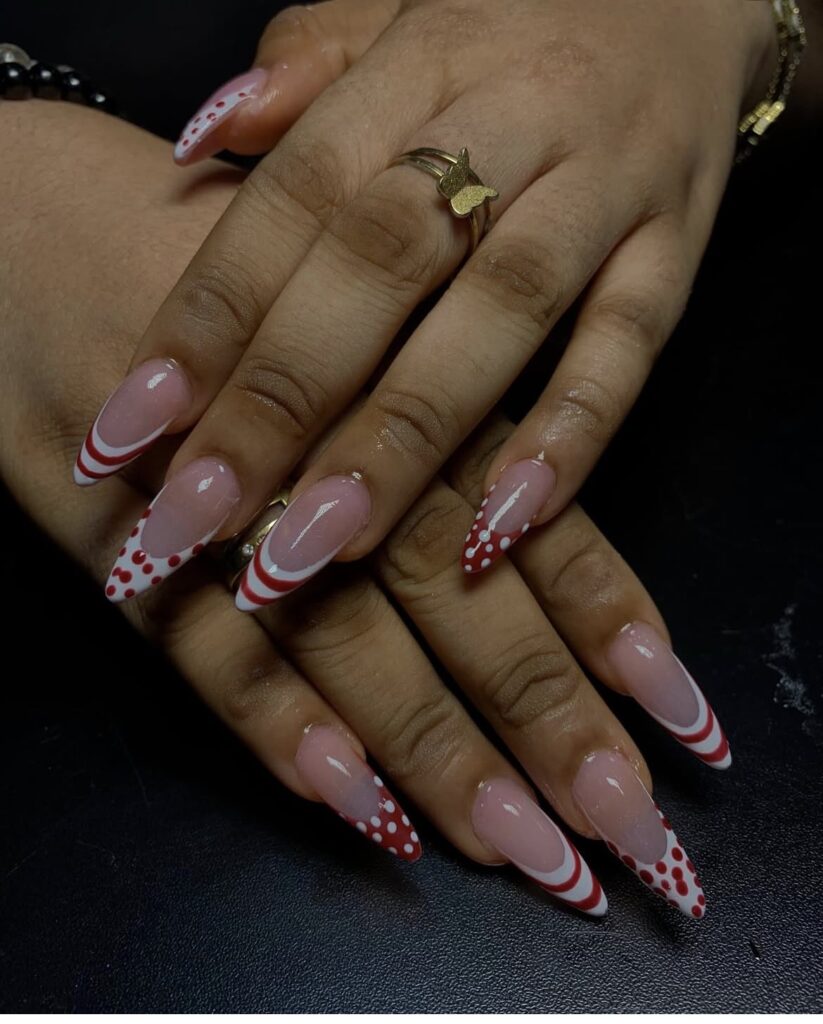
“You have clients who have never done nails before. Come and say, oh, they want to do so-and-so nails. So you have to keep asking them, are you sure? Especially with the long ones”
Rachael Dede Lathbridge, CEO of Nailed by Bambi
Her own view is straightforward: “I don’t think you should be doing it because everyone is doing it. You should just do it because you also want to look nice and presentable.”
Long and bold nails still attract judgment from multiple directions fellow technicians, men, older people and peers. The familiar question “Can you wash?” surfaces often, reflecting assumptions that elaborate nails signal impracticality even in a modern context where many women outsource domestic tasks or simply prioritise personal style.
Role of Social Media on the Beauty Industry
Social media has accelerated change. Classic colour requests have given way to more elaborate designs inspired by international nail artists on Instagram and TikTok. Both technicians and clients scroll the same feeds, raising expectations on both sides.
“You as a nail tech, you always have to be on social media. You cannot put social media away. Because whatever you are looking at, your potential client is also looking at it.”
Rachael Dede Lathbridge, CEO of Nailed by Bambi
Rachael draws motivation primarily from her own progress. Comparing her early uncertain work with her current ability reinforces her confidence. She identifies more as a technician than an artist, noting that nail art is subjective and that many successful colleagues build strong businesses around clean, simple sets.
The most demanding techniques involve three-dimensional work. Rhinestone designs and molding gel flowers require significant skill. Before specialised gels became available, creating sculpted effects with acrylic powder was especially difficult.
She is equally clear about common health concerns. Properly applied gel polish and acrylics do not inherently damage natural nails. Coverage can actually protect the nail plate from everyday breakage. Problems usually arise from poor preparation rather than the products themselves. A base coat provides an important protective barrier.
Accidents still happen. Around 2022, a mix-up between acetone and pedicure solution created a tense moment that was resolved by soaking the client’s hands in oil to slow any burning sensation. The incident underlined the need for careful product handling in a busy workspace.
Starting and sustaining the business has required substantial sacrifice. Rachael gave up much of her social life while managing operations alone for a long period. Monthly restocking and supplies typically cost between GH¢1,500 and GH¢2,500 during busy months. Pricing is calculated according to time and materials used, yet clients frequently push back even on carefully considered rates.
Keeping pace with trends adds further expense and practice time. New products must be purchased and mastered whether or not clients immediately request them.
Looking Ahead
Looking five to ten years ahead, Rachel hopes to expand into a full-service spa offering nails, hair, lashes, facials, waxing and massage under one roof-an extension of her original cosmetology training.
The physical demands remain her greatest long-term concern. Continuous detailed work strains hands, shoulders and back, while prolonged chemical exposure requires careful management.
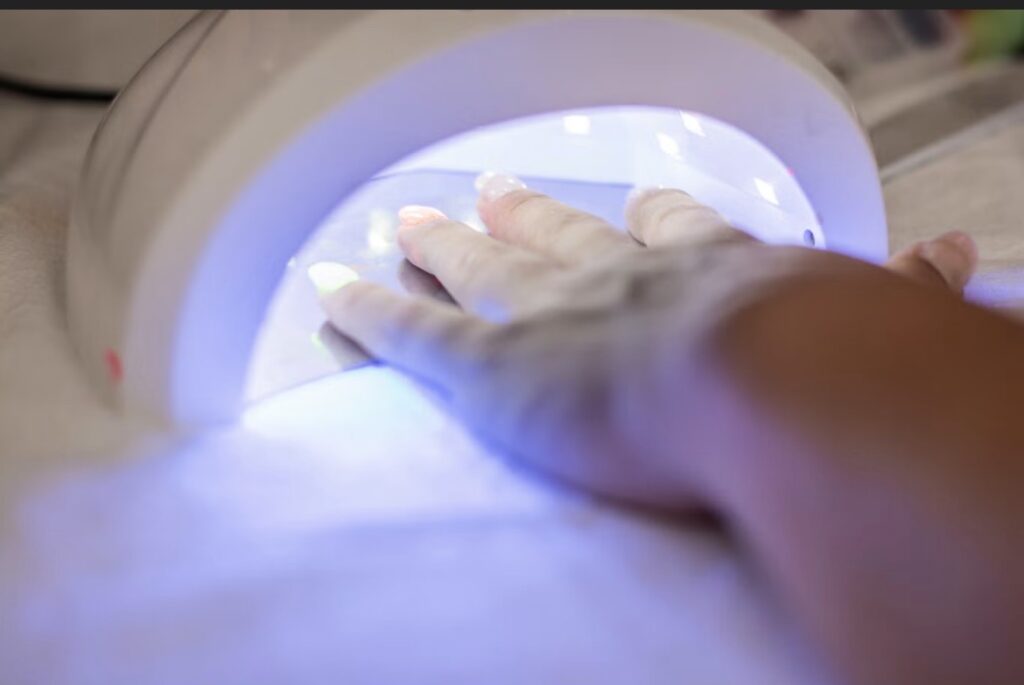
“It’s exhausting. Physically. A lot of people stop doing this after a couple of years. Not because they are not passionate about it. Or maybe they are not earning money. But physically it takes a toll on your body”
Rachael Dede Lathbridge, CEO of Nailed by Bambi
To young women considering the same path, her advice is direct.
“It would be very difficult. Extremely difficult. But the most important thing is to start. When I started in 2021, this is not where I saw myself. I didn’t have a plan. I didn’t have the money. I didn’t have savings. Nothing. But because I dedicated so much time and I sacrificed so much to learning this skill. Eventually, help came”
Rachael Dede Lathbridge, CEO of Nailed by Bambi
Rachael Dede-Lathbridge continues to balance technical skill, client care and personal ambition while quietly dismantling outdated assumptions about the beauty industry. In her chair, nails become both a craft and a conversation, a status marker and a form of everyday self-respect.
READ ALSO:Government Plans Emergency Unit Expansion, Digital Bed Management Rollout