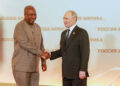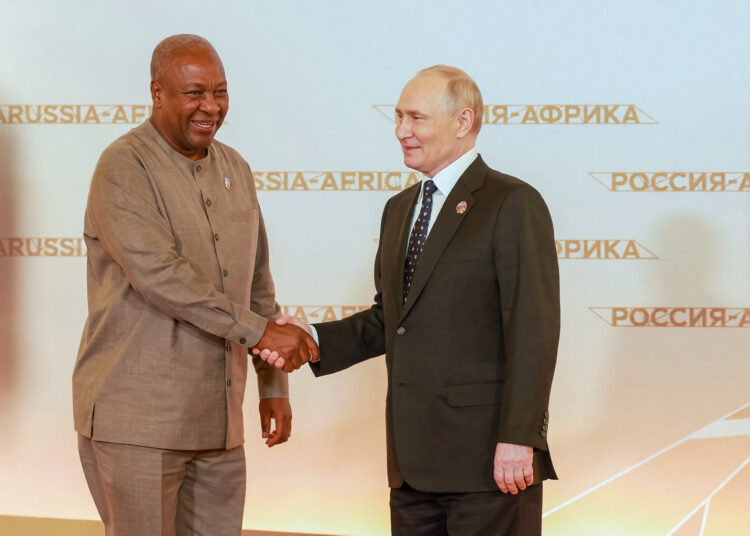
President John Dramani Mahama has proposed a new framework for digital cooperation between Ghana and Russia.
Speaking at the Third Russia–Africa Summit in Moscow on 29 October 2026, he called for practical partnerships that would strengthen Africa’s technological capabilities and support its economic development.
“Ghana is prepared to explore a Russia-Africa Digital Innovation and Artificial Intelligence Program that will bring together African universities, research institutions, businesses, and public agencies. It could support joint research, carefully assessed pilot projects, skills development, and technology transfer.”
His Excellency John Dramani Mahama
The President of Ghana observed that artificial intelligence is reshaping production, public administration and education, making it “imperative for African countries to develop the infrastructure and expertise required to participate meaningfully in that transformation.” He cautioned against leaving the continent on the margins of technological advancement, advocating cooperation that enables African institutions to shape solutions suited to their needs.
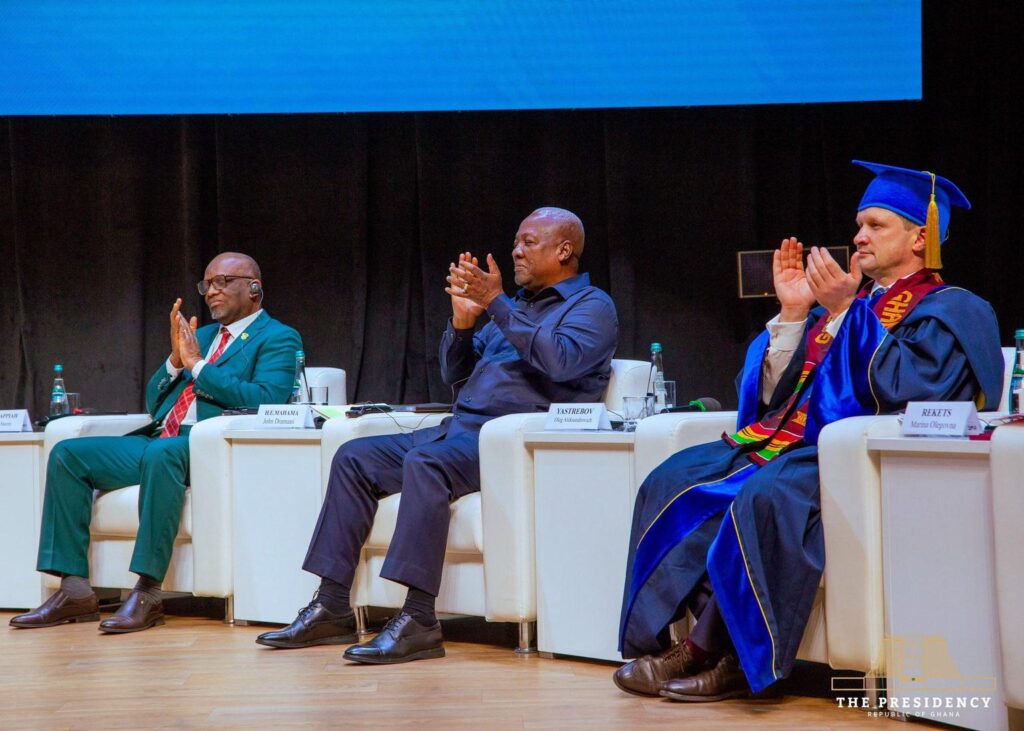
President Mahama identified agriculture, healthcare, education, municipal services, transport management, tax and revenue collection, and environmental monitoring as potential areas for practical AI applications. He emphasised that technology should deliver measurable benefits by improving decision-making, strengthening public services and helping businesses and communities operate more efficiently.
Turning to the wider investment agenda, the President highlighted Ghana’s commitment to partnerships that respect sovereignty, equality and peaceful international cooperation. He also pointed to the country’s strategic location on the Gulf of Guinea and its position as host of the African Continental Free Trade Area Secretariat as advantages for businesses seeking opportunities across Africa.
In addition, His Excellency called for mechanisms that would facilitate legitimate trade settlements through local currencies and digital payment systems. He identified central banks, commercial banks and fintech companies as important participants in efforts to make cross-border transactions more seamless.
The President further encouraged Russian businesses to work with Ghanaian counterparts through joint ventures that develop local expertise and create opportunities for small and medium-sized enterprises. Such partnerships, he posited, should translate diplomatic goodwill into lasting commercial relationships.
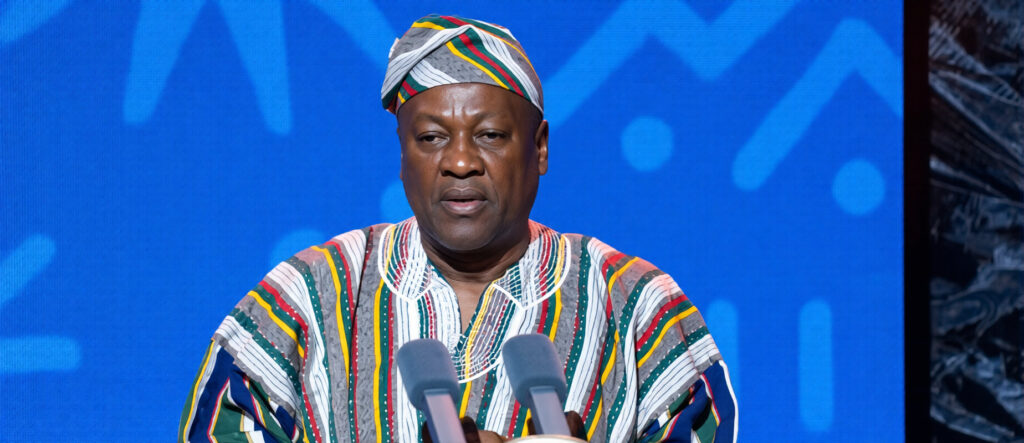
Consequently, President Mahama called on participants to leave the summit with a clear commitment to implementation. He emphasised that the value of Ghana–Russia cooperation would ultimately be measured by improvements in people’s communities and everyday lives.
President Mahama Courts Russian Investment In Ghana’s Energy Future
Against the backdrop of Ghana’s industrialisation drive and efforts to strengthen food security, President John Dramani Mahama called for increased Russian investment in nuclear power, renewable energy and agricultural technology.
He highlighted opportunities for both countries to combine technical expertise and investment to improve electricity supply, boost farm productivity and build a more resilient economy.
His Excellency linked the proposed cooperation to “Ghana’s pursuit of a diversified energy mix” noting that dependable and affordable electricity remains essential for industrial growth. He also called for collaboration in fertiliser production, agricultural machinery, scientific research and modern farming techniques to improve productivity and help farmers manage costs.
“Ghana has a historical relation with Russia in the peaceful use of nuclear energy. As far back as 1964, the Soviet Union provided Ghana with a 2-megawatt nuclear reactor for scientific and research purposes. Many Ghanaian nuclear scientists were trained here in Russia to operate the reactor.”
His Excellency John Dramani Mahama
President Mahama also identified Russia’s experience in renewable energy and nuclear power as an opportunity for cooperation capable of producing tangible results. He emphasised that industrial development depends on electricity supplies that are both reliable and affordable.
Turning to agriculture, the President highlighted Russia’s capabilities in fertiliser production, agricultural machinery and scientific research as areas that could support Ghanaian farmers. He called for dependable fertiliser supplies at competitive prices, while encouraging investment in local production and blending to strengthen resilience.
In addition, His Excellency pointed to soil mapping, precision agriculture and satellite information as tools that could improve planting decisions and the application of agricultural inputs. He emphasised that “such technologies must help farmers reduce costs, make informed decisions and protect their harvests.”
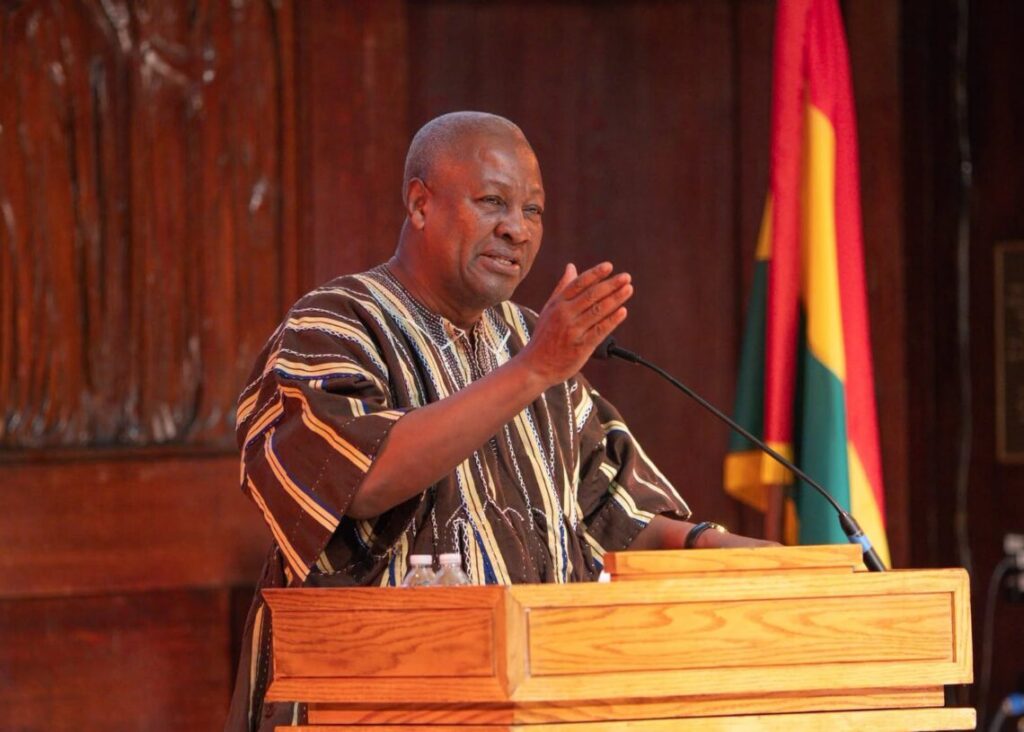
Beyond energy and agriculture, President Mahama called for stronger trade and investment ties, identifying opportunities in cocoa, cashew, shea nut, horticulture, mineral processing and manufacturing. He urged Russian businesses to collaborate with Ghanaian enterprises in areas including pharmaceuticals, transport infrastructure and agro-processing, with joint ventures creating opportunities for smaller businesses as well as major investors.
The President also advocated improved access for African products to Russian markets through better market information, predictable standards and stronger logistics. He called for closer cooperation between business communities to make trade more balanced and beneficial to both sides.
Addressing international security, President Mahama appealed for amicable resolutions to conflicts disrupting lives and global supply chains. He welcomed Russia’s willingness to resume trilateral talks concerning Ukraine and called for international cooperation against terrorism, particularly in the territories of the Alliance of Sahelian States.