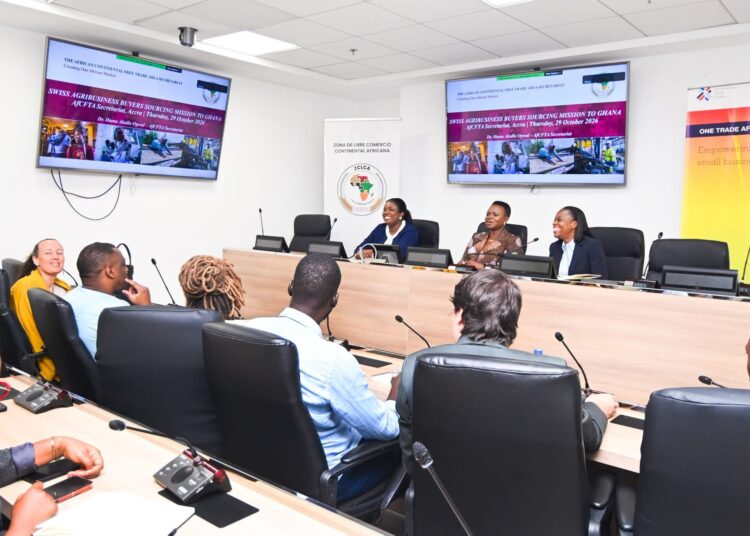
The African Continental Free Trade Area (AfCFTA) Secretariat, in collaboration with the International Trade Centre (ITC), has intensified efforts to connect African agribusinesses with international buyers following an engagement with a Swiss agribusiness buyers’ delegation at its headquarters in Accra.
The meeting focused on strengthening commercial relationships between Ghana and Switzerland, introducing international buyers to opportunities within Africa’s agricultural value chains and providing practical guidance on how businesses can utilise the AfCFTA framework to facilitate trade across the continent.
The engagement forms part of broader efforts to position the continental free trade agreement as a practical instrument for expanding market access, attracting investment, encouraging local processing and connecting African producers to regional and international supply chains.
“Connecting international buyers with African suppliers creates opportunities for stronger commercial partnerships, increased agricultural exports and greater participation in global value chains.”
AfCFTA
The engagement is particularly significant for Ghana, where agriculture remains an important contributor to employment, rural livelihoods and industrial development.
By facilitating direct engagement between international buyers and African trade institutions, the initiative could help businesses identify new markets, understand export requirements and develop relationships that translate into commercial transactions.
AfCFTA Opens Access To Continental Markets
During the Accra engagement, the Secretariat shared practical tools and guidance to help businesses understand how to trade under the agreement. This included the importance of understanding applicable tariff concessions, product classification, customs procedures and Rules of Origin.
Rules of Origin are particularly important because they determine whether a product qualifies as originating within an AfCFTA member country and can therefore benefit from preferential tariff treatment when traded between participating African countries.
For Ghanaian agribusinesses, compliance with these requirements is essential to accessing preferential markets across the continent.

“Access to AfCFTA preferences depends not only on producing goods in Africa but also on meeting the applicable Rules of Origin, tariff requirements and export documentation procedures.”
AfCFTA
According to guidance published by Ghana’s Free Zones Authority AfCFTA Desk, exporters must ensure their products satisfy the relevant origin criteria and fall within the liberalised tariff schedules of destination countries before claiming preferential treatment.
The engagement also presents an opportunity to familiarise international buyers with the scale and diversity of Africa’s agricultural production, while helping businesses understand the regulatory environment governing trade within the continent.
It is important, however, to distinguish between the two markets: AfCFTA preferential tariffs apply to eligible trade between African member states, not directly to imports into Switzerland.
Swiss Market Off Export Opportunity
Switzerland represents an important potential market for Ghanaian agricultural products, particularly cocoa, fruits, nuts and processed agricultural commodities.
Data from the Swiss Economic Report on Ghana 2025 indicates that bilateral trade between the two countries reached approximately CHF3.83 billion in 2024. However, the relationship remains heavily concentrated in gold, which accounted for approximately CHF3.67 billion of Switzerland’s imports from Ghana.
Cocoa followed as another important Ghanaian export, generating approximately CHF88.2 million in Swiss imports during the same period.
Additional trade data from the World Bank’s World Integrated Trade Solution (WITS) shows that Switzerland imported approximately US$94.94 million worth of cocoa beans from Ghana in 2024, representing about 24,144 tonnes.
These figures demonstrate an established agricultural trading relationship that could provide a foundation for expanding other Ghanaian agribusiness products into the Swiss market.
“Diversifying Ghana’s exports beyond traditional commodities requires stronger buyer connections, competitive local processing and the ability of producers to meet international market requirements.”
AfCCTA
The Swiss market also presents opportunities for African businesses willing to invest in quality assurance, traceability, sustainable production and internationally recognised certification systems.
The engagement therefore provides a platform for examining how Ghanaian producers, processors and exporters can position their products to meet the expectations of Swiss buyers, particularly in areas where consistent supply, product quality and value addition influence purchasing decisions.
Value Addition To Drive Agribusiness Growth
Beyond establishing commercial relationships, the discussions highlighted the importance of value addition in transforming Africa’s agricultural sector.
For decades, several African economies have depended significantly on exporting unprocessed agricultural commodities, limiting the economic benefits retained within producing countries.
Strengthening processing capacity can improve product quality, extend shelf life, create manufacturing opportunities and increase the value generated from agricultural production.
In Ghana, opportunities exist across cocoa processing, cashew processing, fruit preservation, shea butter production, vegetable processing and the development of packaged agricultural products.
The International Trade Centre’s involvement is particularly relevant because of its focus on supporting small and medium-sized enterprises to become more competitive and participate in international trade.
Through market intelligence, trade-related technical assistance and business development support, the organisation works to address challenges that prevent enterprises from accessing international markets.
For Ghanaian agribusinesses, stronger cooperation between the AfCFTA Secretariat and ITC could help bridge the gap between production capacity and international market expectations.
“The long-term value of international trade partnerships lies in building competitive African businesses that can supply quality products, attract investment and retain more value within their economies.”
AfCFTA
The Accra engagement also reinforces the importance of connecting policy discussions with practical business opportunities. While trade agreements provide the legal framework for market access, businesses require information, technical capacity, financing, reliable logistics and established commercial relationships to benefit from them.
The participation of Swiss buyers offers an opportunity to move beyond institutional discussions towards identifying potential suppliers, understanding product requirements and exploring sustainable sourcing arrangements.
Although the identities of individual speakers, the specific products examined and the detailed outcomes of the meeting were not disclosed in the announcement, the engagement underscores the growing importance of international partnerships in advancing Africa’s agricultural trade ambitions.
The collaboration between the AfCFTA Secretariat and ITC seeks to strengthen the link between African producers and international markets, ensuring that the continent’s agricultural potential translates into increased exports, industrial development, investment and employment.
READ ALSO:BoG Absorbs GH¢9.44bn in Fresh Liquidity Squeeze