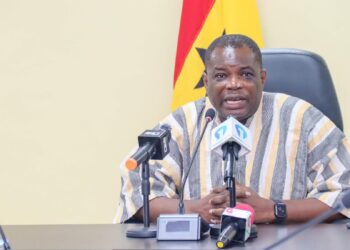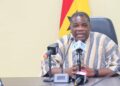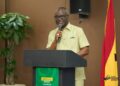
Beyond the immediate dispute over the 2026 salary review, the General Secretary of the Judicial Service Staff Association of Ghana (JUSAG), Abdulai Yakubu has drawn attention to longstanding arrears in workers’ allowances.
He contends that the association’s current industrial action also seeks to secure the implementation of conditions of service that have now been given legal backing.
Mr Yakubu explained that four allowances remain outstanding, although he declined to identify them individually because of their sensitive nature. He traced the dispute to the association’s 2012 conditions of service, which contained the benefits currently being contested but were never fully implemented.
“We have waited patiently. We have gone through the legal processes, reviewed the documents, fine-tuned them and they have now become law. So, we are asking that, just as we have exercised patience for so long to get the law passed, now that it has become law, let us have it implemented.”
Abdulai Yakubu
The General Secretary recalled that the matter previously reached the Supreme Court in 2015, when JUSAG engaged the Attorney-General and the Fair Wages and Salaries Commission over the regulation of its conditions of service. He explained that the court directed the Attorney-General and the Judicial Council to comply with Article 158(2) of the Constitution by establishing the necessary regulation within three months, but the directive was not fulfilled within the stipulated period.
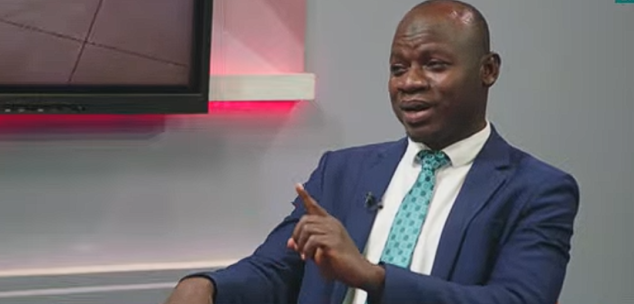
According to Mr Yakubu, the regulation was eventually passed in 2025 after years of sustained engagement and repeated industrial action by successive association leaders. He therefore considers the present disagreement a question of implementing an existing legal framework, not negotiating benefits without an established basis.
He also invoked Article 296 of the Constitution, which requires discretion exercised by persons who are not judges or judicial officers to be applied judiciously and not capriciously. In his assessment, the President has limited room to disregard the applicable regulation when considering the Judicial Council’s advice on the workers’ conditions of service. The financial implications, he explained, “are evident in the disparity between what some employees are entitled to receive and their actual take-home pay.”
He also cited differences in salary adjustments between judicial staff and other public-sector employees. In 2023, JUSAG members received a 25 percent base-pay increase covering two years, while other public-sector workers received a 30 percent increase for one year.
The following year, those workers received another increase, while judicial staff received none. Mr Yakubu warned that the disparity also affects pensions and other employment benefits, insisting that the association expects the applicable conditions of service to be honoured.
He also highlighted the demands placed on judicial employees, including strict professional conduct, prescribed dress codes and restrictions on accepting gifts.
JUSAG Strike Enters Fourth Day Over Unmet Demands
As the strike action by the Judicial Service Staff Association of Ghana (JUSAG) reaches its fourth day, General Secretary Abdulai Yakubu indicated that members will not suspend the strike until government addresses their outstanding demands.
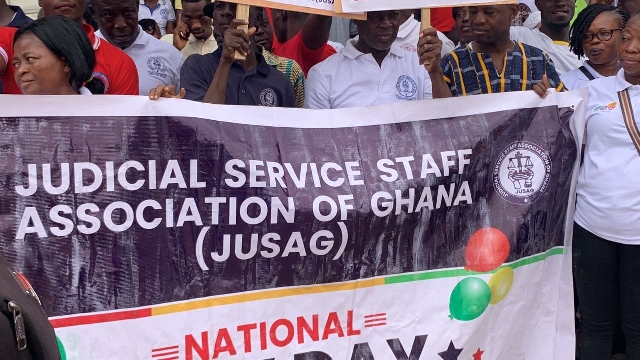
The action, which centres on the delayed approval of the association’s 2026 salary review and four allowances, remains in force despite a series of engagements.
“Though the government has submitted a revised proposal, we observed that it did not amount to even 20% of the demands we were looking for. So, we have decided that the government’s new revised position does not even meet 20% of what you were asking for.”
Abdulai Yakubu
Consequently, the union has submitted a further proposal of its own, which it regards as its “final position for resolving the impasse.”
The General Secretary indicated that the association has exhausted several avenues to secure the necessary approvals before resorting to industrial action. He explained that the Judicial Council’s advice on the 2026 salary review has been forwarded to the Office of the President, but the approval process experienced prolonged delays despite repeated reminders from the staff association.
According to Mr Yakubu, JUSAG raised the matter during public engagements involving the Chief Justice and government officials, including the Attorney-General and the Chief of Staff. However, the absence of the required approval prompted the association to notify the National Labour Commission that it would embark on an indefinite strike if the matter remained unresolved by the end of October.
He further elucidated that the association’s National Executive Council, its highest decision-making body, passed a resolution authorising the industrial action on October 30, 2026. Although the Labour Commission subsequently directed the Labour Ministry to engage the unions, the meeting was scheduled for November 2, after the date set for the commencement of the strike.
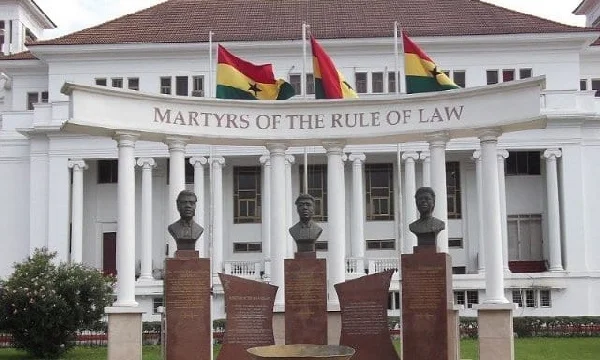
Nevertheless, negotiations have continued, with JUSAG acknowledging some progress in the government’s revised position. Mr Yakubu indicated that the association has also agreed to accept payment of salary arrears in two instalments, following a revision of the proposed payment timeline.
However, the outstanding allowances remain a significant obstacle. He explained that the unions reconsidered their position through internal consultations and submitted a revised set of demands to the relevant authorities on November 4, with further communication distributed the following morning.
The proposal, he indicated, has been communicated to the Attorney-General, the Judiciary, the Presidency, the Labour Ministry and the Finance Ministry. JUSAG is awaiting a favourable response, which could pave the way for the suspension of the strike.
While expressing sympathy for affected members of the public, he emphasised that the association needs a satisfactory resolution to prevent the dispute from recurring.
READ ALSO: 100,000 Threatened by Closure of South Sudan Border Clinic — IOM