Ghana’s ambition to use natural gas as a driver of industrialisation will depend not only on the availability of domestic resources but also on whether industries can provide sufficient demand and credible commercial arrangements to justify investment in the infrastructure required to deliver the fuel.
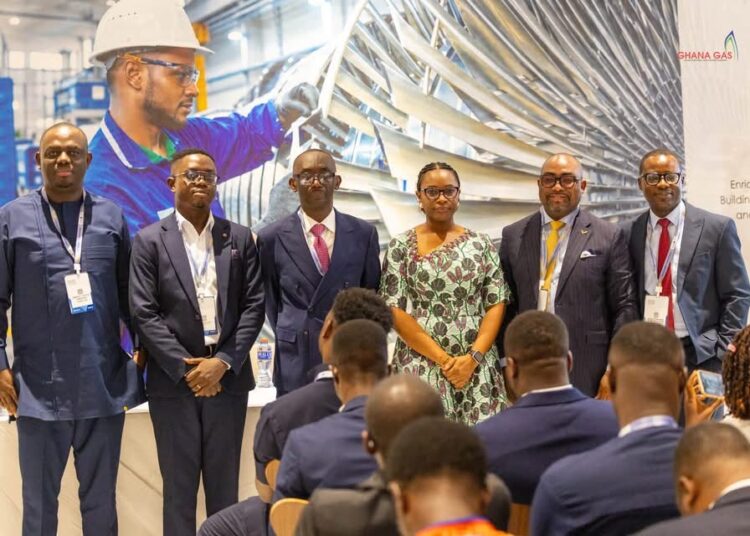
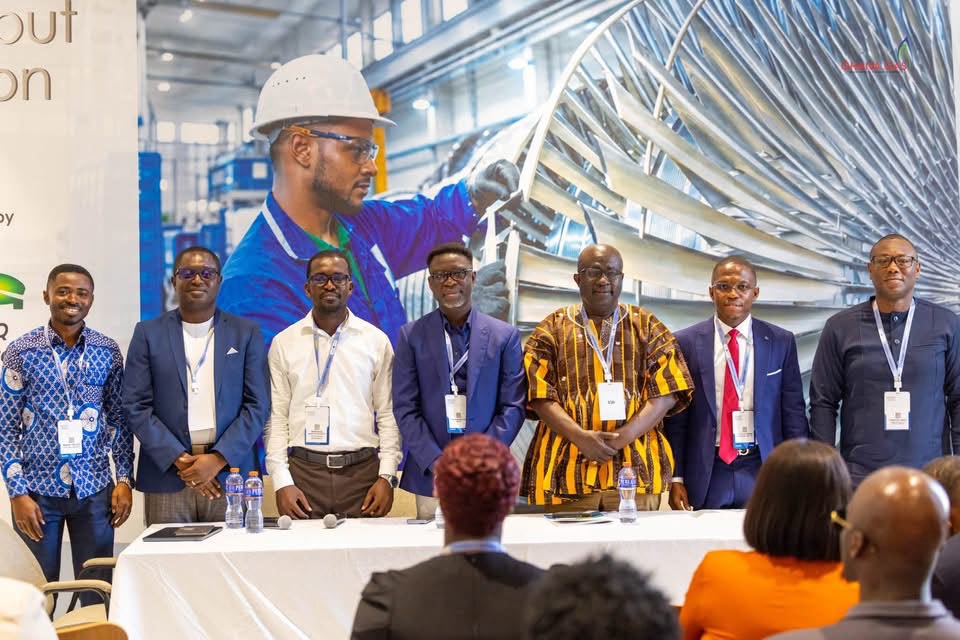
The issue featured prominently at the 2026 Local Content Conference and Exhibition (LCCE2026), where two senior officials of Ghana National Gas Limited Company (Ghana Gas) participated in discussions on domestic gas monetisation and financing models for gas infrastructure and downstream investment.
Ing. Charles Anafi, Senior Manager of Commercial Operations, joined a panel examining how domestic gas could support industrial value chains, while Samuel Tsatsu Dagedzie, General Manager of Finance and Accounts, participated in discussions on financing approaches to reduce investment risks across the gas sector.
Their respective engagements brought together two closely connected questions: how Ghana can create stronger industrial markets for its natural gas and how the infrastructure needed to supply those markets can attract sustainable financing.
The distinction is important because gas resources do not automatically translate into industrial development.
Processing facilities, transmission pipelines and distribution networks require substantial capital, while investors need confidence that sufficient volumes will be purchased and that customers can meet their payment obligations.
Industrial Demand Must Support Infrastructure Investment
Ghana has identified natural gas as an important resource for electricity generation and the development of energy-intensive industries, including fertiliser production and petrochemicals.

The Ministry of Energy and Green Transition recognises the economic potential but also acknowledges the constraints affecting the sector.
“However inadequate infrastructure, gas monetization constraints and required expertise remain major challenges to the development of a vibrant and sustainable indigenous gas industry.”
The observation captures the central difficulty facing Ghana’s gas industrialisation agenda. The country needs infrastructure to expand gas consumption, but investors need credible demand to justify the construction and expansion of that infrastructure.
This creates a commercial dependency between gas suppliers, infrastructure operators and industrial customers.
For example, a pipeline serving an industrial enclave requires sufficient and predictable consumption to generate revenue over the project’s operating life.
Without long-term commitments from customers, investors may be reluctant to finance construction, while industries may hesitate to invest in gas-dependent production facilities without assurances of reliable supply.
The challenge is therefore to coordinate investment in gas supply with the development of industries capable of absorbing the resource.
Anafi’s participation in the LCCE2026 panel on monetising domestic gas for industrialisation placed this relationship at the centre of discussions about the country’s gas value chain.
Beyond power generation, industries such as mining, manufacturing, cement production and agro-processing could provide additional markets for natural gas.
Developing these markets would diversify consumption and potentially increase the economic value retained within Ghana.
However, industrial users must also be able to access gas at commercially sustainable prices. If supply costs make gas-based production uncompetitive, the demand required to support infrastructure investment may not materialise.
Financing Must Follow Credible Commercial Demand
The financing discussion involving Dagedzie addressed another critical dimension of the problem: how to structure investments in a sector where infrastructure projects require substantial upfront capital and generate returns over extended periods.
Gas infrastructure projects often involve considerable construction costs, long development timelines and exposure to regulatory, operational and market risks.
For private investors and lenders, the availability of gas alone is insufficient. They must also assess the reliability of supply, the financial strength of prospective customers, tariff arrangements and the certainty of future revenues.
A pipeline or processing facility may have strong economic potential, but its financial viability can be undermined if customers cannot pay for the gas delivered or if commercial agreements do not provide predictable revenue.
This is particularly relevant to Ghana, where financial pressures across the electricity and gas value chains have affected payment flows between industry participants.
At a September 2026 technical consultative workshop organised by the Public Interest and Accountability Committee (PIAC), GNPC Deputy Chief Executive responsible for Finance, Commercial and Administration, Hamis Ussif, emphasised the importance of having a commercially sustainable structure across the industry.
“A vulnerability in one segment can easily cascade and you have a systemic risk across the whole chain.”
His observation highlights why financing decisions cannot be considered in isolation. Investment in production, processing, transportation and distribution must be supported by arrangements that allow revenues and payments to move reliably throughout the system.
For Ghana, this means that financing models must address not only the availability of capital but also the underlying commercial risks that could affect repayment and project returns.
Potential structures may include long-term gas supply and offtake agreements, private-sector participation, project financing and risk-sharing arrangements between government and investors.
However, the suitability of each model will depend on the specific project, the creditworthiness of its customers and the allocation of construction and operational risks.
Ghana Must Connect Gas Supply To Industrial Growth
The Government’s Gas Master Plan provides a framework for prioritising gas use in power and non-power sectors, planning infrastructure development and establishing a transparent pricing framework.
These priorities are important because the development of a broader domestic gas market requires more than increasing production and processing capacity.

The country must also ensure that gas can reach industrial consumers at competitive prices and that businesses have the capacity to convert the resource into higher-value products.
Commercial-scale fertiliser production and petrochemical manufacturing, for instance, could create demand beyond the electricity sector.
Such industries could also stimulate investment in storage, transportation, engineering and other supporting services.
However, these opportunities require clear supply commitments, reliable infrastructure and investment conditions that allow projects to operate profitably.
The financing discussion at LCCE2026 therefore raises a wider policy question about how Ghana can align its industrialisation ambitions with the commercial realities of gas infrastructure development.
If industrial demand remains uncertain, infrastructure investment may be delayed. If infrastructure is inadequate, industries may be unwilling to commit capital to gas-dependent operations.
Breaking this cycle requires coordinated planning between government, gas producers, infrastructure operators, financial institutions and prospective industrial consumers.
From Industry Discussions To Investable Projects
Ghana Gas’ participation in the two panels reflects the company’s role in discussions about how domestic gas resources can support wider economic activity.
The company’s contribution also comes as Ghana seeks to expand the use of natural gas beyond electricity generation and strengthen the infrastructure connecting production, processing and consumption.

But the practical value of these discussions will depend on whether they lead to commercially viable projects, stronger offtake commitments and financing arrangements capable of mobilising investment.
The announcements provided by Ghana Gas do not disclose specific financing proposals, investment commitments or industrial offtake agreements emerging from the panels.
It would therefore be premature to describe the discussions as having secured new funding or partnerships.
For now, the central issue remains the alignment of supply, demand and finance.
Ghana’s natural gas resources can support industrial expansion, but the transition from resource availability to productive economic use requires a market in which suppliers can invest, infrastructure operators can recover their costs and industrial customers can obtain reliable and affordable gas.
That is the commercial foundation the country’s gas industrialisation ambitions will need to establish.
READ ALSO: Government Misses T-Bills Target by GH¢2.13bn as Yields Decline