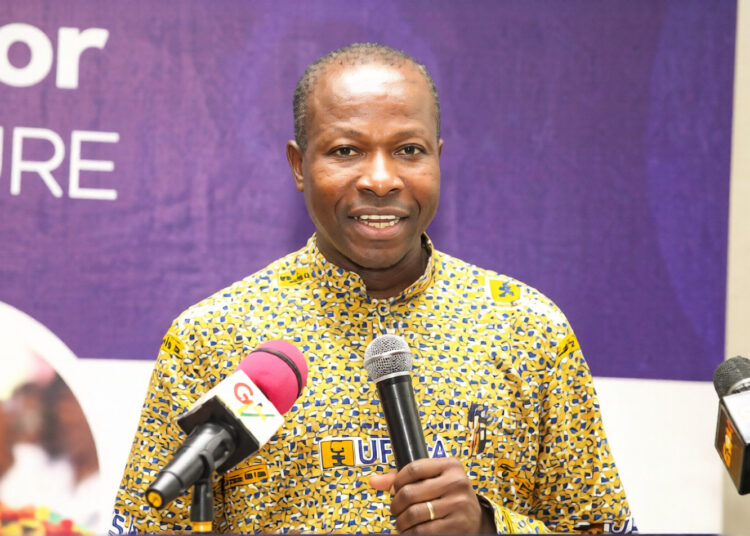
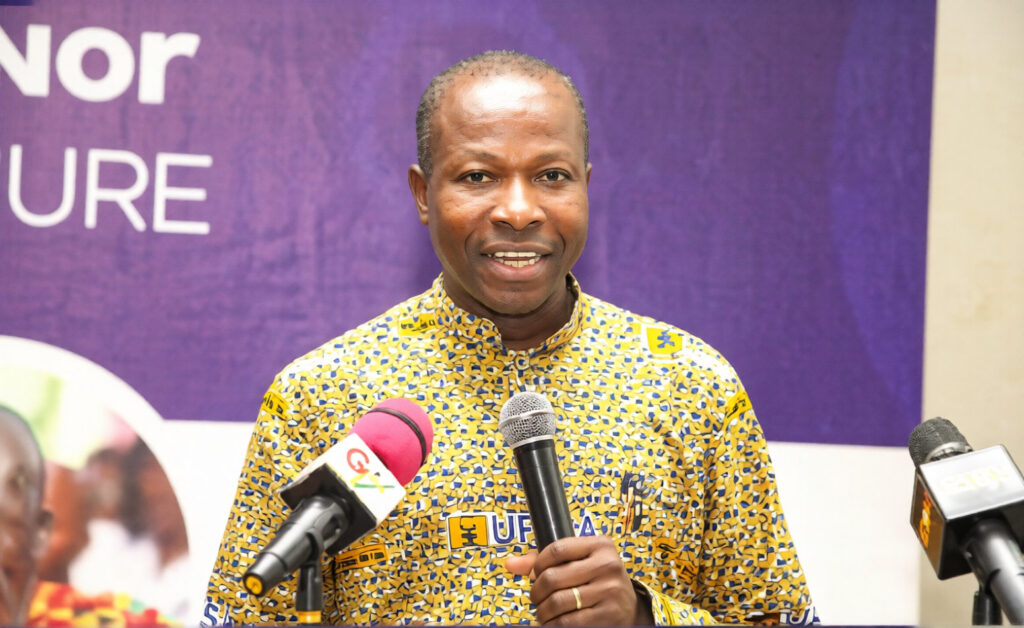
In discussing the legacy of Kutu Acheampong, Senior Lecturer at the University of Professional Studies, Accra (UPSA) and Policy Analyst, Dr James Kwabena Bomfeh has challenged “an incomplete historical assessment” of the former military ruler, insisting that his achievements must be examined alongside the circumstances and consequences of his rise to power.
Dr Bomfeh pointed to earlier development initiatives under previous governments, arguing that some projects attributed to the former Head of State have foundations predating his administration.
“Acheampong has not, like most of our leaders been well discussed in his context. And in trying to discuss him, I find it worrying that if we don’t check it. It is almost as if be that we want to do away with grievous errors that he made in his attempt to enrich.”
Dr James Kwabena Bomfeh
The Policy Analyst cited the housing developments at Dansoman as an example of the need for historical context, observing that estate development had featured in Ghana’s development agenda before Acheampong assumed power. He identified Tema Township, North Kaneshie and Kwame Nkrumah Estates as earlier initiatives, noting that Acheampong “served as Western Regional Commissioner under the National Liberation Council (NLC)” which overthrew the First Republic in February 1966.
He therefore questioned whether the housing developments celebrated under Acheampong could be separated from the political circumstances that interrupted earlier national development programmes. In his assessment, the former ruler’s participation in the 1966 coup and his subsequent role in the January 1972 overthrow of the Second Republic “must inform any appraisal of his administration.”
The Operation Feed Yourself Initiative
Similarly, Dr Bomfeh challenged the portrayal of Operation Feed Yourself as an entirely original initiative of the Acheampong government. He pointed to agricultural policy directions under the Busia administration, particularly the Sefwi Wiawso initiative, as part of the antecedent context that deserves consideration.

While acknowledging the boldness of Operation Feed Yourself and the policy of indigenisation, he insisted that their eventual outcomes must also feature in the historical account. He questioned how the policies were implemented, whether the structures needed to sustain them were established and what their eventual collapse meant for the country.
The researcher also drew attention to the distinction between recognising Acheampong’s personal qualities and excusing the political consequences of his rule. Citing Emeritus Professor Adu Boahen’s 1987 lecture, he noted that the historian offered a severe assessment of Acheampong’s administration while also acknowledging his humane disposition and aversion to bloodshed.
Analyst Rejects Selective Defence Of Ghana’s Military Coups
Beyond the debate over Kutu Acheampong’s development record, Dr James Kwabena Bomfeh cautioned against attempts to distinguish between military coups based on their perceived achievements or popularity.
The Senior Lecturer at the University of Professional Studies, Accra (UPSA) argues that Ghana must adopt a consistent position against unconstitutional changes of government, insisting that “the consequences of military interventions cannot be excused by the policies or personalities associated with their perpetrators.”
“Unconstitutional interventions in our country’s development and evolution has been the bane of our progress in this country.”
Dr James Kwabena Bomfeh
Dr Bomfeh acknowledged that some Ghanaians retain favourable memories of Acheampong’s indigenisation policies and attempts to place local ownership at the centre of the economy. However, he cautioned that public nostalgia does not establish the legitimacy of a coup, observing that every unconstitutional intervention can attract supporters without thereby becoming defensible.
He consequently questioned the consistency of those who condemn the overthrow of one republican administration but celebrate another. For him, the adoption of the 1992 Constitution requires Ghanaians to reject military seizures of power as a matter of principle, irrespective of the political circumstances or perceived benefits surrounding them.
In support of this position, Dr Bomfeh referred to the Supreme Court case challenging the use of public funds to commemorate the December 31 coup. He recalled that the plaintiffs’ argument treated the 1966, 1972 and 1981 military interventions as unconstitutional acts incompatible with Ghana’s constitutional order, an argument the Court accepted by majority decision.
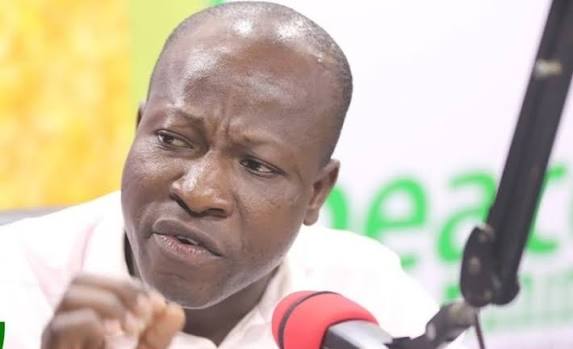
The researcher also cited the dissenting opinion of Justice Archer in that case, particularly his historical assessment of Acheampong’s responsibility for introducing penalties under the Public Holiday Law. Dr Bomfeh emphasised that he was invoking the opinion as persuasive moral authority, not binding law.
The discussion subsequently turned to calls for Acheampong’s military rank to be restored posthumously. Dr Bomfeh questioned the rationale behind restoring a rank that Acheampong acquired after the January 1972 coup, when he was still a colonel. He emphasised this point, asking: “The question is: what is the force, the motive? What are we seeking to do?”
Furthermore, he referenced Sir Sam Jonah’s recent lecture on the subject, arguing that “historical identity cannot be selectively separated from the circumstances through which it was acquired.” The Policy Analyst therefore challenged attempts to restore honours associated with military interventions while overlooking the constitutional violations that enabled their acquisition.
READ ALSO: Minority Describes Government’s Economy Progress As “Artificial”