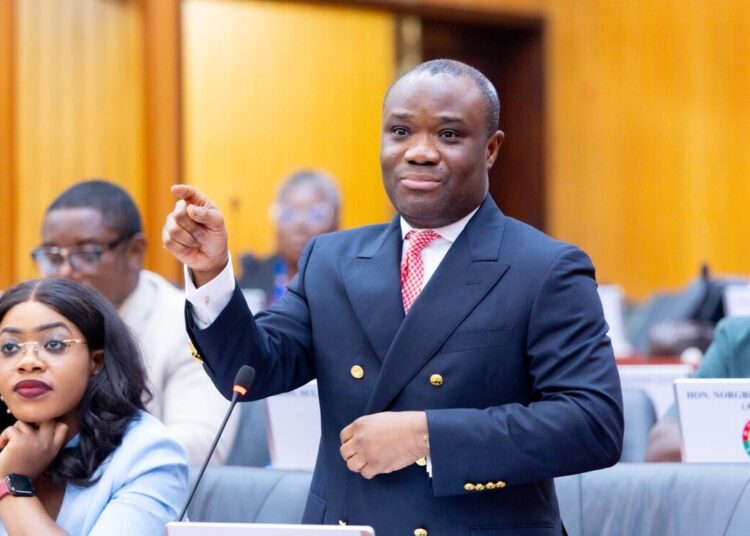
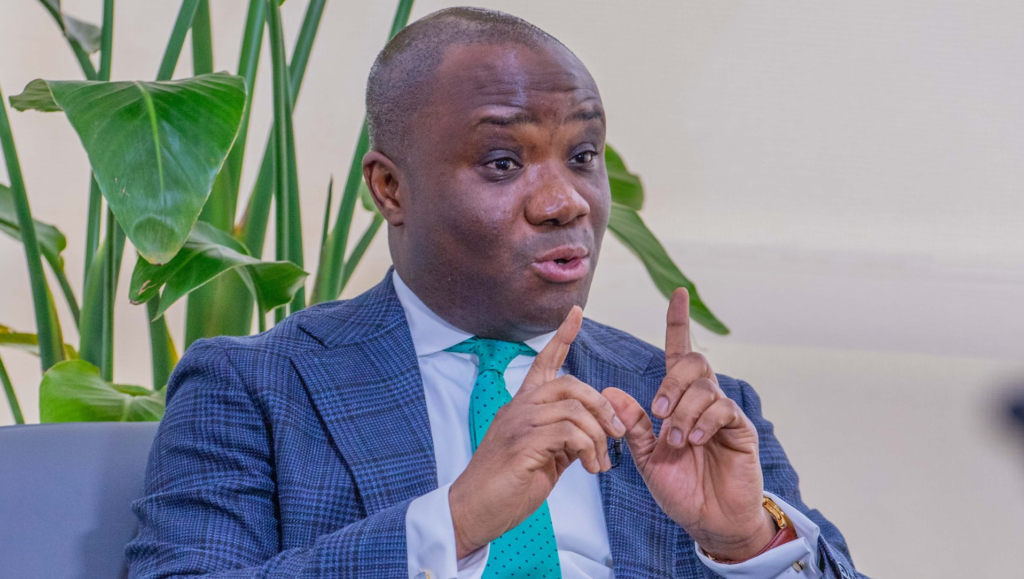
Presidential Spokesperson and Minister for Government Communications, Hon. Felix Kwakye Ofosu, has claimed that more than 95 per cent of approximately 300 goods and services surveyed on the Ghanaian market have recorded significant price reductions, citing lower costs of building materials and selected food items.
Speaking during the debate on the 2027 Budget in Parliament on Wednesday, November 18, 2026, he argued that improved economic stability had translated into reduced prices for consumers and challenged claims that the government’s economic performance had not improved household conditions.
“I have a list of about 300 items on the market, and over 95% of them have seen significant reductions.”
Minister of State in charge of Government Communications, Felix Kwakye Ofosu
Hon. Kwakye Ofosu relied on examples from the building materials market to support his assessment, highlighting changes in the prices of iron rods and cement between 2024 and November 2026.
He cited K. Ofori Limited, a building materials retailer with a branch in Prampram, where a tonne of 16-millimetre iron rods reportedly cost GH¢9,000 in 2024. According to him, the same quantity was selling for GH¢6,800 at the retailer’s Prampram branch on November 4, 2026, representing a reduction of GH¢2,200.

He also compared cement prices, recalling that he paid GH¢115 for a bag in 2024 when making a donation in Naieki. He indicated that the same cement now cost him GH¢80 to deliver.
The Minister further cited Dzata Cement, which he stated had reduced its price from GH¢120 in 2024 to GH¢98. POP Cement, which he said sold for GH¢115 in 2024, was reportedly selling for GH¢80 at the time of his parliamentary address.
The examples formed part of his argument that the cost of construction materials had declined under the current administration. “That is a saving of 2,200. That goes into the pocket of builders.”
Food prices also feature in government’s cost-of-living argument
Beyond building materials, Kwakye Ofosu pointed to selected food commodities to illustrate what he described as reductions in the cost of everyday goods.
He stated that a cup of beans, which sold for GH¢13 in 2024, was then selling for GH¢12. He also compared the price of one kilogramme of Jindo Rice, which he recalled selling for GH¢40 in 2024, with its reported current price of GH¢36.
On gari, he indicated that an olonka, which sold for GH¢30 in 2024, had declined to GH¢26. He also recalled that the same measure sold for GH¢5 in 2017, while a cup of beans cost GH¢1.50 during that period.
The Minister used these comparisons to argue that prices of several commodities had eased from the levels recorded during the previous administration. However, the figures and comparisons were presented as part of his parliamentary remarks and were not accompanied in the transcript by the underlying survey data or a detailed methodology.
Government attributes lower prices to economic stability
Hon. Kwakye Ofosu also linked the reduction in market prices to improved exchange-rate stability, arguing that currency movements had influenced the cost of goods and fuel.
He maintained that the difference between fuel prices in 2022 and those prevailing at the time of his address reflected the effect of exchange-rate stability. He cited diesel at GH¢23 per litre in November 2022, compared with GH¢17 at the time of his speech, while petrol was around GH¢15 per litre.
He argued that lower fuel costs had helped leave more money in the pockets of consumers, estimating that the difference could amount to GH¢6 for an ordinary Ghanaian.
His comments formed part of a broader defence of the government’s economic record during the parliamentary debate, where he disputed claims that improved macroeconomic indicators had not translated into changes in the cost of living.
Rent increases remain a concern
Despite highlighting reductions in the prices of several goods, Kwakye Ofosu acknowledged that rent costs had increased. He argued that the reduction in building material prices and borrowing costs could eventually ease pressure on rents.

According to him, some property owners had increased rents to recover expenses incurred when construction materials and credit were more expensive. He nevertheless expressed confidence that rents would decline in due course as the cost of construction and financing eased.
“But every honest assessment of our economy will reveal that the cost of living is better now than it was under the NPP.”
Minister of State in charge of Government Communications, Felix Kwakye Ofosu
His assessment placed the reported price reductions at the centre of the government’s defence of its economic performance, although the claims on market prices, rent and household costs remain attributable to the Minister’s parliamentary presentation.
READ ALSO: BoG Slashes Policy Rate to 11% in Massive 300bps Cut