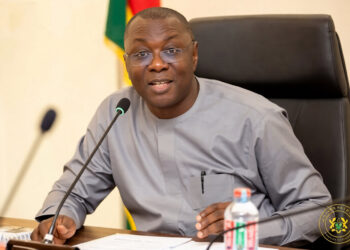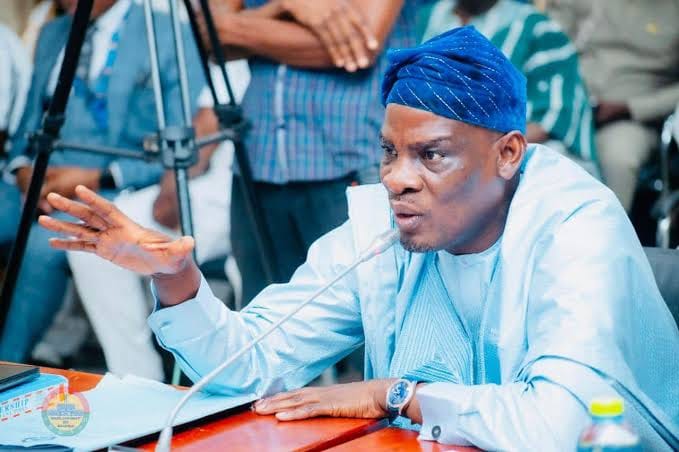
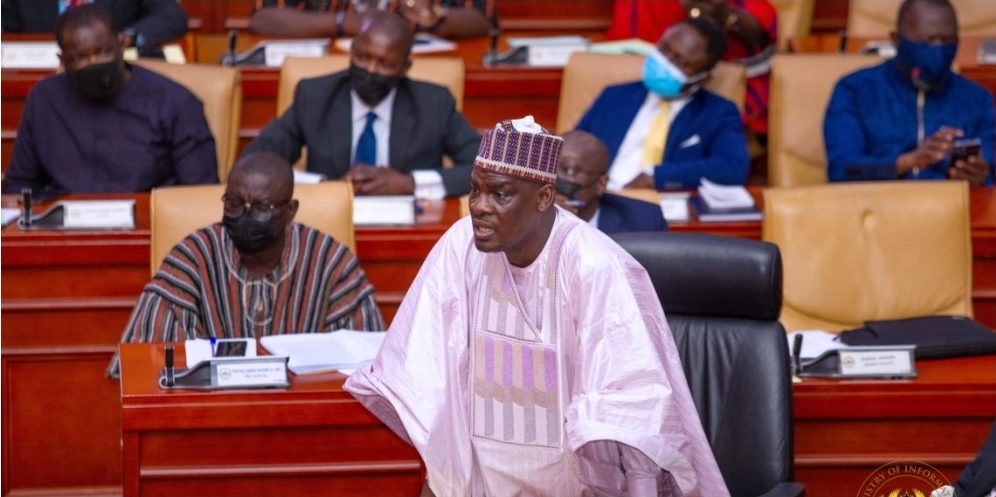
The Minister of Education, Haruna Iddrisu, has outlined plans to use Ghana Education Trust Fund (GETFund) resources to support local furniture production, expand tertiary education and strengthen technical and vocational education and training (TVET).
Addressing Parliament during debate on the 2027 Budget, the Minister highlighted several proposed interventions, including the establishment of a new university in Damongo, technical universities in Dambai and Jasikan, and a teacher training college in Ezimbele in the Western Region.
He also disclosed that government was working towards establishing a dedicated TVET fund, with the proposed legislation currently undergoing drafting at the Attorney-General’s Department.
The announcements form part of the government’s broader education investment plans under the 2027 Budget, which allocates GH¢48 billion to the Ministry of Education to improve access, infrastructure and teaching and learning.
GETFund to Support Local Furniture Production
A key component of the Minister’s statement was the proposed use of GETFund resources to support local manufacturing of school furniture and beds. Hon. Iddrisu indicated that government intended to allocate GH¢1.1 billion towards supporting St Paul’s at Kukurantumi and other technical institutions to manufacture the items locally.
The initiative is expected to create opportunities for technical institutions to apply their practical training to industrial production while supporting efforts to reduce reliance on imported educational furniture .The 2027 Budget allocates GH¢11.2 billion to GETFund for educational infrastructure development, making it one of the largest allocations within the education sector.
The Minister also outlined plans to dedicate GH¢500 million towards establishing a new university in Damongo, while additional resources would support digital skills development. The proposed investment in local production could also strengthen the relationship between technical education and industry by giving students and institutions opportunities to participate in practical manufacturing activities.
New Universities and Teacher Training College Planned
The Minister further announced plans to expand tertiary and teacher education through new institutions in different parts of the country. These include the establishment of technical universities in Dambai in the Oti Region and Jasikan, alongside a new teacher training college at Ezimbele in the Western Region.
The proposed teacher training institution is intended to improve access to professional teacher education for communities in the western corridor. The plans build on earlier government commitments to expand tertiary education.
The 2026 Budget had outlined proposals for public universities in Kintampo and Dambai, technical universities in Jasikan and Techiman, and a Catholic University of Science and Technology in Damongo.
The Minister’s latest statement therefore adds further detail to the government’s plans for expanding higher and technical education, although the timelines, institutional arrangements and funding requirements for the newly announced projects are yet to be fully outlined.
Government Advances Plans for Dedicated TVET Fund
On technical and vocational education, Hon. Iddrisu disclosed that the proposed TVET fund had reached the drafting stage at the Attorney-General’s Department. He explained that President John Dramani Mahama had tasked the Ministers responsible for Finance, Energy and Education to work towards completing the process.
The proposed fund is expected to provide a dedicated financing framework for technical and vocational education, supporting skills development and practical training. The Minister argued that the initiative would address a longstanding funding gap in the sector, noting that a dedicated TVET fund had not been introduced during the previous eight years.
The proposal comes amid wider efforts to position TVET as a major pathway for equipping young people with practical skills relevant to employment and industrial development. However, the proposed fund is not yet operational, with its establishment dependent on the completion of the legislative process and the necessary approvals.
No Fees Stress Policy Benefits Over 328,000 Students
The Minister also highlighted the government’s No Fees Stress Policy, reporting that GH¢998 million had been spent to support 328,000 tertiary students who might otherwise have struggled to pay academic fees. He noted that the initiative had extended support to persons with disabilities, reinforcing its role in improving access to tertiary education for students facing financial barriers.
The latest figures represent an increase from an October 2026 update, when the Minister reported that GH¢917 million had supported 321,807 students under the policy. Under the 2027 Budget, government has allocated GH¢537 million to the No Fees Stress Policy for first-year tertiary students.
Other education allocations include GH¢1.37 billion towards transforming secondary education and eliminating the double-track system, GH¢292 million for free sanitary pads for schoolgirls and GH¢227 million for teacher trainee allowances. The budget also provides GH¢169 million for Basic Education Certificate Examination fees, GH¢166 million for the Capitation Grant and GH¢50 million for special schools.
While the Minister presented the proposed investments as evidence of the government’s commitment to expanding educational opportunities, the impact of the plans will depend on timely funding, legislative approvals and effective implementation across the sector.