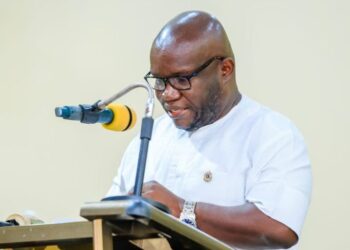
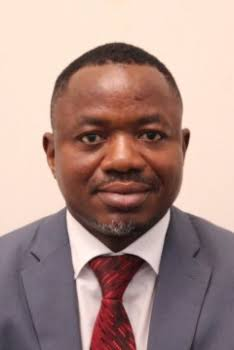
Board Chairman of the Korle Bu Teaching Hospital (KBTH), Prof. Titus Kofi Beyuo, has attributed the delay in surgery for five-year-old, who was referred to the facility for another operation to remove a brain tumor, to a shortage of paediatric intensive care beds and ventilators.
All eight paediatric intensive care beds were occupied, making surgery unsafe without the specialized support required for child’s recovery. Doctors would proceed when a suitable bed became available, but would not displace another patient.
“It would be unconscionable for a doctor to take a child who has a medical condition into surgery when they know that, after the operation, there is no bed available for the child’s recovery.”
Board Chairman of the Korle Bu Teaching Hospital (KBTH), Prof. Titus Kofi Beyuo
Speaking on the case, Prof. Beyuo disclosed that child had previously undergone surgery at Cape Coast before doctors referred him to Korle Bu for a further procedure to remove the tumors.
The hospital had attempted to schedule the operation several times, but emergencies and the absence of an available paediatric ICU bed prevented it.
Paediatric ICU Bed Capacity
One patient from the neurosurgery department had remained in intensive care for almost six weeks. Doctors had considered transferring the child to a ward, but a fever developed and required the patient to remain on intensive care and ventilator support.
Prof. Beyuo warned that moving the patient while the infection risk remained could prove fatal. Brain surgery patients generally require intensive care and ventilation during recovery, making post-operative support essential.
“Landing is as important as the surgery. In this case, we are talking about the recovery period,”
Board Chairman of the Korle Bu Teaching Hospital (KBTH), Prof. Titus Kofi Beyuo
Clinical Triage Decisions
Prof. Beyuo questioned whether administrative payment processing explained the delay. He had spoken with the heads of the Paediatric Surgery and Paediatric Intensive Care units to establish the circumstances.
The Public Affairs Department had attributed the delay to processing payment made at Central Administration. Prof. Beyuo was unsure that this explained the situation, maintaining that payments could be reconciled while the immediate obstacle remained specialised intensive care capacity.
He further disclosed that the child had been brought to the hospital at least twice, prepared for surgery, but doctors had to attend to more pressing emergencies.
“When you have limited resources, you triage and offer the best chance of survival to all your patients,”
Board Chairman of the Korle Bu Teaching Hospital (KBTH), Prof. Titus Kofi Beyuo
Doctors would not remove another child to create space for Miguel. If a patient became stable enough for transfer or discharge, the bed would be made available and Miguel’s family informed.
Shortage Extends Beyond Physical Beds
Prof. Beyuo emphasised that the challenge went beyond the number of beds, identifying paediatric ventilators and specialised personnel as equally critical requirements.
A suitable recovery environment also requires trained intensivists, anaesthesiologists and critical care nurses. Without paediatric ventilators, adding ordinary beds would not resolve the immediate difficulty.
“It is not just about beds. It is about specialised beds and the associated equipment,”
Board Chairman of the Korle Bu Teaching Hospital (KBTH), Prof. Titus Kofi Beyuo
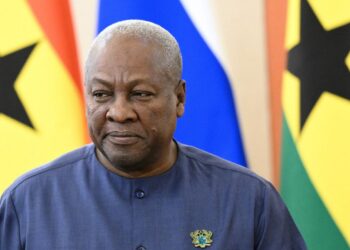
He linked the challenge to President John Dramani Mahama’s call for emergency and intensive care capacity to reach at least 20 per cent of total beds at Korle Bu, 37 Military Hospital, Komfo Anokye Teaching Hospital and Tamale Teaching Hospital.
Korle Bu has between 1,500 and 2,000 beds, Prof. Beyuo disclosed, but only eight paediatric intensive care beds, a gap that can leave hospitals struggling when several children require critical care simultaneously.
Monitoring Condition
Prof. Beyuo assured child’s mother that the hospital would not abandon him. Doctors would operate when the required support became available; current assessments described the child as stable and under monitoring.

He cautioned against claims that the tumour was necessarily cancerous or would spread. Some tumours are benign and do not spread; doctors must establish their type before determining their behaviour. He maintained that doctors would make ethical decisions through clinical triage, not media attention.
“We can assure the nation of the highest standard of care, but we must use the resources available to us judiciously, efficiently and ethically so that all Ghanaians are equally served,”
Board Chairman of the Korle Bu Teaching Hospital (KBTH), Prof. Titus Kofi Beyuo
He reiterated that the 5year old would undergo surgery when doctors could provide a safe recovery pathway. He clarified that doctors had not established whether the tumour was benign or malignant.
Until further assessment confirms its nature, the hospital will continue monitoring him and determine the appropriate timing for intervention, taking account of any changes in his condition and the availability of the equipment and personnel needed to support him after surgery throughout the immediate post-operative recovery and subsequent monitoring period.
READ MORE: Ghana Targets First Locally Made Tetanus-Diphtheria Vaccine by 2027