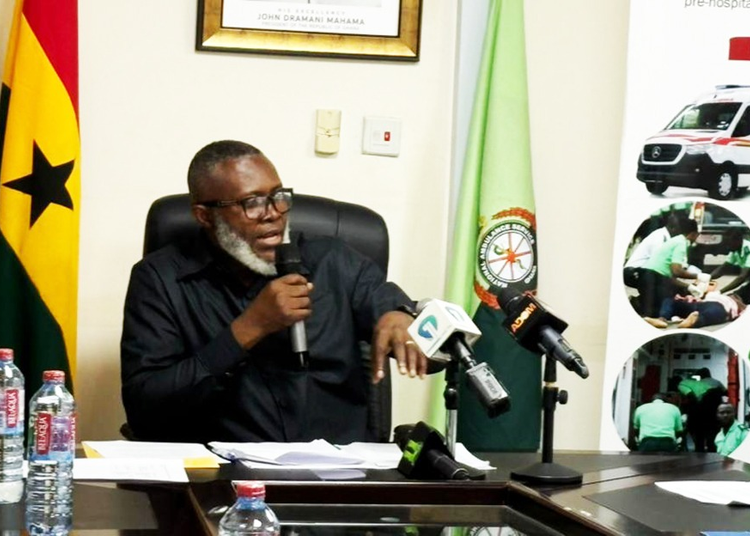
The Chief Executive Officer of the National Ambulance Service (NAS), Dr George Kojo Owusu, has called for a comprehensive overhaul of Ghana’s emergency healthcare system to address the No Bed Syndrome and improve patient outcomes.
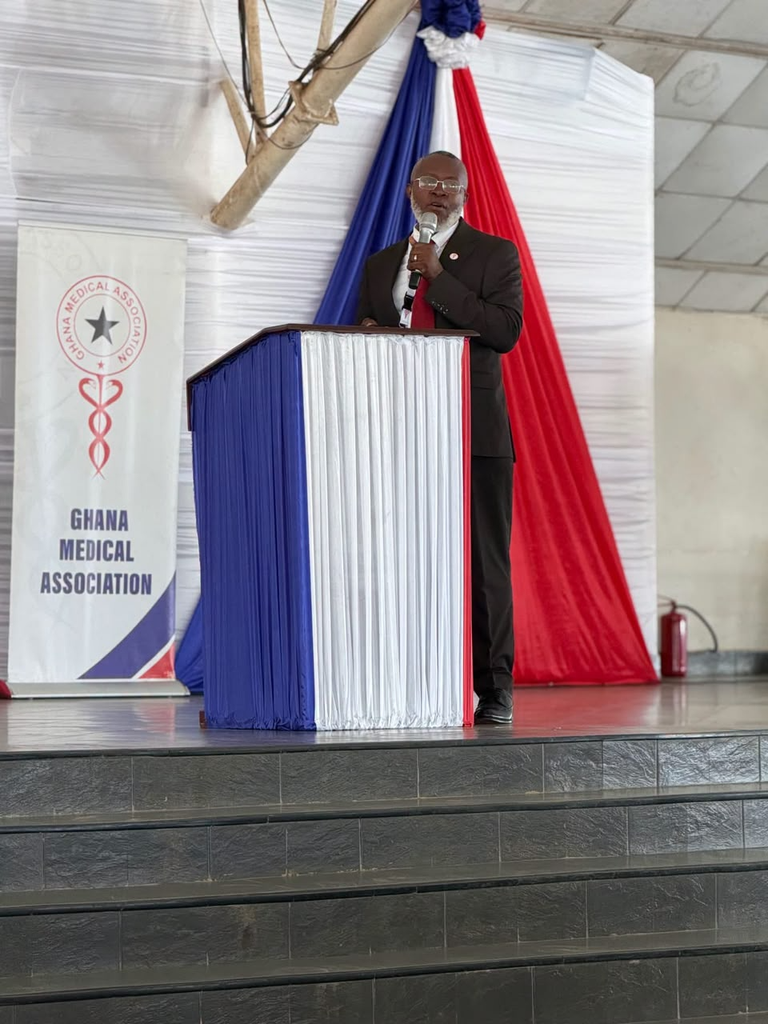
He made the call on Thursday, November 5, 2026, while delivering the keynote address at the scientific session of the Ghana Medical Association’s 68th Annual General Conference at Trinity Hall, Central University, Miotso.
Addressing medical professionals and policymakers under the theme, “The No Bed Syndrome: Reimagining a Befitting Emergency Response System for Ghana,” Dr Owusu argued that the crisis reflects weaknesses beyond hospital bed shortages.
“Ghana’s emergency healthcare crisis requires urgent reforms in hospital capacity, referral coordination, staffing and sustainable funding to save lives.”
Chief Executive Officer of the National Ambulance Service (NAS)
He called for coordinated referrals, stronger infrastructure, adequate funding, improved staffing and legislation to guarantee timely emergency assessment and stabilisation.

Dr Owusu recalled the death of 29-year-old engineer Charles Henry Amissah, who was involved in a hit-and-run accident at the Circle Overpass on February 6, 2026. He explained that NAS personnel stabilised him, but three hospitals reportedly turned him away because beds were unavailable.
No Bed Syndrome exposes wider system failures
The incident exposed a fragmented emergency response system in which ambulance teams can provide initial care but struggle to secure hospital admission. He called for stronger links between pre-hospital services, emergency departments and referral facilities.
“A directive is not a system.” Dr Owusu maintained that the No Bed Syndrome cannot be reduced to the number of vacant hospital beds. It also reflects weaknesses in emergency infrastructure, referral coordination, workforce capacity, information systems and healthcare financing.
He cited Ghana’s estimated 0.7 hospital beds per 1,000 people, against the World Health Organisation’s recommendation of five.
Inadequate intensive care capacity, workforce shortages, maternal deaths and road traffic injuries further underline the need for coordinated emergency care.
Seven proposals to strengthen emergency response
A key proposal is a National Emergency Bed Census providing real-time information on beds, intensive care unit spaces, high-dependency unit capacity, ventilators and operating theatres across public and accredited private facilities. It would help referral teams identify hospitals able to receive patients.
He also proposed transforming the existing 112 emergency number into an integrated dispatch and referral centre. It would connect ambulance dispatch with hospital capacity to coordinate destinations.
Dr Owusu called for functional intensive care unit capacity to double by 2030, with more specialist and critical care training. He also advocated universal emergency triage, requiring every patient arriving at a facility to receive prompt assessment under standardised protocols.
He proposed referral networks in all 16 regions to ease pressure on hospitals in Accra and Kumasi.
The NAS chief executive further identified sustainable ambulance funding as essential. He called for resources for fleet maintenance, fuel, EMT welfare and scene response.
He disclosed that the Service was working to integrate its digital applications into Ghana.gov and develop a Fleet Management System covering all 319 stations and five regional workshops.
Emergency Care Act and professional accountability
Dr Owusu proposed an Emergency Care Act to establish clear obligations for health facilities. It would guarantee emergency assessment and stabilisation, prohibit demands for payment before assessment and hold facilities accountable for unjustified refusals.
“No patient should be denied emergency medical attention because of bed shortages, poor coordination or institutional failures.”
Chief Executive Officer of the National Ambulance Service (NAS)
He urged the Ghana Medical Association to issue a formal position statement advocating the law. He also called on the Association to work with the Ghana College of Physicians and Surgeons to make emergency life-support and triage training part of continuous professional development.
His third proposed commitment was to promote accountability for facilities that unjustifiably refuse emergency care.
Partnership key to ending emergency care gaps
Dr Owusu reaffirmed NAS’s commitment to working with the Ministry of Health, GMA and regulators to build a responsive emergency care system.
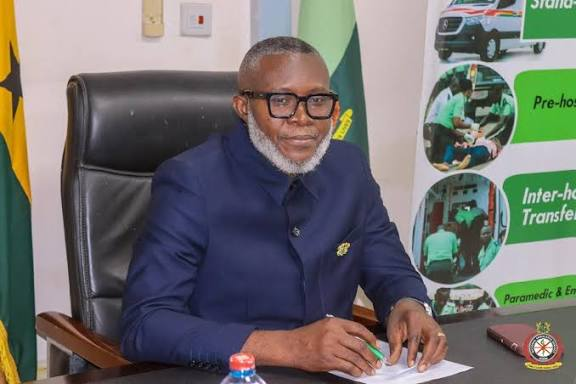
He stressed that reform must connect ambulance services with hospitals, strengthen staffing and make emergency resources visible to referral teams.
In concluding, he returned to Amissah’s death as a reminder of the consequences of system failures. He urged stakeholders to ensure patients brought to hospital gates receive timely assessment, stabilisation and care.
“We will not bring him back. But somewhere in this country, tonight, another person will be brought to a hospital gate by an ambulance, or by a taxi, or in the arms of a parent. Whether that person becomes a name we mourn at next year’s Conference, or a patient we discharge with a scar and a story, depends on whether the system at that gate is the system we have, or the system we have agreed, today, to build.”
Chief Executive Officer of the National Ambulance Service (NAS)
Success, he stressed, means no patient is denied timely care by institutional or coordination failures.
READ MORE: Ghana’s Youth Population Presents Opportunity Amid Growing Risks