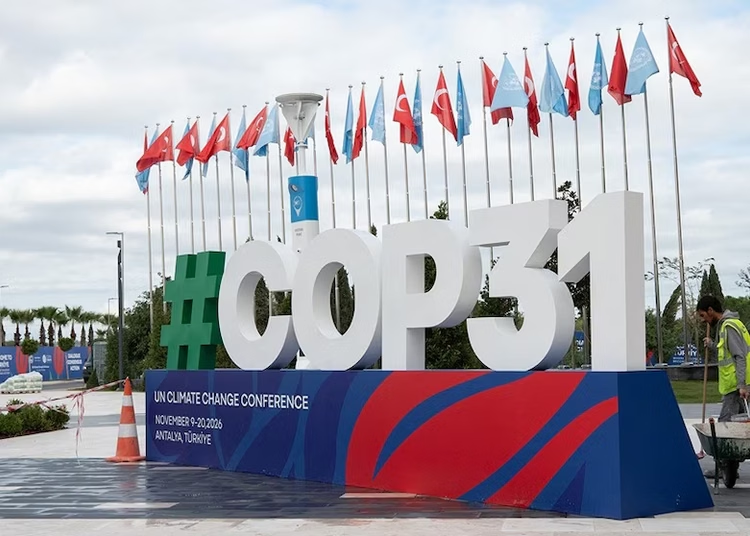
The COP31 Global Climate Action Agenda Electrification Delivery Package has brought together more than 150 countries, the European Union, 37 cities and over 260 businesses to accelerate the global shift towards clean electricity, stronger power grids and electrified transport and industry.
Presented to Parties at the UN Climate Summit, the package outlines new commitments, investment plans and progress across the energy sector.
The initiatives span six continents and involve businesses with combined annual revenues exceeding US$4 trillion, while participating countries represent more than two-thirds of global gross domestic product (GDP).
According to UN Climate Change Executive Secretary, Simon Stiell, “year on year, the Action Agenda is a power station of progress, and COP31 has already supercharged real-world results.”
“Electrification is a huge efficiency booster, helping bring down greenhouse gas pollution and energy costs, and tackle grave injustices in energy access. Today is a lightbulb moment for our global climate push.
“Bringing vast benefits to people everywhere, from cheaper energy costs to cleaner air and better health. But this is not the finish line.”
Simon Stiell
He added, “we now need to carry this momentum to every country, so billions more people can share in the vast dividends of climate action.”
Grid Investment and Electricity Access Gain Momentum
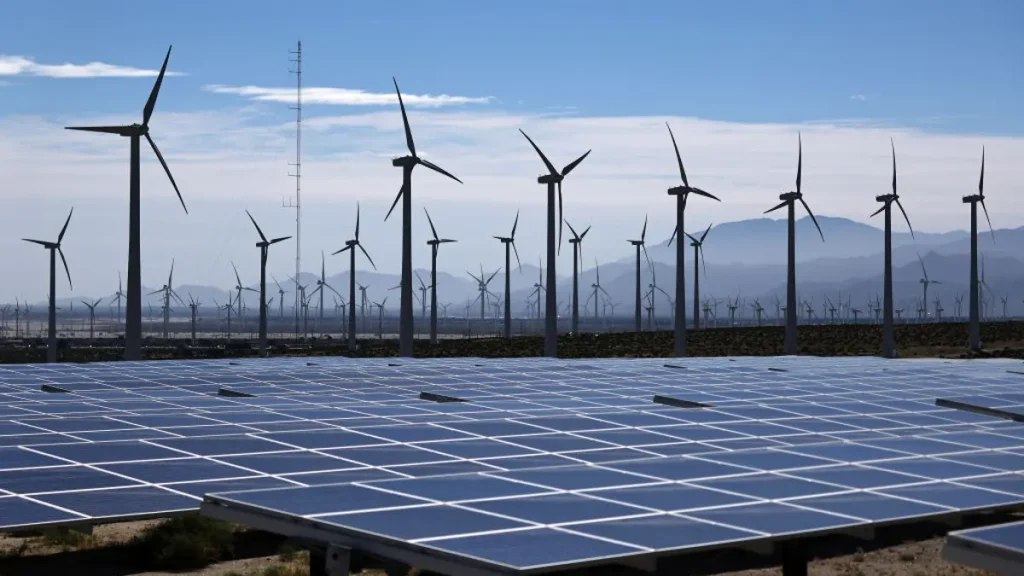
A major component of the package is the expansion and modernisation of electricity infrastructure, with members of the Utilities for Net Zero Alliance (UNEZA) announcing combined annual investment plans of at least US$156 billion across electricity grids, renewable energy and storage.
The investment plans represent a 5% increase from the previous year and a 35& rise compared with 2024. UNEZA members also reported deploying more than 21,000 kilometres of new electricity grids in 2025, marking a 50 per cent increase from the previous year.
Additional initiatives are being introduced to help developing countries address infrastructure constraints. Türkiye and the International Renewable Energy Agency (IRENA) launched D-GRIDs to support distribution-grid planning, investment, digitalisation and resilience, while the Green Grids Initiative established a technical assistance hub connecting countries with more than 20 specialist organisations.
Efforts to expand electricity access are also recording progress, although substantial gaps remain. Sustainable Energy for All (SEforALL) and its Universal Energy Facility reported that they had already achieved more than half of their target of providing 25,000 new electricity connections by 2028, less than a year after making the commitment.
In Sierra Leone, the organisation’s Salone Off-Grid Renewable Energy Acceleration initiative has a further 30,000 connections in the pipeline by 2028, with the potential to reach more than 200,000 people.
Despite these developments, around 655 million people worldwide still lack access to electricity, underscoring the scale of infrastructure and financing required to make the transition inclusive.
Climate Finance Mobilises Billions for Electrification
Meanwhile, finance has emerged as a critical pillar of the electrification agenda, with new funding mechanisms and investment commitments announced to accelerate clean energy development, particularly in emerging markets and developing economies.
At COP31, the Climate Investment Funds (CIF) announced that its new AMPLIFi financing mechanism had become operational, with an initial portfolio of projects and a £400 million contribution from the United Kingdom. The mechanism aims to mobilise up to £5 billion for clean power, electricity grids, energy storage and electrification.
The Electrify Now Finance Coalition, launched during the summit and co-chaired by the World Bank, is also expected to work with governments, development banks, private financial institutions and technical partners to develop investment-ready projects, reduce financing risks and improve access to capital.
Private sector investment is contributing to the growing pipeline. Octopus Energy launched its Asia Electrification Fund, targeting US$600 million for solar, wind, energy storage and electric vehicle charging projects. The fund has secured an initial US$50 million commitment from Japanese investors, with its first investment supporting a Philippine developer’s plans for 450 megawatts of solar capacity and 350 megawatt-hours of battery storage.
Meanwhile, BBVA reported that it had channelled nearly €60 billion into sustainable business activities linked to electrification between January 2025 and September 2026. The financing covered electricity generation and supply, power grids, storage, and the electrification of transport, buildings and industrial operations.
The Asian Infrastructure Investment Bank (AIIB) also announced plans to double its 2030 green and transition lending target from €30 billion to €60 billion, building on €28 billion already deployed since 2019.
Transport and Industry Advance Towards Electrification
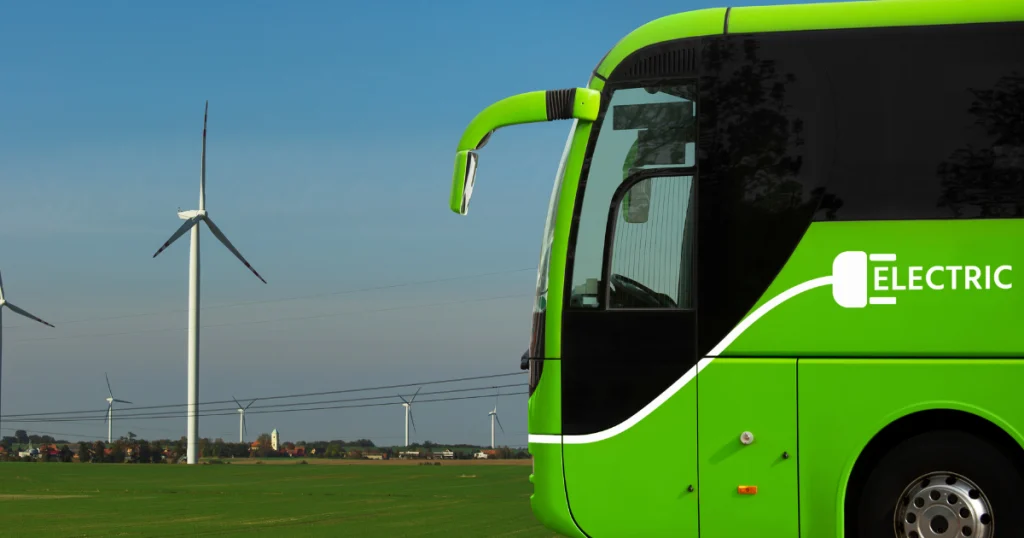
Also, the package also records progress in reducing dependence on fossil fuels across transport and heavy industry, with new initiatives targeting road freight, shipping, commercial vehicles and industrial production.
The Global Green Road Corridors Initiative reported that 13 zero-emission freight corridors were under development across six continents, covering more than 29,000 kilometres of roads. The achievement exceeds its target of establishing at least 10 corridors by 2026.
On the Mediterranean Corridor, which connects southern Spain with southern France, 45% of planned charging capacity has already been installed, supporting the infrastructure required to transition long-distance freight operations to electric vehicles.
Electric vehicle adoption is also expanding. Countries that signed the Zero-Emission Vehicles Declaration recorded 2.1 million electric vehicle sales in the first half of 2026, while six cities committed to deploying approximately 2,200 additional electric buses in 2027.
Shenzhen, China, had nearly 1.8 million electric vehicles on its roads by June 2026, with electric vehicles accounting for 83 per cent of new vehicle sales, according to C40 Cities. Separately, members of Climate Group’s EV100 initiative have deployed approximately 400,000 fully electric vehicles worldwide.
In shipping, more than 30 supporters are backing a new Maritime Electrification Breakthrough Goal, which seeks to raise electricity’s share of the sector’s final energy demand to at least 20 per cent by 2035.
Industrial electrification is similarly gaining ground. The Mission Possible Partnership’s Global Project Tracker identified a record 36 commercial-scale industrial decarbonisation projects reaching final investment decisions across 13 countries in the 12 months to November 2026.
The United Nations Industrial Development Organization (UNIDO) also launched the Global Green Industrialization Agenda at COP31 to coordinate policy, investment, technology and skills development in support of cleaner industrial production, particularly in emerging and developing economies..
READ ALSO: Lasmid Brings ‘Campus Storm’ To University Of Ghana