

The global expansion of artificial intelligence is creating a new source of electricity demand, and Ghana’s ambition to attract digital infrastructure investment means the country must consider more than the economic benefits of hosting data centres.
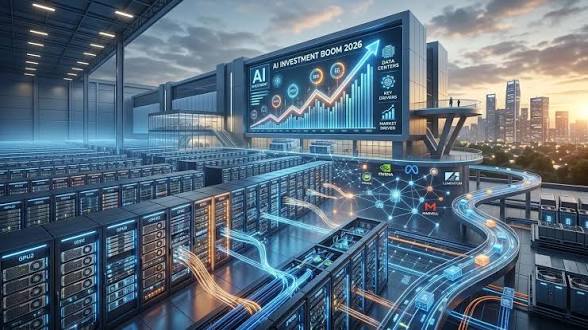
The International Energy Agency (IEA), in its World Energy Outlook 2026, projects that electricity consumption by data centres will double to approximately 1,000 terawatt-hours (TWh) by 2030 under its Stated Policies Scenario.
The agency links the increase to the rapid growth of artificial intelligence-related investment, while warning that the expansion is exposing constraints in electricity grids, equipment supply chains and public acceptance.
“The boom in artificial intelligence-related investment is pushing up electricity consumption by data centres,” the IEA states in its outlook.
The projection is global, not a forecast of Ghanaian demand. But it carries implications for countries seeking to attract data centres as part of their digital economies.
These facilities require dependable electricity, cooling systems, network infrastructure and, increasingly, dedicated power arrangements. Their economic contribution therefore needs to be considered alongside the cost of supplying them.
For Ghana, the question is not whether data centres should be discouraged. It is whether the country can attract investment in digital infrastructure while ensuring that the electricity and infrastructure costs associated with those facilities are properly planned and allocated.
The Cost Of Attracting Digital Infrastructure
Ghana has been positioning itself as a regional destination for digital services, cloud infrastructure and artificial intelligence.
The presence of facilities such as PAIX Data Centres and the MDXi facility, now part of Equinix’s West African network, reflects the country’s existing role in the region’s digital infrastructure market.
However, attracting more facilities could create new demands on an electricity system already experiencing rising consumption.
The Volta River Authority’s 2025 annual report records national peak demand of 4,283 megawatts (MW), an increase of 8.4% from 3,952MW in 2024. Total electricity consumed, including system losses, reached approximately 27,023GWh, up from 24,664GWh the previous year.
These figures do not establish that data centres are currently placing a significant strain on Ghana’s grid.
They do, however, show why additional large electricity users should be incorporated into national demand planning rather than treated as ordinary commercial loads.
The IEA’s analysis also cautions against assuming that data-centre expansion automatically raises electricity prices for every consumer.
The impact depends on available capacity, the size and operating pattern of a facility, the infrastructure required to connect it and how the resulting costs are recovered.
That distinction matters for Ghana. If a new facility requires dedicated substations, transmission upgrades or additional generation, the investment should not automatically become a cost borne by households and businesses that do not benefit directly from the project.
The country therefore needs a transparent framework for assessing major data-centre proposals, including their projected electricity consumption, location, connection requirements, backup arrangements and contribution to system costs.
Investment Must Come With Power Responsibilities
The IEA’s wider analysis of data centres points to an emerging policy approach in which large facilities are expected to contribute to electricity-system adequacy and flexibility.
Some jurisdictions are considering arrangements that require data centres to bring their own power or support network stability.
Ghana does not need to copy another country’s regulatory model wholesale. But it can establish clear expectations for large electricity users before approving projects that may require substantial infrastructure investment.
Such expectations could include credible demand forecasts, energy-efficiency standards, transparent power procurement arrangements and provisions for flexible consumption where technically feasible.
Developers should also demonstrate how they intend to manage cooling requirements and water use, particularly where facilities are located in areas with competing demands on local resources.
This is especially important because the energy implications of AI extend beyond the electricity consumed by servers.
The equipment generates heat that must be removed, while high-density computing facilities can require substantial cooling and specialised electrical equipment.
Ghana’s digital ambitions therefore need to be linked to its broader electricity and infrastructure planning.
The country’s proposed US$500 million transmission modernisation programme for 2027–2030 could help strengthen the network, but investment in transmission should be guided by credible projections of where demand will emerge and what types of users will require new connections.
The issue has already featured in Ghana’s policy debate. In May 2026, Vaultz examined the tension between the country’s AI ambitions and the capacity of its electricity infrastructure.
That discussion remains relevant as the IEA’s latest outlook highlights the scale of the global demand shift.
Ghana Must Avoid Paying Twice For Growth
There is also a question of who captures the economic value created by data-centre investment. Hosting digital infrastructure can support jobs, improve connectivity, attract technology companies and strengthen Ghana’s position in regional digital services.
But those benefits should be assessed against the public and private costs of supplying reliable electricity.
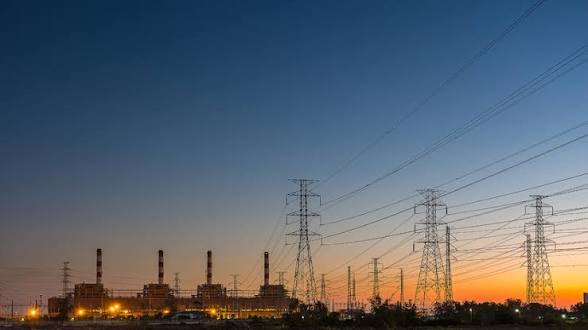
If electricity infrastructure is expanded to serve large facilities without adequate planning, other consumers could face pressure through higher system costs or reduced investment capacity elsewhere.
Conversely, well-designed projects could support investment in generation, storage and network upgrades that also benefit the wider system.
The policy challenge is to distinguish between investment that strengthens the national economy and projects whose infrastructure costs are effectively transferred to the public.
The IEA’s outlook offers another important lesson: electricity demand from data centres is growing alongside demand from cooling, transport and industrial activity.
Ghana cannot plan for these sectors independently when they will compete for generation capacity, transmission infrastructure and investment.
The Government’s plans to expand solar generation, battery storage and transmission infrastructure provide an opportunity to prepare for this changing demand profile.
But the benefits will depend on whether projects are delivered on schedule and whether the grid can reliably move electricity to the places where it is needed.
Ghana should not treat the data-centre boom simply as a race to attract the largest facilities. It should be a competition to attract investment that creates economic value without weakening electricity affordability or reliability.
The next phase of digital growth will reward countries that can provide dependable power at competitive prices.
For Ghana, that means ensuring that data-centre investment is matched by credible electricity planning, transparent cost allocation and infrastructure capable of supporting both digital businesses and existing consumers.