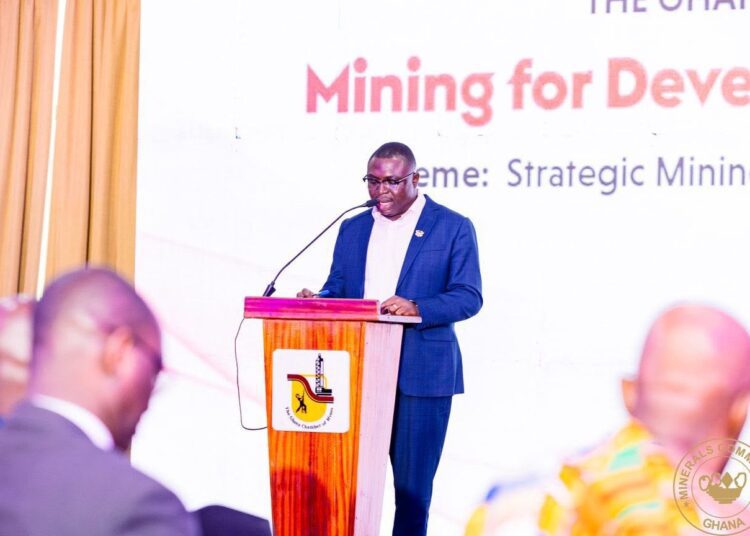
Emmanuel Kwamena Anyimah, Deputy Chief Executive Officer in charge of Support Services at the Minerals Commission (MinCom), has declared that Ghana’s historic issuance of forest carbon credits valued at an expected US$43 million serves as definitive proof of advancing sustainable natural resource management.
Extending formal commendations to the Minister for Lands and Natural Resources, Emmanuel Armah-Kofi Buah, Anyimah noted that the landmark achievement elevates Ghana’s global standing in environmental stewardship and positions the country as a continental pioneer in climate finance.
The commendation follows the official unveiling of 6.57 million Architecture for REDD+ Transactions (ART) TREES credits at the Ghana Pavilion during the COP31 climate summit in Antalya, Türkiye.
Under the jurisdictional forest conservation programme, Ghana became the first African nation and only the third globally after Guyana and Costa Rica to earn verified emission reduction credits under ART’s stringent Environmental Excellence Standard.
Initial transactions under the Lowering Emissions by Accelerating Forest Finance (LEAF) Coalition are projected to generate approximately US$43 million from the sale of four million tonnes of verified emission reductions priced between US$10 and US$13 per tonne.
“This remarkable milestone reflects commendable leadership and marks a significant step forward in Ghana’s sustainable natural resource management. I wish to extend my heartfelt congratulations to the Minister for Lands and Natural Resources, Hon. Emmanuel Armah-Kofi Buah, for his exceptional leadership and significant contributions to advancing Ghana’s natural resource management agenda.”
Emmanuel Kwamena Anyimah
Bridging Extractives Governance and Forest Conservation
From the standpoint of Ghana’s minerals and extractives industry, the Deputy CEO’s endorsement underscores a critical policy intersection between mining regulation and ecological preservation.
Historically, alluvial mining and unregulated resource extraction have exerted severe pressure on Ghana’s high-forest zones and watershed ecosystems.
By aligning institutional support from the Minerals Commission with the Lands Ministry’s broader conservation framework, regulators are signaling that mineral wealth generation and forest protection must operate as mutually reinforcing pillars rather than competing interests.
In his official message, Anyimah emphasized that “Ghana has achieved a historic milestone, earning global recognition for forest conservation and securing carbon credits to the tune of approximately US$43 million”.

Industry observers note that such high-level synergy between mining regulators and forestry authorities strengthens investor confidence in Ghana’s Environmental, Social, and Governance (ESG) credentials.
As global commodity markets increasingly penalize jurisdictions linked to deforestation, demonstrating verifiable emission reductions across 2.5 million hectares of southern and central cocoa-forest landscapes directly enhances the long-term sustainability profile of Ghana’s entire extractive sector.
The Economic and Ecological Imperative for Carbon Finance
The urgency behind Ghana’s pursuit of jurisdictional carbon credits stems from mounting fiscal and environmental pressures across rural landscapes. Between 2017 and 2021 the verification window for the newly issued credits tropical forest ecosystems faced escalating threats from agricultural expansion, illegal logging, and unsustainable land-use practices.
Traditional conservation models reliant solely on state budgetary allocations have consistently fallen short of funding the intensive monitoring, community sensitization, and alternative livelihood programmes required to halt forest degradation at scale.

Monetizing verified emission reductions offers a self-sustaining financial mechanism to bridge this funding gap.
Through the LEAF Coalition, major private-sector buyers including Amazon, Bayer, PwC, and the Walmart Foundation, alongside sovereign partners such as Norway and the United Kingdom, are channeling results-based climate finance directly toward jurisdictions that prove measurable forest protection.
Crucially, the programme incorporates structured benefit-sharing frameworks designed to channel anticipated proceeds directly to local forest-fringe communities, traditional authorities, and smallholder farmers who serve as frontline stewards of the ecosystem.
Translating Verified Credits into Tangible Community Impact
While the issuance of Core Carbon Principles (CCP) Approved credits represents a major regulatory triumph, officials across the natural resources sector maintain a disciplined focus on execution.
During the COP31 announcement delivered on behalf of Minister Buah, Ghanaian authorities explicitly clarified that “issuance is not payment,” noting that the registry milestone confirms verified emission reductions while actual disbursements depend on finalizing purchase agreements and settlement arrangements.
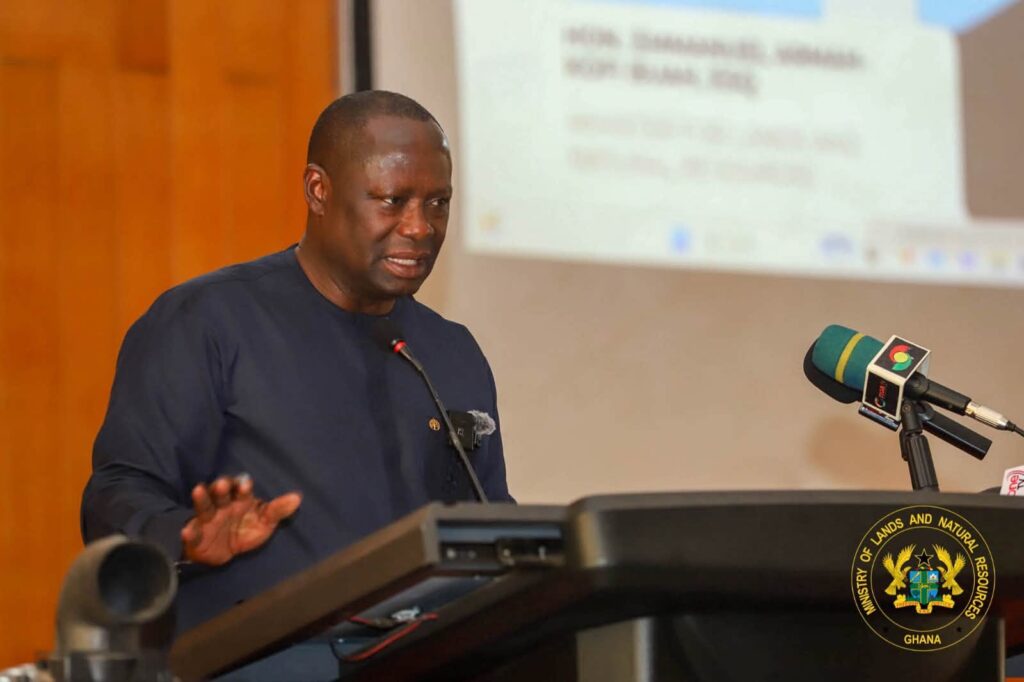
Alongside the initial four million credits earmarked for near-term transactions, roughly 2.5 million additional credits remain available for future market placement.
For regulators at the Minerals Commission and the Forestry Commission alike, the next phase requires rigorous governance to ensure transparent revenue administration and sustained ecological compliance.
Maintaining the integrity of Ghana’s forest carbon assets demands relentless enforcement against illegal mining in forest reserves, continuous satellite-backed emissions monitoring, and equitable distribution of carbon revenues to rural livelihoods.
READ ALSO: Fitch Warns $5.05bn Debt Repayments Could Trigger Cedi Slump in 2027