
Minister for Energy and Green Transition, Dr John Abdulai Jinapor, has renewed engagements with civil society organisations (CSOs) and industry stakeholders over the proposed National Petroleum Authority (NPA) Bill, 2026, as scrutiny of the legislation increasingly shifts towards how government intends to address concerns raised about its potential impact on Ghana’s downstream petroleum industry.
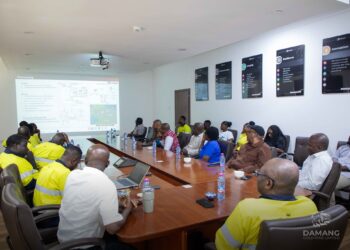
In a statement shared after the meeting, the Minister said the engagement provided an opportunity to discuss the proposed legislation, its implications for the sector and concerns raised by stakeholders.
The latest meeting comes after the Bill was laid before Parliament on November 19, placing the proposed reforms at a more advanced stage of the legislative process.
It also follows concerns from industry groups and policy organisations about provisions they believe could affect the commercial position and strategic responsibilities of the Bulk Oil Storage and Transportation Company (BOST) Energies.
Dr Jinapor said government recognised the need for stability and predictability in the downstream petroleum market, while assuring participants of its commitment to protecting institutional interests.
“We recognise the importance of a stable, predictable and well-regulated petroleum industry,” he stated.
He added that he had assured stakeholders of government’s commitment to strengthening the sector, safeguarding institutional interests and creating an enabling environment for sustainable growth.
However, the significance of the latest engagement will ultimately depend on whether the concerns raised translate into identifiable changes, safeguards or clarifications in the legislation.
Consultation Must Produce More Than Dialogue
The proposed NPA Bill is intended to replace the existing National Petroleum Authority Act, 2005 (Act 691), and update the legal framework governing Ghana’s downstream petroleum industry.
The case for reviewing the existing legislation is partly rooted in changes to the industry, including increasing fuel consumption, developments in refining and the growing relevance of alternative energy sources.

When he presented the Bill to Parliament, Dr Jinapor explained that the sector had evolved considerably since the existing law was enacted.
“This bill is expected to replace the current act. There’s been a lot of development following the promulgation of the current bill. We now have about four different refineries. Fuel consumption is increasing. Renewable energy is forming part of Ghanaian petroleum consumption,”
The reform therefore presents an opportunity to clarify regulatory responsibilities, improve oversight and establish a framework that reflects the changing commercial and operational realities of the sector.
But the controversy surrounding the proposed legislation demonstrates that modernising regulation is not simply a matter of giving the regulator additional powers.
The framework must also account for the institutions responsible for maintaining the infrastructure that supports petroleum distribution across the country.
In its November 18 report, NPA Bill Consultations Revisit Downstream Industry Concerns, The Vaultz News examined the competing interests involved, including regulatory oversight, private-sector participation, infrastructure financing and national fuel security.
The latest engagement suggests that government is continuing to seek stakeholder input.
Yet the Ministry’s public statement does not identify the specific recommendations presented at the meeting, the provisions being reconsidered or whether any amendments have been proposed.
That information will be important in determining whether consultation is influencing the substance of the Bill or simply providing stakeholders with another opportunity to express concerns.
BOST Concerns Remain Central
Much of the debate has centred on the potential implications of the proposed legislation for BOST Energies, a state-owned company with responsibilities linked to petroleum storage and transportation infrastructure.
The concerns are not limited to the company’s commercial interests. They extend to how Ghana will finance and manage infrastructure that serves national fuel-distribution and security objectives.

The Alliance for Accountable Governance (AFAG), for instance, has questioned proposed open-access requirements and tariff controls, arguing that the arrangements could restrict BOST’s ability to recover the costs of operating and maintaining its facilities.
AFAG has also raised concerns about the proposed Infrastructure Fund and how investments financed through it would relate to existing state-owned infrastructure.
In a separate intervention, the Institute for Economic Research and Public Policy (IERPP) warned that the Bill could create a mismatch between BOST’s responsibilities and the financial resources and authority available to discharge them.
These concerns raise a broader policy question: how can government introduce greater competition in petroleum logistics without weakening the financial capacity of an institution expected to maintain infrastructure of national importance?
Private-sector participation can potentially improve investment, operational efficiency and infrastructure development.
However, the commercial framework must provide clarity on access conditions, tariffs, maintenance obligations and the distribution of costs.
If infrastructure operators are expected to provide access to their facilities while facing restrictions that prevent adequate cost recovery, the sustainability of those assets could become a concern.
Similarly, assigning strategic fuel-reserve responsibilities without a clearly defined financing arrangement could place additional pressure on the institution expected to manage them.
The Ministry’s assurance that institutional interests will be safeguarded is therefore significant, but the practical meaning of that commitment will need to be reflected in the Bill’s final provisions.
Parliament Needs A Clearer Picture
The timing of the engagement is particularly important because the legislation has already entered Parliament.
The Energy Committee’s consideration of the Bill provides an opportunity for lawmakers to examine the concerns raised by stakeholders and assess whether the proposed framework adequately balances regulatory effectiveness, competition and national energy security.
For the Ministry, continued engagement should also provide an opportunity to explain the policy reasoning behind contested provisions and clarify how government intends to address possible unintended consequences.

Dr Jinapor said the Ministry would maintain an open-door approach to the process.
“The Ministry will continue the stakeholder engagement, and our doors will remain open to all industry players and civil society organisations as we work together in the broader interest of Ghana’s energy sector,”
That commitment will be tested by the transparency of the process that follows.
Stakeholders and the public would benefit from knowing which organisations participated, the principal recommendations submitted, and the Ministry’s response to proposals that challenge specific provisions of the Bill.
A published summary of the engagement, alongside explanations of any proposed amendments, could help establish whether the consultation process is producing meaningful outcomes.
It would also help Parliament distinguish between concerns that can be addressed through clarification and those that require changes to the legislation itself.
The Test Is In The Final Legislation
The downstream petroleum industry needs a regulatory framework capable of responding to changing market conditions, encouraging investment and protecting consumers.
However, these objectives must be pursued without creating uncertainty around the responsibilities and financial sustainability of institutions that support the country’s petroleum supply chain.
The NPA requires an effective legal framework to regulate the industry, while businesses need predictable rules to plan investments and operate efficiently.

BOST, meanwhile, must have the resources and commercial capacity to maintain infrastructure and fulfil responsibilities linked to national fuel security.
These interests do not have to conflict. But reconciling them requires clear legislative provisions and financing arrangements rather than broad assurances alone.
The latest engagement led by Dr Jinapor is an opportunity to narrow the differences between government and stakeholders. Its value, however, will be measured by what changes in the legislative process.
As Parliament considers the Bill, the central question is no longer simply whether government is willing to listen.
It is whether the concerns raised will be reflected in a framework that strengthens regulation without undermining the institutions and infrastructure on which Ghana’s downstream petroleum sector depends.
READ ALSO: Education Minister Urges Ethical AI Integration in Schools