
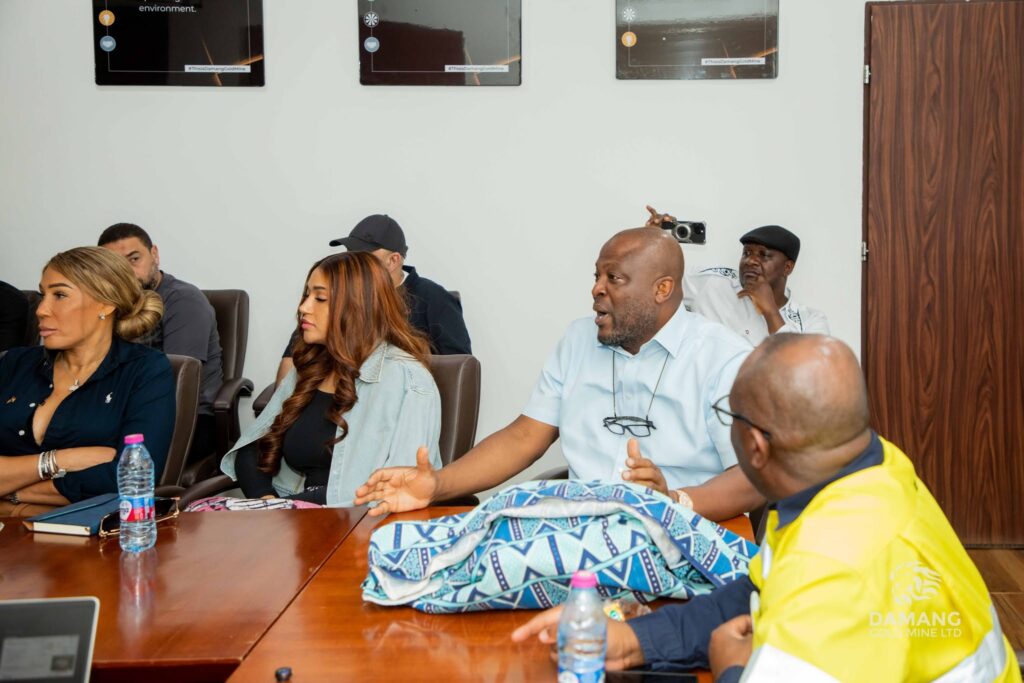
Damang Gold Mine Limited (DGML) has briefed the Ministerial Advisory Board of the Ministry of Lands and Natural Resources (MLNR) on its operational milestones following a three-day working tour of the Western Region concession while raising red flags over the persistent threat of illegal mining.
The high-level engagement afforded the indigenous mine operator an avenue to showcase its post-transition turnaround while pressing for coordinated regulatory action to safeguard the asset’s long-term viability.
Hosted at the mine site in Damang, the oversight visit marks a critical review of DGML’s stewardship since taking over operational control of the historic gold asset from Gold Fields Ghana Limited in April 2026.
Management walked the advisory team through its early production gains, fleet expansion drive, and strategic alignment with national reserve accumulation goals, even as encroaching artisanal and illegal mining activities locally termed galamsey continue to pose operational, security, and environmental risks across the broader Tarkwa-Damang mineral belt.
“During the visit, we shared our achievements since taking over operations and discussed opportunities for the Damang project. We also spoke candidly about the challenges facing the mine, with particular attention to illegal mining.”
Damang Gold Mine Limited (DGML)
Operational Turnaround and Strategic Expansion
Since assuming full control of the Damang concession on April 18, 2026, following a competitive tender won by its parent firm, Engineers & Planners (E&P), DGML has moved aggressively to revitalize output and prove that Ghanaian-owned enterprises can efficiently manage large-scale industrial mines.
During the inspection, company executives detailed how the mine transitioned smoothly from processing lower-grade stockpiles to executing fresh pit expansions supported by a US$250 million capital injection into heavy-duty mining equipment.
A centerpiece of the achievements highlighted to the MLNR delegation is DGML’s direct contribution to Ghana’s macroeconomic stabilization architecture.
Within weeks of commencing independent operations, the company delivered 100 percent of its initial gold doré output including subsequent tranches such as a 121-kilogram consignment directly to the Ghana Gold Board (GoldBod) and the Bank of Ghana to bolster national foreign exchange reserves.
Briefing the visiting board, DGML noted that the engagement was designed to align its expansion blueprint with state oversight, stressing that management remains focused on “advancing responsible mining at Damang.”
Confronting the Illegal Mining Threat
Despite strong production metrics and robust capital deployment, DGML’s candid disclosure regarding illegal mining underscores a pressing vulnerability confronting licensed large-scale operators across Ghana’s gold belts.
Industry analysts note that illegal miners frequently target active mining leases, peripheral pits, and rehabilitated tailings storage facilities, leading to ore theft, destruction of geological exploration data, heavy siltation of water bodies, and heightened security expenditures for legitimate concession holders.
At Damang, protecting the integrity of pit walls, processing infrastructure, and previously reclaimed agricultural lands is essential to sustaining the mine’s projected multi-year lifespan and safeguarding thousands of direct and indirect Ghanaian jobs.
By flagging illegal mining directly to the Ministerial Advisory Board, DGML signaled that corporate security protocols alone cannot neutralize organized encroachment without sustained backing from the Minerals Commission, state security taskforces, and host community leadership.
Oversight Imperative and Policy Alignment
The timing and structure of the Ministerial Advisory Board’s visit reflect a broader governance imperative within the Ministry of Lands and Natural Resources.
Established under Section 41 of the Civil Service Act, 1993 (PNDCL 327), the Board is mandated to promote constant interaction between the Ministry and sector stakeholders while advising the sector minister on adjustments in policy direction, planning objectives, and operational strategies.
Ground-truthing performance through field tours such as the November 2026 circuit covering major concessions including Damang, Akyem, and Bogoso-Prestea enables policymakers to bridge the gap between boardroom directives in Accra and realities on the pit floor.
For the government, ensuring the success of Damang Gold Mine Limited carries immense strategic weight as a flagship test case for indigenous ownership in Ghana’s capital-intensive extractive sector.
Following the tour, the delegation validated the operator’s trajectory, noting in its assessment that the Board “expressed satisfaction with the progress made so far, recognised the potential of the Damang project and voiced confidence in DGML’s ability to manage the mine and build on its achievements.”
Moving forward, translating that institutional confidence into concrete protection against illegal mining encroachment will be vital.
As DGML scales up throughput and deepens local value addition, sustained synergy between the mine’s management, the MLNR, and regulatory agencies will determine whether Damang cements its status as a premier model of sustainable, Ghanaian-led resource development.
READ ALSO: Kumasi Mayor Calls For Intervention In Suame Magazine Dispute