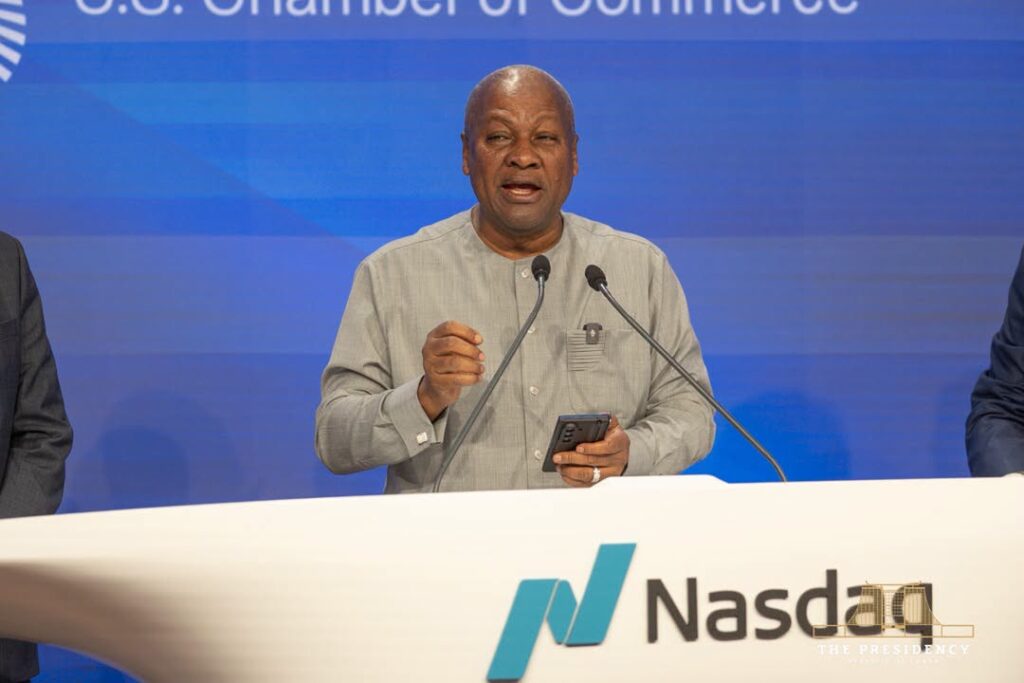
President John Dramani Mahama has announced that newly uncovered iron ore and nickel reserves in the Oti Region possess the commercial scale and mineral purity required to anchor Ghana’s transition toward green energy and heavy industrialization.
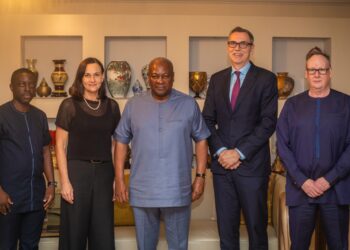
Delivering these remarks during a high-level engagement with the Oti Regional House of Chiefs at the Jubilee House, the Head of State emphasized that preliminary geological assessments indicate an extraordinary concentration of high-grade minerals capable of attracting substantial foreign direct investment while transforming local livelihoods.
The discoveries, centered around the Gyamurume enclave within the Kadjebi District, emerged from targeted exploration spearheaded by the Ghana Integrated Iron and Steel Development Corporation (GIISDEC) alongside the Ghana Geological Survey Authority.
Beyond confirming iron ore concentrations exceeding international commercial benchmarks, field evaluations unexpectedly revealed significant occurrences of nickel, a critical transition mineral essential for manufacturing lithium-ion batteries used in electric vehicles.
Consequently, these findings elevate the Oti Region from a predominantly agrarian corridor into a strategic frontier for both domestic steel production and global clean-technology supply chains.
“And so also while they were looking for iron ore, found nickel, which has now become very important in the green transition, because it’s used to make the batteries for electric vehicles. And so that is a potential source of prosperity and also of job creation in that area.”
President John Dramani Mahama
Unlocking High-Grade Ore Reserves in the Kadjebi Enclave
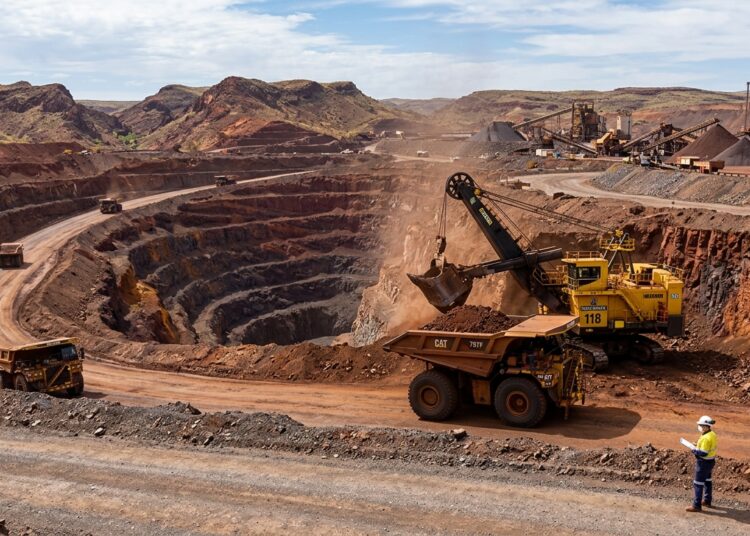
Geological assays conducted across the Kadjebi exploration blocks have yielded iron content surpassing the 50 per cent threshold, a benchmark that classifies the deposits as high-grade ore on the international commodities market.
In global metallurgical trade, ores exceeding 50 per cent purity command premium valuations because they require significantly less energy and beneficiation before smelting, thereby lowering capital expenditure for prospective mine developers.

Assessing the technical findings during the Jubilee House dialogue, President Mahama noted that GIISDEC had “made some important discoveries in the Kajabi area,” adding that “the iron ore, in many places, is more than 50% content, which is on the international scale” and “means it’s a very rich mine“.
To ensure long-term investor confidence, state agencies are subjecting initial handheld scanner readings to rigorous verification at certified commercial laboratories.
Establishing bankable geological data prevents speculative licensing and ensures that any eventual mining lease reflects the true volumetric value of the asset.
Furthermore, President Mahama assured traditional authorities and youth leaders that comprehensive community consultations will precede any commercial extraction decisions, aligning the project with broader regional development frameworks and the government’s upcoming US$10 billion New Economy investment programme.
Strategic Positioning in Global Electric Vehicle Supply Chains
While iron ore underpins heavy infrastructure, the incidental detection of nickel positions Ghana within one of the fastest-growing segments of the twenty-first-century energy economy.
Global decarbonization mandates have triggered an unprecedented surge in demand for battery-grade nickel, which enhances energy density and extends driving range in modern electric vehicles.
Historically, global supply chains have relied heavily on producers in Indonesia, the Philippines, and Australia, leaving Western and African automotive manufacturers searching for diversified, geopolitically stable sources.
By entering the battery-minerals space, Ghana reduces its historical over-reliance on traditional commodities such as gold, cocoa, and crude oil.
Integrating Oti’s nickel deposits into national mineral policy complements parallel domestic mobility initiatives, including the recent deployment of electric vehicles and motorcycles across urban transport networks.
Rather than merely exporting raw concentrates, policymakers face a rare opportunity to attract midstream processing facilities that refine nickel sulfate locally, capturing higher margins along the clean-energy value chain.
Imperative for Domestic Industrialization and Import Substitution
The urgency behind developing the Oti mineral corridor is underscored by Ghana’s persistent structural trade deficit in metallurgical products.
For decades, the nation has expended hundreds of millions of dollars annually recently estimated at over US$528 million importing finished iron and steel products to service its expanding construction, energy, and manufacturing sectors.
Utilizing domestic high-grade ore from Kadjebi to feed local smelting and rolling mills directly addresses this foreign-exchange drain while insulating infrastructure projects from international shipping volatility.
Moreover, operationalizing an integrated iron, steel, and battery-mineral value chain in the Oti Region addresses acute regional economic disparities. Establishing processing plants, haulage networks, and ancillary engineering services around Gyamurume will generate sustainable direct and indirect employment for local youth.
When paired with strict environmental safeguards and transparent revenue-sharing mechanisms, these newly confirmed mineral assets provide the industrial bedrock necessary to power Ghana’s green transition while securing generational economic prosperity for host communities.
READ ALSO: UNSMIL Calls for Probe into Benghazi Port Attacks