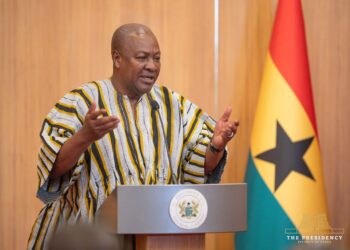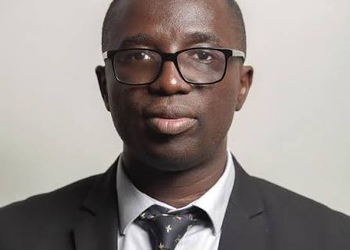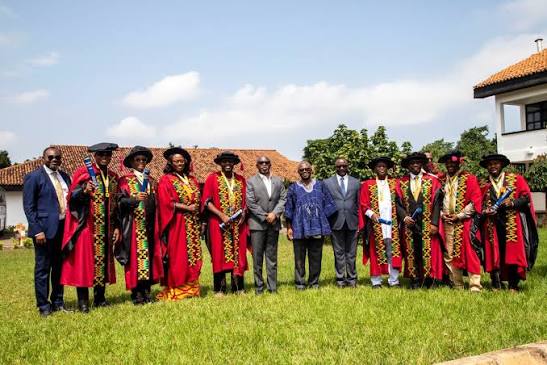
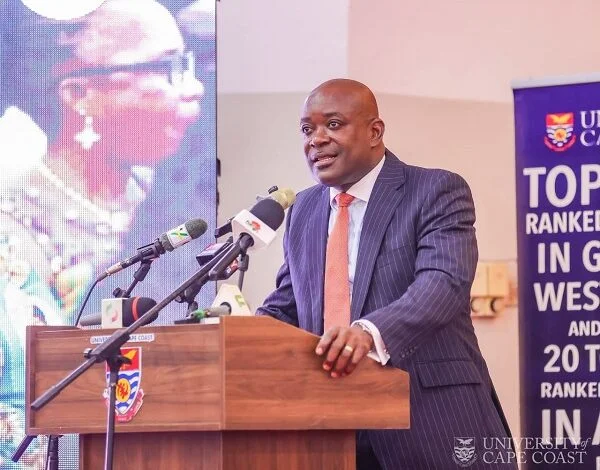
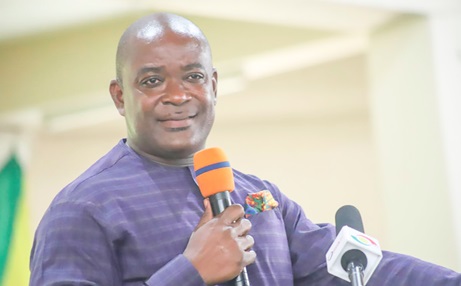
The Director-General of the Ghana Tertiary Education Commission (GTEC), Professor Ahmed Abdulai Jinapor, has affirmed that every PhD degree within the country must meet credible academic standards and command recognition.
He explained that the Commission’s nationwide audit of doctoral programmes seeks to establish whether institutions possess the academic capacity, supervisory expertise and infrastructure required to deliver rigorous research training.
In an interview, Prof Jinapor clarified that “GTEC has not suspended admissions into existing accredited PhD programmes, contrary to media reports, but has temporarily frozen the acceptance and processing of applications from institutions seeking approval to introduce new doctoral programmes.”
He explained that the measure would prevent the proliferation of programmes of questionable quality while the Commission investigates concerns surrounding doctoral education in the country.
“A PhD that is obtained from a Ghanaian university or institution must be one that is credible, acceptable not only in Ghana, but outside the country. And we are not going to renege in doing our job as the regulatory agent.”
Professor Ahmed Abdulai Jinapor
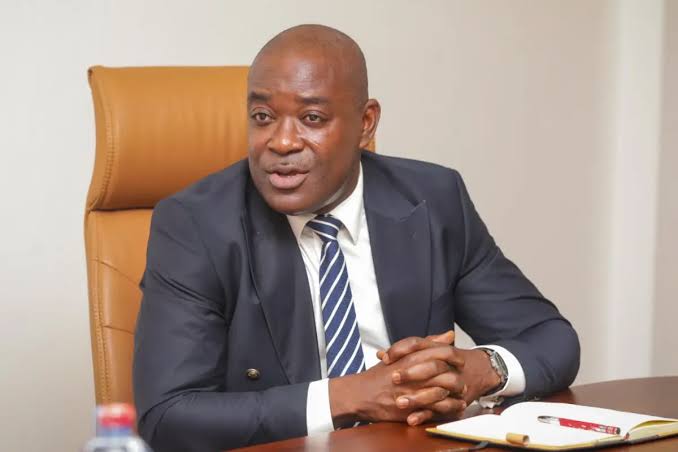
The Director-General identified the distinction between new programme applications and student admissions as essential to understanding the Commission’s intervention. He emphasised that GTEC does not admit students, since that responsibility rests with individual institutions, while the regulator assesses and accredits the programmes they seek to operate.
Preparations For Nationwide Audit
For instance, an existing History PhD programme at the University of Ghana will remain subject to its accreditation status, even as the Commission examines its academic delivery. The audit will assess student enrolment figures, the number of supervisors, their capacity to guide doctoral research and the infrastructure available to support the programmes.
Prof Jinapor further elucidated that the exercise would operate through a peer-review system involving university faculty. Under the arrangement, faculty members from institutions such as the University of Cape Coast, Kwame Nkrumah University of Science and Technology and the University of Education, Winneba will participate in evaluating programmes at other universities under GTEC’s coordination.
He also located the intervention within the Commission’s statutory responsibility to ensure that tertiary education and human resource development align with Ghana’s national development priorities. Consequently, he rejected suggestions that the temporary restriction exceeded GTEC’s regulatory authority, noting that similar measures had previously been applied where institutions operated several unaccredited programmes.
The Director-General also disclosed that the audit process has already commenced, with GTEC requesting information from tertiary institutions approximately two to three weeks prior. He indicated that the Commission has begun examining submitted data and has deployed an audit team to an institution for an on-site assessment.
Prof Jinapor cautioned that the exercise is to protect its academic value. He insisted that the Commission would not permit the PhD qualification to lose its meaning through inadequate supervision, excessive enrolment or insufficient institutional capacity.
GTEC Warns Institutions Over PhD Programme Over-Enrolment
Beyond the temporary freeze on applications for new doctoral programmes, the Director-General of the Ghana Tertiary Education Commission (GTEC), Professor Ahmed Abdulai Jinapor also warned that institutions found operating deficient PhD programmes could face regulatory sanctions following a nationwide audit. He identified excessive student enrolment and inadequate supervisory capacity as key issues prompting the exercise, warning that the Commission could recommend action against qualifications that fail to meet the minimum standards expected of doctoral education.
He indicated that the audit would establish the extent of these deficiencies and provide the evidence required for the Commission’s governing board to determine the appropriate response.
“We have evidence of a number of schools over-admitting to the extent of an institution admitting close to more than 250 students for a single year for a PhD programme and, in fact, 52 students in a particular programme.”
Professor Ahmed Abdulai Jinapor
Prof Jinapor explained that the Commission would “examine whether institutions possess the requisite facilities and qualified supervisors to support the number of doctoral candidates they admitted.” He cautioned that the quality of a PhD could not be assessed merely by the award of a certificate, since the research training and academic competence of graduates must satisfy established standards.
On the question of qualifications already awarded by institutions subsequently found to have deficiencies, he explained that the audit report would guide the governing board’s deliberations. Depending on the findings, the board could determine that certain certificates did not meet the requirements of a PhD, require additional measures or allow the qualifications to stand while restricting the institution’s authority to offer doctoral programmes in the future.
The Director-General, however, emphasised that such decisions would follow an established process and would not be imposed arbitrarily. He described the quality assurance exercise as a continuing process.
He further distinguished PhD programmes from honorary and professional courses, explaining that the Commission’s immediate concern is on the academic and research demands associated with the Doctor of Philosophy qualification. In particular, he underscored the importance of supervisors possessing the competence to train candidates as independent researchers.
READ ALSO: Analyst Urges Ghana To Borrow For Projects, Not Consumption